


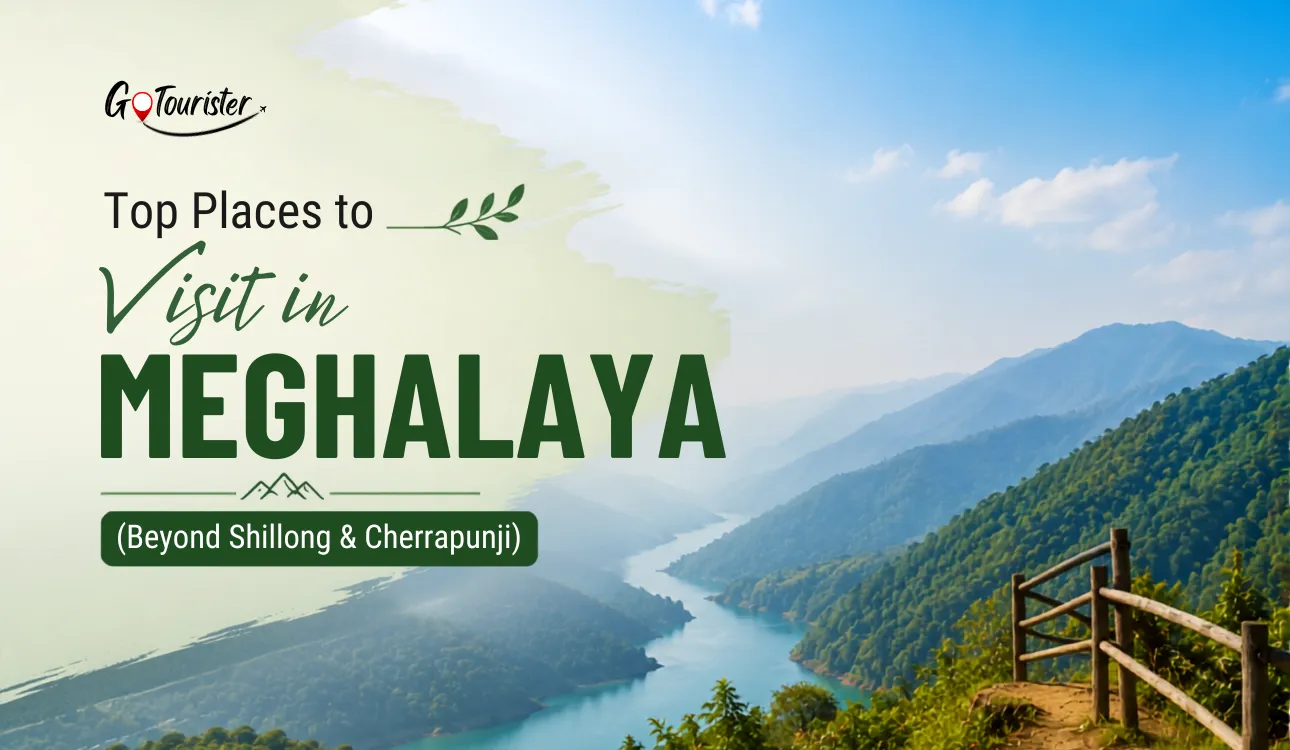
Having seen the main sights of Shillong and Cherrapunji, you may be asking what to do next. There are more beautiful sights in Meghalaya than those listed in many guidebooks. Head off the beaten track, for striking ridges, tranquil valleys, forest walks, village scenery and nature activities to slow your pace.
Here is a guide to attractions in Meghalaya outside the ones featured in your specific guides to Shillong, Cherrapunji /Sohra, Dawki, Mawlynnong, waterfalls and living root bridges. From the breathtaking views of Laitlum to the bizarre Blue Lagoon and thriving “Mini Pahalgam” outlook, the Meghalaya Biological Park and bamboo trekking adventures, below are attractions you should look at when in need of a different side of Meghalaya.
Some are a snap to include in a sightseeing day; some require more time and some local knowledge. It all depends on what interests you and not on ticking off everything in sight.
Plan your Meghalaya trip with this complete travel guide.
Quick Answer: Best Offbeat Places to Visit in Meghalaya
To get a taste of Meghalaya beyond Shillong and Cherrapunji, go to Laitlum Canyon and Blue Lagoon, the “Mini Pahalgam” vantage point, Meghalaya Biological Park and the bamboo trekking trails. These places offer beautiful vistas, serenely quiet countryside, wooded surroundings, rich diversity and a slower, more experiential travel experience.
| Place / Experience | Best For | Suggested Time | Experience |
| Laitlum Canyon | Views, couples, photographers | 1–2 hours or longer with a walk | Dramatic valleys, cliffs and short hikes |
| Blue Lagoon | Adventure seekers, nature lovers | Several hours including trekking | Forest trail and natural water scenery |
| “Mini Pahalgam” Viewpoint | Families, couples, photographers | 1–2 hours | Meadow-like countryside and pine-framed scenery |
| Meghalaya Biological Park | Families, children, wildlife enthusiasts | Allow a few hours | Wildlife, biodiversity and education |
| Bamboo Trekking Trails | Hikers and adventure travellers | Half-day to multi-day, depending on trail | Bamboo bridges, ladders, forests and ridges |
Laitlum Canyon
If the “what a view” kind of scenic outlooks is what you are after, Laitlum Canyon is one spot that should find itself on the top of your list of places to see in Meghalaya. Situated in the East Khasi Hills, this scenic hilltop viewpoint offers one of the most spectacular views of interconnecting deep gorges, green ridges and multi-layered valleys that distinguish Meghalaya from other sights near Shillong. According to Meghalaya Tourism, it is approximately 25km from Shillong and is among one of the best places to visit in Meghalaya.
The appeal is not so much one landmark as the scale of the landscape. From the grassy plateau you can see away across steep valley walls and far away hills, and quickly change the scene completely when the mists arrive.
What to do at Laitlum
Laitlum is not a place to be suffered through a few hours of tough walking. Most people can simply relax and enjoy the viewpoint, walk along the grassy banks or venture onto the routes that lead off. If you want to get more active, you can also find routes down into the valley towards settlements such as Rai Um and Rasong (according to Meghalaya Tourism). Do not assume that these routes are an easy walk just because the viewpoint is open access.
The main things to do include:
- Enjoy panoramic valley views.
- Photograph changing cloud and light conditions.
- Take short walks around the plateau.
- Explore longer downhill routes only if properly prepared.
- Look for distant streams, waterfalls and village landscapes.
- Combine the visit with nearby countryside rather than rushing back immediately.
For the photographer, the early morning and the late afternoon can be the best times of day. But it is more the quality of the light than the time on the clock that counts. If it is very cloudy it may be atmospheric but it will be cloaking the valley. A clear day however reveals the valley in all its depth.
Best time to visit Laitlum
Meghalaya Tourism lists October to May as the official best time to visit, when the weather should be clear for a good view. Another official tourism website recommends November to March as the best period, so it’s best to treat the October-May list as an indication rather than a certainty.
Though monsoon can turn the landscape into one of the most intensely green and atmospheric, rain, mist and the slippery ground can make it difficult to see and walk.
Allow 1-2 hours for a simple visit and longer if you want to explore the paths. Wear good footwear and take waterproofs. Do not go close to cliff edges in bad visibility or strong winds.
Laitlum is a perfect spot for couples, photographers, nature lovers and travelers who love not to visit tourist traps but in places with lush views.
Blue Lagoon
The Blue Lagoon Meghalaya referred to by travelers is of the natural pool experience along the Nongriat region in the broader trekking territory of the living-root-bridge path. That location is the key context: this is not a roadside viewpoint that can be slipped in between two attractions accessible by car.
Instead, the focus is on the mix of forest, walking, water and atmosphere. The distances walked are long and the nature of the water changes with the weather and time of year. Recent reports from travelers have also suggested that swim-in access may be limited, so never assume on the day that you will be able to walk-in.
Why visit Blue Lagoon?
Blue Lagoon seeks out those travelers who prefer to do more than ride around in a vehicle while exploring Meghalaya. Its setting in the jungle, its natural pool and the fact that you can walk there make it perfectly suited to those who enjoy being active outdoors.
Depending on conditions, visitors may:
- Walk through forested terrain.
- Enjoy the natural scenery around the pool.
- Photograph the water, rocks and vegetation.
- Observe the changing character of the stream after rain.
- Spend time in nature rather than rushing between attractions.
We should not read the word “Blue” as a promise of a specific colour every day. Rain, sediment and sunlight can alter the appearance of water bodies quite significantly.
Practical considerations
Think of Blue Lagoon as a walk rather than a tourist attraction and remember sensible footwear, water for drinking and perhaps some of your own snacks and light rain gear with a little basic first aid kit. Don’t take too much luggage.
Most importantly, be sure to check the local conditions before going off. Water levels and trail conditions as well as swimming access can vary, so visitors should listen to local community instructions or guides.
If swimming is allowed, take the safety precautions and don’t go in just because everyone else is. Natural pools may have slippery rocks, unpredictable currents and depths that change.
Suitable for fit travelers, couples, photographers and adventure travelers. Families with small children should evaluate the walking requirements and conditions prior to visiting.
“Mini Pahalgam” Viewpoint
Here there is a place popularly described as Mini Pahalgam Meghalaya. “Lum ‘er Pyngngad near Mawlyndep/Umbir in the Ri-Bhoi area” is known popularly for this name. The reason being used for Mini Pahalgam as described is that the place resembles a Pahalgam like a meadow, trees and quiet environment of countryside; it is not such part of Pahalgam and not to be presented as the same.
What I like about this place is that there is nothing too special about it. No waterfall or large monument here. Just a combination of open grass land, tall trees, lake scenery and an easy going country atmosphere.
What can you do there?
This is one of the more accessible ideas for travellers looking for offbeat places in Meghalaya without committing to a demanding trek.
Depending on local conditions and access, the experience can include:
- Walking through open countryside.
- Photographing the meadow and tree-lined landscape.
- Enjoying a picnic-style stop where locally permitted.
- Taking landscape and family photographs.
- Combining the visit with other attractions around the Ri-Bhoi/Barapani side.
It’s very family friendly because the open exposure makes a break from steep trails and cliff edges. It can be used by couples as a relaxing intermission between the more exhausting sightseeing.
If you are traveling primarily for the scenery, give yourself around 1-2 hours, but longer if you want to relax, not just take pictures.
As this is a less populated place, do not take for granted that you will be able to find tourist facilities, food stalls or any other kind of service. Bring your own water and snacks, recycle and respect the land and the community.
Meghalaya Biological Park
The Meghalaya Biological Park, located at Umtrew in the Ri-bhoi district, offers a different experience and should be a must visit for families and travelers eager to explore biodiversity. Presently, the Central Zoo Authority recognizes the presence of the Meghalaya Biological Park, Umtrew as a zoo.
The first phase of the park opened in 2024 after a long period of development. It is part of a series of projects aimed at conserving wildlife and promoting education and awareness of the environment. When opening the first phase state authorities highlighted that some work was still to be done to make the park fully operational.
This also distinguishes this place from the state’s natural scenic views and forest trails. Here the attraction lies in discovering the variety of life and nature of Meghalaya under a planned environment, as opposed to a regular safari.
Why include it in a Meghalaya trip?
The park can be especially effective when travelling with children as it can be used as a talking point to a comfort break instead of just another view.
It can also suit:
- Families with children.
- Wildlife enthusiasts.
- Students and educational groups.
- Travellers interested in conservation.
- Photographers interested in nature observation.
Please note that it is not the same as Nongkhyllem Wildlife Sanctuary which is a different protected forest located in Ri-Bhoi. According to the Meghalaya Tourism, Nongkhyllem is a place of great diversity. It has guided forest walks, bird-watching, soft trekking and photography.
Visitor tips
As the biological park is relatively new and the amenities and visitor arrangements might be altered, check the latest opening information, entry conditions, ticketing and facilities before you travel. Do not depend on outdated posts on social-media.
Adhere to any rules about taking photographs, feeding animals, areas which are off-limits and visitor flow, as these are often in the interests of the animals themselves. The animals at wildlife attractions are usually most interesting when they are left alone.
If you are travelling with children, take your time to enjoy and don’t be in a rush. Take water and other essentials with you while exploring the park, especially if you are combining it with other Ri-Bhoi attractions.
Bamboo Trekking Trails
Thus a Bamboo trek in Meghalaya must be classified as an experience category rather than just one single trail. In Meghalaya, to walk through forests and hills in bamboo bridges, walkways and ladders.
One of the most well-recorded cases is of the Bamboo Trail to Mawryngkhang (from Wahkhen), a trail in Meghalaya Tourism which mentions bamboo bridges and ladders that connect to steep rock faces. This trail proceeds toward Mawryngkhang, the “King of the Rocks”.
What makes walking on bamboo so unique is the fact that the bamboo is not simply ornamental. Instead, it is integral to the route, guiding walkers over and through the slopes, offering them a truly forest-and-ridge experience.
What is bamboo trekking like?
Probably a busier than usual sightseeing day. The way can be through forest trail, slope, steps, bamboo bridges, ladders, uneven ground, and open outlook.
The details given by the Meghalaya Tourism department for the Mawryngkhang route is the optional trek from Wahkhen of around 6.5 km (3.25 km each way) which takes about 5-6 hours, with gradually downhill sections over bamboo bridges and ladders, among other things. This is one authenticated example and not a general rule for all bamboo trails in the state.
What to carry
For a bamboo trekking Meghalaya experience, pack:
- Sturdy footwear with good grip.
- Drinking water.
- Light snacks.
- A waterproof layer or poncho.
- Small first-aid supplies.
- Insect repellent where appropriate.
- Phone/camera protection against rain.
- A small backpack rather than heavy luggage.
Conditions can get slippy very rapidly after rain. If unfamiliar with the trail, hiring a local guide can make for easier navigation as well as having useful local and cultural knowledge, while Meghalaya Tourism, in particular, advises local guide support in the Wahkhen/Mawryngkhang area.
Best suited to lively travellers, trekkers, photographers and adventure loving couples. Please respect the local guidance and never treat the bamboo architecture as an indestructible system.
Things to Do Beyond Sightseeing
The best Meghalaya places to visit are often those where the activity is as important as the attraction itself.
Chase Scenic Viewpoints
The heights and valleys of Meghalaya can change completely from one hour to the next. Rather than waiting for a clear view to always appear, take time for clouds, fog and changing light to become an integral part of the experience.
Laitlum in particular lends itself to this mode of travel, but applies just as well to the entire hills.
Try Short Nature Walks
However not everyone is up for day-long hikes. Brief excursions to lookouts, village tracks, forest edges and rural scenery will give a flavor of Meghalaya rather than turn every day into a walking challenge.
Even an easy walk will require the right shoes. Uneven and wet ground can be very slippery.
Explore Local Villages and Countryside
The village scenes give a more relaxed approach to understanding Meghalaya. Travel with care, stick to designated routes, ask permission before taking pictures of people or property and don’t treat the villages as a zoo.
Purchasing local foods or using local guides and services, where available, is another way to benefit local communities through tourism.
Go Birdwatching and Wildlife Spotting
Meghalaya’s forests contain very rich biodiversity, and Nongkhyllem is a noted sanctuary for birds and other animals. The Meghalaya Tourism department offers guided nature walk, bird watching, and wildlife photography in the vicinity.
If observing animals, that takes time. If you have binoculars take them along, be discreet and never feed or approach wild animals.
Photograph the Landscape
The best shots are not necessarily captured from the most popular viewing point. Search for the layers of ridges, the mist flitting through the trees, the streams, village paths, bamboo hangings and the shifting sunlight.
Worth having, a lightweight rain cover for your camera or phone. It often rains before you notice, so better to think ahead and keep the equipment dry.
Slow Down and Enjoy the Outdoors
One of the benefits of visiting the less popular sites in Meghalaya is that you won’t have to squeeze every day between sights.
Stop at a viewpoint. Listen to the winds in a forest. Stroll along a village road.
Watch the clouds blow across a valley.
These are the kinds of moments that stick in your memory longer than that extra ten-minute photo break.
Combine Offbeat Places With Major Attractions
You needn’t decide between popular or hidden Meghalaya. Combine one offbeat activity with a routine sightseeing day.
Best Time to Explore These Offbeat Meghalaya Places
There is no single season that works perfectly for every attraction.
Spring brings fresh greenery and generally pleasant conditions for sightseeing and walking. It is a good compromise for travellers who want outdoor activities without deliberately seeking heavy rain.
Summer can be comfortable for many outdoor activities, although Meghalaya’s weather remains changeable. Carry rain protection even when the forecast looks favourable.
Monsoon transforms the landscape with intense greenery, mist and flowing streams. It can be spectacular for photography, but heavy rain can reduce visibility and make trails, rocks and bamboo structures slippery. Water-based activities may also be affected by conditions.
Autumn is often attractive for travellers prioritising clearer views and outdoor exploration after the wet season.
Winter generally offers cooler, drier conditions and can be particularly appealing for viewpoints and comfortable sightseeing.
For detailed month-by-month information, weather patterns and seasonal planning, see the site’s Best Time to Visit Meghalaya guide rather than trying to apply one season to every destination.
How to Add These Places to a Meghalaya Trip
The easiest approach is to treat these attractions as add-ons to existing bases, rather than creating a completely separate circuit.
On a Shillong-based trip
Laitlum is the obvious addition. Meghalaya Tourism notes it is about 25 km from Shillong. It is a half-day excursion and can be the main activity or a contribution to a general day exploring the East Khasi Hills.
Planning a Shillong stop? Start with this complete guide.
On a Cherrapunji/Sohra-based trip
Blue Lagoon is actually something that makes more sense on a busy trekking day around Nongriat, rather than squeezing it in for a quick sightseeing break. If waterfalls, caves and views are your main interest, keep them in your dedicated Cherrapunji guidebook and leave some extra time for the Nature experience.
Plan your Cherrapunji adventure with this local guide.
For a 4-day Meghalaya trip
Stick to the itinerary. Pick one quirky thing to do – I would recommend Laitlum- instead of cramming as many sights into a few days.
For a 6-day Meghalaya trip
You can break it up with two or three varied experiences: e.g. Laitlum for viewpoints, a forest/water experience like Blue Lagoon and one active trek day.
For an 8-day Meghalaya trip
If you go for a longer trip it will offer you more options and allow you to visit other parts of Ri-Bhoi or you could include the Meghalaya Biological Park or you could even take a specific bamboo trekking trip. For the main route consider the Meghalaya itinerary guide and include these elements based on their location.
Practical Tips for Visiting Lesser-Known Places in Meghalaya
Offbeat travel requires slightly more preparation than visiting established tourist centres.
- Start early: Morning departures give you more daylight and flexibility if roads or trails take longer than expected.
- Expect rapid weather changes: Sunshine can quickly become cloud, mist or rain.
- Wear proper footwear: Even short walks can involve wet grass, mud, rocks or slippery surfaces.
- Carry water and snacks: Do not assume that every attraction will have shops or food stalls.
- Protect electronics: Waterproof pouches or dry bags are useful in Meghalaya.
- Check local conditions: Trails, water access and visitor arrangements can change after rain.
- Ask locally before taking lesser-known routes: Some paths may cross private land or have local restrictions.
- Use local guides where appropriate: Guides can help with navigation, safety and cultural context.
- Respect communities: Ask permission before photographing people, homes, ceremonies or private spaces.
- Leave no waste: Carry wrappers and bottles back with you if bins are unavailable.
- Never enter restricted areas: A beautiful viewpoint is not worth ignoring a safety sign or local instruction.
- Do not assume water is safe for swimming: Natural pools and streams can have changing currents, slippery rocks or unsafe conditions.
- Keep mobile connectivity expectations realistic: Coverage can vary considerably outside towns and on forest trails.
- Build buffer time: Meghalaya’s weather and road conditions can make a tightly packed schedule stressful.
For transport planning, use the site’s How to Reach Meghalaya guide, while the Where to Stay in Meghalaya article can help when deciding whether to base yourself in Shillong, Sohra or elsewhere.
Frequently Asked Questions
1. What are the best places to visit in Meghalaya beyond Shillong and Cherrapunji?
Check out one of the offbeat places to visit in Meghalaya, Laitlum Canyon, Blue Lagoon, Mini Pahalgam, Meghalaya Biological Park and the Wahkhen bamboo trekking trail.
2. Is Laitlum Canyon worth visiting?
Yes, it does. It provides magnificent valley views and a serene environment and is one of the best scenic lookout points in Meghalaya.
3. Where is Blue Lagoon in Meghalaya?
Blue Lagoon is just close to Nongriat and it is normally visited on a trek to the Living Root Bridges.
4. Why is the Mini Pahalgam viewpoint called Mini Pahalgam?
It is an unofficial name given as the green meadows and trees of the area are similar to those seen in Pahalgam (Kashmir).
5. What can you see at Meghalaya Biological Park?
The park is home to native animals, conservation displays and the environment, making this park an enjoyable place for families or those interested in wildlife.
6. Where can I experience bamboo trekking in Meghalaya?
A well known route for bamboo trekking is Wahkhen to Mawryngkhang in East Khasi Hills.
7. Which offbeat Meghalaya places are good for couples?
Laitlum Canyon, Mini Pahalgam and Blue Lagoon are perfect for couples who want to relax and enjoy the scenic beauty.
8. How many days are enough to explore Meghalaya beyond the main tourist spots?
A 5-6 day trip is best to allow for a relaxed visit to both the main highlights and some of the more lesser known places.
Final Verdict / Conclusion
Once you move away from the obvious sights, Meghalaya gets a lot more interesting. The Laitlum Canyon presents vast ridges and valleys, while the Blue Lagoon combines forests and waters. The view point dubbed as the ‘Mini Pahalgam’ slows things down in the countryside. The Meghalaya Biological Park brings in the world of Biodiversity while the bamboo trails make walking an adventure.
These Meghalaya places to visit also show why the state is so ideal for slow travel. You can spend an hour viewing clouds gliding across a valley, embark on a short nature walk, visit rural areas or explore a forest trail in half a day rather than ticking off everything on the list.
You do not have to see it all. Pick one or two offbeat sights that suit your interests and available time and weave them seamlessly into your Meghalaya itinerary along with the key sights.
One response to “Top Places to Visit in Meghalaya (Beyond Shillong & Cherrapunji)”
[…] you’ve covered the famous spots, it’s time to discover the Top places to visit in Meghalaya beyond Shillong and […]