


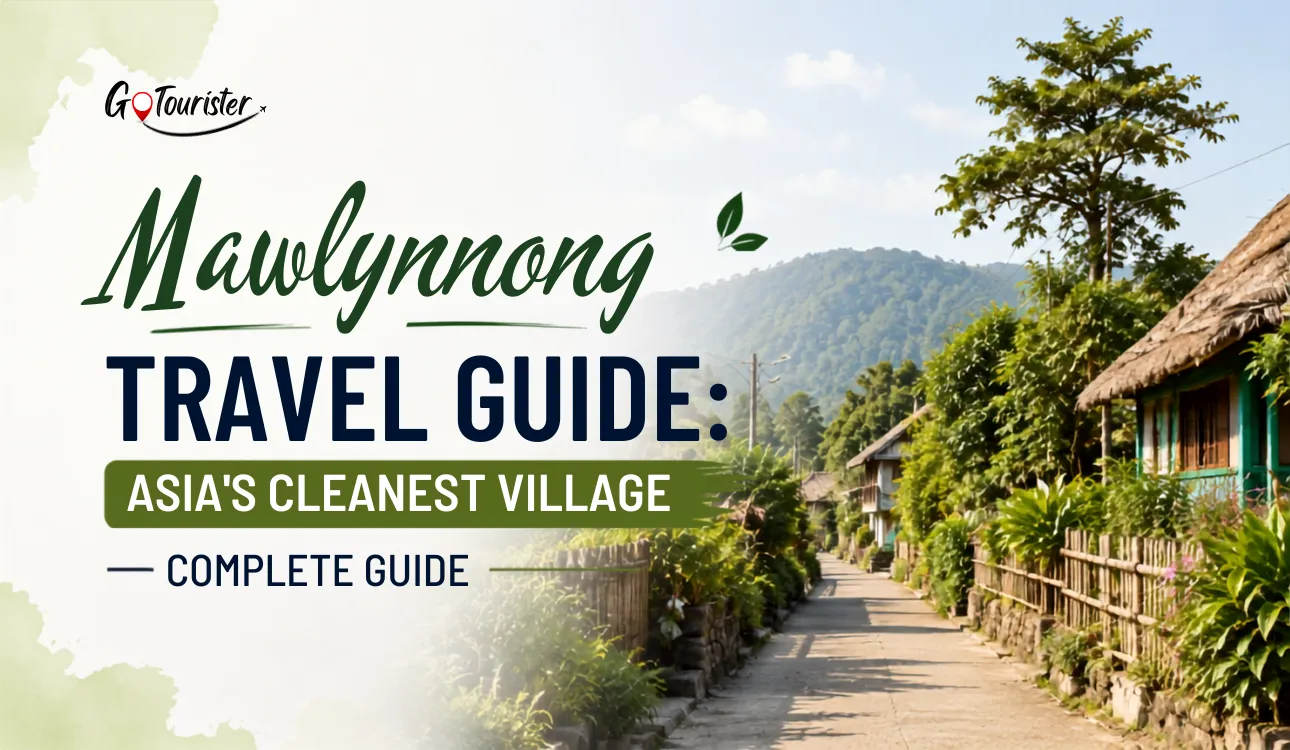
Situated in the Green East Khasi Hills in the state of Meghalaya, Mawlynnong is one of the finest examples of community based eco tourism in India. Widely known as the Cleanest Village of Asia, the small village is a beautiful one, with clean lanes, bamboo dustbins, bursting flowers and honest hearts, and is a place where a tourist can come to experience true Khasi culture, village life, living root bridges, scenic viewpoints and a thriving eco community.
If you are considering a Meghalaya road trip, seeking memorable experiences, or searching for offbeat destinations around Dawki and Shillong, Mawlynnong is a must-visit. We have everything you need to know about this brilliant village-from places of interest and climate to getting there, finding accommodation, travel tips, and essential visitor information.
Why Mawlynnong Is Called “Asia’s Cleanest Village”
Mawlynnong became an overnight sensation when it was crowned the cleanest village in the early years of this millenium. Though the term ‘Cleanest Village in Asia’ is used liberally by tourism promoters, what sets the place apart is its commitment towards cleanliness and conservation of nature since time immemorial.
Instead of large government schemes these people have clean streets just from community ownership, strict local traditions and caring about the environment.
The Village’s Waste Management System
There, cleaning is part of daily routine rather than a major tourist attraction.
Some of the practices visitors immediately notice include:
- Bamboo dustbins placed throughout the village
- Separate collection of biodegradable and non-biodegradable waste
- Composting of organic waste
- Regular community cleaning drives
- Limited use of single-use plastics
- Well-maintained footpaths and public spaces
We kindly request that our visitors take care of their waste, and littering should be avoided. Carrying your own water bottle and avoiding excess plastic will allow you to easily contribute to the village efforts to sustain the local environment.
Community-Led Conservation Story
This pristine character of Mawlynnong is preserved by generations of effort of The Khasi community.
Local residents actively:
- Maintain public spaces
- Protect trees and native vegetation
- Promote eco-tourism without excessive commercialization
- Encourage responsible visitor behavior
- Preserve traditional Khasi customs and village life
There is proof that the village succeeds as a sustainable tourism destination only because the village residents are close to the center. The travelers that respect the customs of the village and practice according to the rules, add to this.
Top Things to See in Mawlynnong
Although Mawlynnong is compact, it offers several attractions that can comfortably fill half a day or more. Staying overnight allows visitors to experience the village after day-trippers leave, revealing a much quieter and more authentic atmosphere.
Mawlynnong Living Root Bridge
The Mwlynnong root bridge (by the neighboring Riwai village) is one of the simplest living root bridges to get to in Meghalaya.
This is a bridge that has been formed over many decades by directing the aerial roots of rubber fig trees over a stream, in contrast to modern concrete bridges.
Highlights
- Easy walk suitable for most visitors
- Minimal trekking compared to larger root bridges
- Dense forest surroundings
- Beautiful during and after the monsoon season
Trek Difficulty: Easy
Time Required: Around 30–45 minutes round trip
Photography Tips
- Visit early morning for softer light.
- Use a wide-angle lens to capture the entire bridge.
- Avoid climbing or sitting on the roots, as they are living structures.
Mawlynnong Balancing Rock
The most unusual natural marvel of the village is the big Balancing Rock of Mawlynnong.
Despite weighing several tons, the enormous boulder seems to have been placed gently on top of the other rock. According to local Khasi legend, the formation is over a thousand years old and connected to stories told over many generations; the geological explanation is that it is due to natural weathering.
Photographers are particularly fond of the site for its unique appearance and the fact that it is green all around.
Sky View Point (Bamboo Tower)
The village’s bamboo skywalk is one of Mawlynnong’s iconic attractions.
Constructed almost entirely from bamboo, the tower offers panoramic views over:
- Mawlynnong village
- Forested hills
- Bangladesh plains on clear days
Best Time to Visit
- Early morning
- Late afternoon
- Winter months generally offer the clearest visibility
Safety Notes
- Follow local instructions.
- Avoid overcrowding the platform.
- Exercise extra caution during rainy weather, as bamboo surfaces may become slippery.
Church of the Epiphany
Located in the heart of all the colonies, the Church of the Epiphany was constructed during the colonial era and continues to be a significant religious and historical site today.
The village’s serene setting, modest buildings, and neatly kept grounds demonstrate the village’s concern for cleanliness and neighborly assistance.
Visitors may wish to stand outside and observe the church in a respectful manner outside prayer times.
Sacred Forest
The sacred forest just outside the village attests to the Khasi people’s reverence for nature.
Backed by traditional beliefs more than any enforced conservation regulations, the forest is home to native flora and fauna, including native plants, mosses, insects and avifauna.
Visitors should:
- Stay on designated paths.
- Avoid collecting plants or stones.
- Keep noise to a minimum.
- Leave no litter behind.
Responsible tourism helps preserve these fragile ecosystems for future generations.
How to Reach Mawlynnong
Although far from the city, Mawlynnong is quite accessible, and typically made part of day excursions from Shillong or combined with a visit to Dawki.
| Starting Point | Distance | Approx. Travel Time | Best Transport Option |
| Shillong | ~90 km | 2.5–3 hours | Taxi or self-drive |
| Dawki | ~35 km | 1 hour | Taxi or self-drive |
| Cherrapunji | ~80 km | 2.5–3 hours | Self-drive or taxi |
| Guwahati | ~175–180 km | 5–6 hours | Taxi or bus + taxi |
Distance from Shillong (~90 km)
The village of Mawlynnong has a distance of about 90 km from Shillong by Pynursla.
The route is paved mostly with some narrow winding sections. There may be occasional landslides/road repairs during monsoons, which could delay the journey.
Taxi Fare Estimate
Most private taxi companies will offer to take you on a full day tour rather than just a one-way journey, prices differ depending on the vehicle, time of year and the itinerary so make sure you get quotes from various companies before booking.
Self-Drive Tips
- Start early to avoid afternoon fog.
- Keep fuel topped up before leaving Shillong.
- Drive cautiously on mountain curves.
- Avoid driving after dark if unfamiliar with the route.
Distance from Dawki
Most travelers visit Dawki and Mawlynnong together on a single itinerary since the two places are relatively nearby.
A common route is:
Shillong → Mawlynnong → Dawki
or
Dawki → Mawlynnong → Shillong
The cultural visit can be combined with the famous Umngot River in one day.
Distance from Cherrapunji
The distance from Cherrapunji to Mawlynnong generally takes about 2.5-3 hours due to your mode of travel, road and weather conditions.
Along the way you will drive through beautiful Khasi hills-sure to be much appreciated for those planning a Meghalaya road trip.
Roads are in good condition, although they may be slippery in heavy rain.
Distance from Guwahati
Guwahati is usually the starting point for all the visitors who are arriving by air or train.
Available options include:
- Private taxi directly to Mawlynnong
- Shared cab to Shillong followed by a taxi
- Bus to Shillong and onward taxi
- Self-drive rental vehicle
In case you are traveling to Shillong, Cherrapunji, Dawki and Mawlynnong, renting a taxi for the entire circuit is the most comfortable idea.
Best Time to Visit & Mawlynnong Weather
Mawlynnong has a lovely subtropical climate, but due to the hilly terrain, the weather varies quite rapidly.
| Season | Weather | Pros | Cons |
| Summer (Mar–May) | Pleasant (18–28°C) | Comfortable sightseeing | Occasional showers |
| Monsoon (Jun–Sep) | Heavy rainfall | Lush greenery, waterfalls | Slippery roads and reduced visibility |
| Winter (Oct–Feb) | Cool (10–22°C) | Clear skies, photography | Chilly mornings |
Summer
Nice weather makes summer the best time for walking through the village and sightseeing around.
Monsoon
Rain- The scenery becomes lush and green due to the rain and the living root bridge becomes more picturesque. Rain gear, waterproof shoes and additional time for your journey are advisable.
Winter
The best time for sightseeing, photography and clearly enjoying the view from Bamboo Sky Tower is during winter.
Photography
For the best lighting:
- Early morning
- Late afternoon
- Shortly after rainfall when foliage appears vibrant
Festivals
Visitors interested in Khasi culture may consider planning around local festivals, though dates vary annually. Check with local tourism offices before your trip.
Best Months
Between October and April is the ideal time for most travelers, offering good weather, good roads and good sightseeing.
Travel Tip: In Meghalaya, the weather and roads can change rapidly, so it’s wise to consult local weather updates before journeying, particularly during the monsoon period.
Important Visitor Information
Preparations in advance will ease your trip to Mawlynnong, considering that this place is a small rural village with a very limited tourist infrastructure. Though the facilities have improved over the years, tourists should count on a very basic and community-oriented tourism rather than a commercial destination.
Mawlynnong Village Entry Fee & Timings
Most visitors will have to pay a small Maolynngong village entry fee. This money goes towards village upkeep and cleanliness programs.
| Information | Details* |
| Entry Fee | Approximately ₹20–₹50 per person |
| Parking Fee | Usually charged separately for cars and two-wheelers |
| Camera Fee | Generally not charged for mobile photography; separate charges may apply for professional equipment |
| Village Timings | Typically open from around 8:00 AM to 5:00 PM |
| Recommended Visit Duration | 2–4 hours |
*Fees, opening hours, and local rules may vary. Confirm current details with local tourist offices or your hotel prior to your visit.
To enjoy the village at a relaxed pace, arrive early in the morning before larger tour groups.
Mawlynnong Sunday Tourist Restriction
It is true that a majority of tourists however search on the internet the following: Schedule of Mawlynnong Sunday Tourist Ban. However the fact remains that this is NOT the case.
Mawlynnong is primarily a Khasi Christian village and traditionally Sunday is a day dedicated for church, family and relaxation and hence:
- Some family-run shops may remain closed.
- A few homestays may offer limited services.
- Tourist activity is generally quieter than on other days.
- Local residents may prefer a peaceful atmosphere during church hours.
This, of course, doesn’t mean a complete ban on visitors. Travellers are asked to be considerate of the local culture and not to play loud music, disturb worshippers with photo shootings or cause other forms of trouble.
Since the local customs and community rules may change, it is recommended to contact your homestay owner or the local tourism office before planning to visit on Sunday.
Where to Stay in Mawlynnong
While many visitors explore Mawlynnong as a day trip from Shillong or Dawki, staying overnight offers a completely different experience. Once day visitors leave, the village becomes remarkably peaceful, allowing you to appreciate its slower pace of life, traditional Khasi hospitality, and quiet evenings.
Accommodation is relatively limited, so booking in advance is recommended during weekends and peak travel seasons.
Village Homestays
Choosing a Mawlynnong homestay is one of the best ways to experience local culture.
Most family-run homestays offer:
- Traditional bamboo or wooden cottages
- Simple but comfortable rooms
- Home-cooked Khasi meals
- Peaceful garden surroundings
- Opportunities to interact with local families
Typical Budget
- Budget: ₹1,000–₹2,000 per night
- Mid-range: ₹2,000–₹3,500 per night
Prices vary depending on the season, room type, and meal inclusions.
Pros
- Authentic cultural experience
- Homemade local cuisine
- Friendly hosts with local travel advice
- Quiet village atmosphere
Limitations
- Basic amenities compared to city hotels
- Limited Wi-Fi or mobile internet
- Few luxury facilities
- Rooms may sell out during holidays
Family-run homestays such as Mawlynnong Homestay and other guesthouses in the area cater for budget travelers who are looking to experience the area rather than indulge in luxury.
Nearby Resorts
If you are after extra facilities, or cannot find somewhere to stay within the village, there are a number of nearby properties.
| Property | Best For | Approximate Price Range | Advantages | Limitations |
| Betelnut Resort | Couples & families | ₹2,500–₹5,000 | Scenic setting, spacious rooms | Slightly away from village |
| Streamside Guest House | Budget travelers | ₹1,500–₹3,000 | Quiet location, affordable | Limited facilities |
| Traveller’s Nest | Road trippers | ₹2,000–₹4,000 | Convenient access | Availability varies |
| Odyssey Stays | Comfortable mid-range stay | ₹2,500–₹5,500 | Modern amenities | Seasonal pricing |
Prices for rooms and their availability fluctuate greatly throughout the year. Please check the current price and status along with guest reviews.
Nearby Places Worth Visiting
Most of the travelers combine this with a series of other places around it for an entire or several days’ itinerary in Meghalaya.
Dawki
Approximately an hour away, Dawki has the clear waters of the Umngot River, one of the most photographed sites in Meghalaya.
Highlights include:
- Transparent river water during winter
- Scenic suspension bridge
- Riverside cafés
- Day trips from Shillong
- Easy combination with Mawlynnong
For more info: Dawki Travel Guide
Umngot River
Nothing beats a boat ride along the Umngot River. The boat ride is the highlight of a Dawki visit.
In the dry season, the water is so clear that on a sunny day the boats look as if they are floating in the air and it is an excellent opportunity for photography.
Morning visits generally have calmer water and better light.
India–Bangladesh Border
There is the view of India-Bangladesh international border near Dawki.
Always have your valid ID while heading to this interesting stop. Obey the security personnel. Pay attention to the No Photography indicators if available.
Mawlyngbna
Adventure seekers should consider adding Mawlyngbna to their itinerary.
Known for its natural landscapes, the area offers:
- Fossil discoveries
- Limestone caves
- River canyons
- Kayaking
- Ziplining
- Trekking opportunities
Compared to Mawlynnong, Mawlyngbna provides a more adventure-focused experience.
For more info: Meghalaya Travel Guide
Practical Travel Tips
A little preparation can make your visit much more comfortable.
Cash
Bring enough cash, since there are no ATMs in the village and this method of payment will not always be accepted.
Mobile Network & Internet
Most of the big networks are available in many places, but signal strength isn’t the same everywhere. Internet access can be slow or non-existent at times, especially during poor weather.
Responsible Tourism
Help preserve the village’s reputation by:
- Using bamboo dustbins
- Avoiding littering
- Carrying reusable water bottles
- Respecting plants and trees
- Supporting local businesses and homestays
Local Etiquette
The Khasi communities are renowned for their hospitable natures. Visitors should ensure that they are appropriately dressed; smile and say hello to residents and respect both holy sites and traditions.
Photography Etiquette
Always seek permission to take photos of local residents or to access private property. Don’t interfere with prayer meetings or meetings of the community.
Parking
Parking near the entrance to the village is available, for a small fee. Come early on the weekends and holidays.
Food Options
Several small cafés and homestays serve simple meals, including:
- Khasi cuisine
- Rice dishes
- Fresh vegetables
- Tea and snacks
Vegetarian options normally available, but reduced choice in smaller towns.
Public Toilets
Toilets available. Bringing tissues and hand sanitizer is recommended.
Travel with Children
Mawlynnong is good for families, with manageable walking paths and a leisurely environment. Care should be taken to watch children around the bamboo sky viewing point and the root bridge.
Solo Travel Safety
Overall the village is a safe place for a single traveler. Use common sense, don’t venture into empty places late at night and let your hotel/guesthouse knows you’re arriving late.
Rain Preparedness
Weather in Meghalaya can change rapidly.
Carry:
- A waterproof jacket
- Umbrella
- Waterproof footwear
- Quick-dry clothing
- A rain cover for cameras and backpacks
Frequently Asked Questions (FAQs)
1. Mawlynnong is in which state?
Mawlynnong is a village in the Indian state of Meghalaya situated in the northeastern part of the country. It is situated in the East Khasi Hills area near the India-Bangladesh border.
2. Which district is Mawlynnong in?
Mawlynnong, which lies in the East Khasi Hills district in the state of Meghalaya, is approximately 90 km away from the capital Shillong.
3. Why is Mawlynnong called the Cleanest Village in Asia?
The village is renowned for its community-led cleanliness practices, including bamboo dustbins, waste segregation, composting, and active participation by residents in keeping public spaces clean. Its reputation has made it one of Meghalaya’s best-known eco-tourism destinations.
4. What does Mawlynnong mean?
By local understanding, the name Mawlynnong is generally associated with the Khasi language meaning “a group of stones” or “stone enclosure”. Similar to many names of places, other interpretations can exist.
5. Is Mawlynnong closed on Sundays?
No. Mawlynnong is not usually officially closed on Sundays. However, Sunday is a day of rest and prayer for many folks so some shops, cafes and homestays might run on limited hours. Confirm locally before arriving.
6. How much is the Mawlynnong village entry fee?
Fees for entry generally run from 20 to 50 per person, subject to change. Parking and professional photography fees may be extra. Confirm charges prior to your visit.
7. What are Mawlynnong village timings?
The usual visiting hours would be between 8:00 am to 5:00 pm. Though the precise timings might differ at times, more so when it is a holiday or occasion.
Conclusion
Be it the pristine roads and bamboo dustbins, Living Roots Bridges or the Kilaben, the mythical Khasian hospitality, Mawlynnong is the ultimate experience in India. So much said about its cleanliness but there are also other more interesting things to learn from this village. Yes it is one of the best places to visit in India but it is more of an experience and not a sightseeing destination, so spend some time relaxing in one of the best places to visit in India.
Though everybody from Shillong/Dawki comes for a day trip to Mawlynnong, experiencing the village overnight allows you to experience the tranquil mornings, silent evenings and the real village life once other tourists leave. Make sure to add Mawlynnong along with other attractions like Dawki, the Umngot river or Mawlyngbna for a great Meghalaya trip.
The progress of the tourism industry makes it more and more demanding for us to protect the environment and the local community from every aspect. Please respect local traditions, cleanliness, stay at local homestays, and follow community regulations so that Mawlynnong can stay an example for eco-tourism.
If you love the outdoors, photography, traveling with family or simply looking for a peaceful retreat, Mawlynnong is worth visiting when in Meghalaya.