



Rising above Junagadh at the foot of Girnar, Uparkot Fort is less a single monument than a layered archaeological landscape. Fort walls, gateways, rock-cut water structures, Buddhist monastic caves, cannons and a former mosque occupy the same historic enclosure.
That mixture is what makes Uparkot unusual. A visit can move from early historic India to the Chudasama period and the Gujarat Sultanate without leaving the fort.
Today, Uparkot is also a recently restored visitor attraction, with improved interpretation and facilities. If you are planning a visit, however, it is worth separating documented history from the legends that have become inseparable from the fort’s identity.
Uparkot Fort at a glance
| Detail | Current information |
| Location | Junagadh, Gujarat |
| Setting | Fortified plateau at the foot of Girnar |
| Standard fort hours | 8:00 am–4:00 pm |
| Indian adult entry | ₹100 |
| Indian child below 12 | ₹50 |
| Junagadh resident, age 12+ | ₹50 |
| Junagadh child below 12 | ₹25 |
| Foreign visitor | ₹500 |
| Suggested visit time | About 2–3 hours |
| Main highlights | Fort walls and gates, Adi Kadi Vav, Navghan Kuvo, Buddhist caves, former Jama Masjid, cannons and viewpoints |
Timings and prices can change, so check the current visitor information before travelling.
Uparkot Fort history: what is known and what is legend?
Uparkot’s history is unusually difficult to compress into one founding date.
Gujarat Tourism says the fort is believed to have been built in 319 BC during the reign of Chandragupta Maurya, while also noting that it was extended many times. This is a useful distinction: the Mauryan association is an important part of the site’s historical tradition, but the date should not be presented as an uncontested archaeological fact.
The wider Junagadh area certainly has exceptionally deep antiquity. Ashoka’s rock edicts, dating to the 3rd century BC, survive elsewhere in the city near Girnar. Uparkot itself preserves later layers of occupation and construction.
After the early historic period, the area’s political importance changed. The fort’s present character was substantially shaped by later rulers, particularly during the Chudasama period. Junagadh’s medieval history is closely associated with the Chudasama dynasty, after which the region came under the Gujarat Sultanate.
Mahmud Begada captured Junagadh in the late 15th century, and the fort’s architecture consequently includes an important Islamic layer. The former Jama Masjid is among its most prominent surviving structures.
The story of Uparkot being rediscovered
One of Uparkot’s best-known stories says that the old fort disappeared beneath forest and was later rediscovered by a woodcutter. According to the legend, a holy man called the place “Juna”, or old, and the discovery eventually became associated with the name Junagadh.
It is a memorable part of local tradition, but it should be treated as legend rather than a securely documented account of the fort’s foundation.
Likewise, stories about exceptionally long sieges—including the famous claim of a 12-year siege—belong to the fort’s historical tradition and should not be confused with a precisely documented military chronology.
Architecture of Uparkot Fort
Uparkot was built for defence, but its architecture also reveals how a fortified settlement had to survive over centuries.
The fort’s massive walls rise to roughly 20 metres in places. Multiple gateways controlled access, while elevated positions provided commanding views over Junagadh and toward Girnar.
Water was particularly important. The presence of deep rock-cut wells inside the fort was not ornamental: reliable water supplies could make the difference between holding a fortified settlement and abandoning it during a siege.
The most remarkable examples are Adi Kadi Vav and Navghan Kuvo.
The fort also contains later religious and civic structures, artillery positions, storage spaces and other remains that demonstrate how the complex changed over time.
Things to see inside Uparkot Fort
A first-time visitor should allow enough time to explore the fort rather than treating it as a quick photo stop.
1. The fort gates and ramparts
Start with the entrance sequence and the defensive walls. The scale of the fort becomes much clearer once you see the thickness and height of the fortifications from inside.
The elevated position also creates some of the site’s best views over Junagadh.
2. Adi Kadi Vav
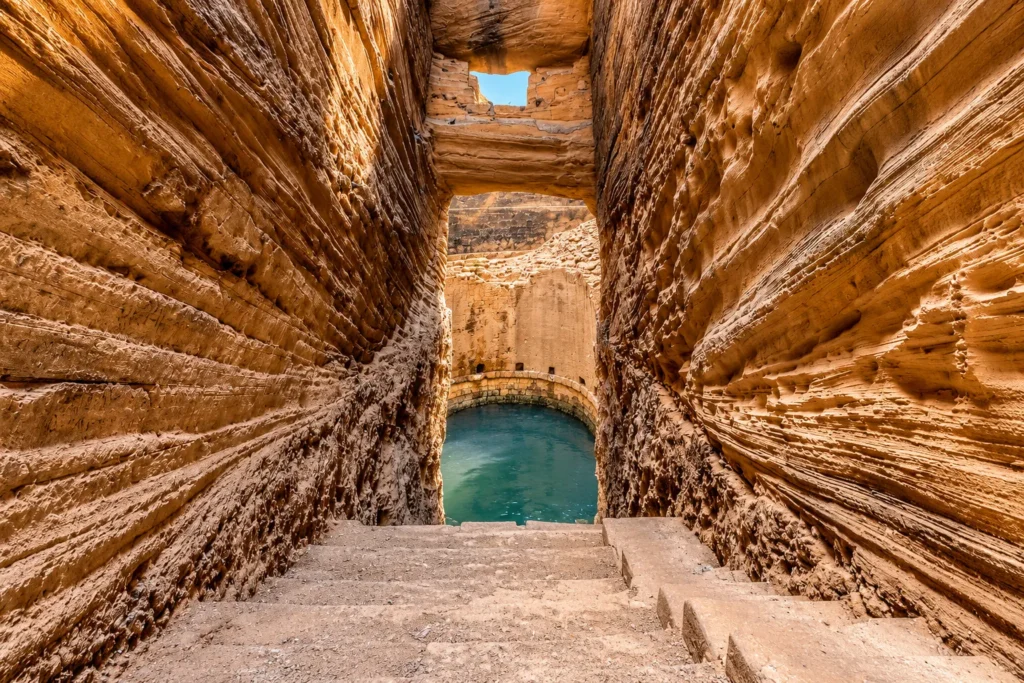
Adi Kadi Vav is one of Uparkot’s defining structures.
The Junagadh district administration dates the stepwell to the 15th century and describes it as being carved entirely out of hard rock. A long flight of approximately 120 steps descends toward the well shaft.
Unlike the ornate, built-up stepwells seen elsewhere in Gujarat, Adi Kadi Vav has a stark, excavated quality: much of the structure is essentially a deep cut into the rock.
The legend of Adi and Kadi
There are two well-known explanations for the name.
The dramatic version says that workers could not find water while excavating the well. A priest supposedly declared that two unmarried girls had to be sacrificed before water would appear. Adi and Kadi were chosen, and water was subsequently found.
The second, less dramatic explanation is that Adi and Kadi were servant girls associated with the royal household who fetched water from the well.
The district administration itself presents both accounts and describes the latter as probably more likely. The sacrifice story should therefore be presented as local legend, not established history.
3. Navghan Kuvo
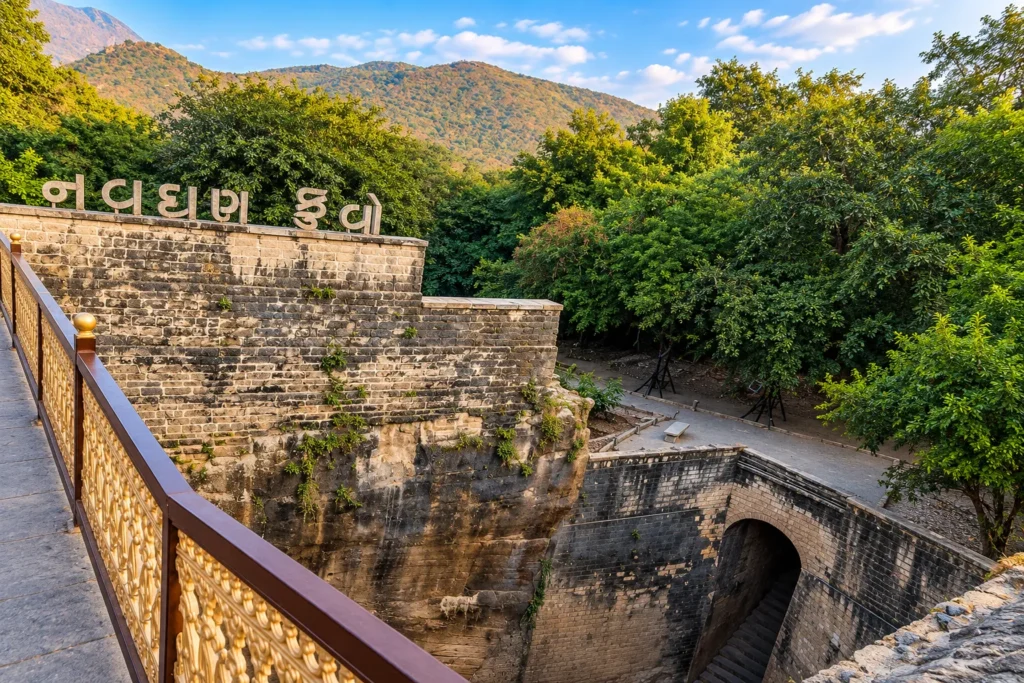
Navghan Kuvo demonstrates a different approach to subterranean water architecture.
The Junagadh district administration says the well is apparently associated with 1026 AD, while also noting that some accounts consider it older. Its staircase descends about 52 metres and spirals around the well shaft.
This is one of the most striking engineering features inside Uparkot. The structure is partly hewn from rock and partly constructed, producing a very different spatial experience from a conventional stepwell.
Its association with water security also helps explain why wells mattered so much inside a fortified settlement.
4. Buddhist caves
The so-called Buddhist caves around Uparkot are another reason the fort cannot be understood simply as a medieval military monument.
Gujarat Tourism describes the cave groups as rock-cut monastic quarters rather than conventional natural caves. The complex includes the Khapara-Kodia group and the more elaborate Baba Pyara caves, while the Uparkot area contains additional rock-cut chambers.
These remains belong to the wider early Buddhist architectural tradition of Junagadh. Some of the cave complexes are generally dated to the early centuries of the Common Era, with different groups belonging to different phases.
The caves are important because they demonstrate that the rocky landscape around Junagadh was being adapted for religious and residential purposes long before the fort acquired its later medieval appearance.
5. Jama Masjid / former palace complex
The former Jama Masjid is one of the most historically complicated structures within Uparkot.
The building is associated with the 15th-century Gujarat Sultanate and the reign of Mahmud Begada. Local tradition has also identified it as the palace of the legendary Ranakdevi.
For a careful historical account, it is better not to state simply that “Ranakdevi’s palace became the Jama Masjid” as an unquestioned fact. The identification of the earlier structure and its relationship with the Ranakdevi tradition is contested.
What can be said more securely is that the surviving building belongs to the fort’s Sultanate-era architectural layer and displays Islamic architectural features alongside evidence of earlier building traditions and reused material.
6. Neelam and Manek cannons
The cannons provide another glimpse of Uparkot’s military history.
Gujarat Tourism identifies the Neelam and Manek cannons as historic artillery associated with the conflicts of the 16th century. They are generally described as having been brought from the Diu theatre of conflict and having an Ottoman/Turkish connection.
They are worth seeing not simply because of their size, but because they illustrate how the fort’s defensive technology changed long after its original walls were established.
7. Other restored features
The recent conservation programme has also brought attention to less famous parts of the fort, including the granary or Anaj Bhandar, lime-processing areas, water-management structures, cannon displays and visitor pathways.
These details help reveal something easy to miss when concentrating only on the famous stepwells: Uparkot was an operating fortified settlement with systems for water, storage, defence and movement.
How much time do you need at Uparkot Fort?
Allow around 2–3 hours for a meaningful visit.
A shorter visit can cover the principal monuments, but a slower itinerary is worthwhile if you want to explore the Buddhist caves, descend toward the water structures, walk the ramparts and spend time with the fort’s architectural details.
If you are combining Uparkot with the Ashoka Rock Edicts, Mahabat Maqbara and other Junagadh monuments, plan at least half a day for the heritage circuit.
Uparkot Fort timings
The fort’s current visitor-information page lists the standard opening hours as:
8:00 am to 4:00 pm
The same source warns that timings can vary according to season or other circumstances, so visitors should verify the hours shortly before travelling.
A recent change is the introduction of a light-and-sound show. The show was reported as launching on 28 September 2026. The launch announcement reported an introductory ticket of ₹50 for the first 15 days, while the current fort fee schedule lists the regular Indian-adult price at ₹177 including GST.
Do not assume that the light-and-sound schedule is the same as the daytime fort opening hours.
Uparkot Fort entry fee
The current fee schedule published by the fort lists:
- Junagadh child below 12: ₹25
- Junagadh resident, age 12 and above: ₹50
- Indian child below 12: ₹50
- Indian visitor, age 12 and above: ₹100
- Foreign visitor: ₹500
The published schedule currently shows no additional GST on these standard fort-entry amounts.
There are separate charges for services such as the electric vehicle, guide, professional camera, locker and light-and-sound show.
Because older travel websites continue to display substantially lower historical prices, it is particularly important not to rely on an old blog when budgeting for Uparkot.
How to reach Uparkot Fort
By road
Junagadh is connected by road with major cities and towns in Gujarat. State transport and private buses serve the city.
Within Junagadh, Uparkot is centrally located in the historic part of the city, close to several other major heritage attractions.
By train
Junagadh is on the Western Railway network and has rail connections with other parts of Gujarat and India.
The railway station is a practical option for travellers arriving without a private vehicle.
By air
Gujarat Tourism identifies Rajkot as the nearest major airport, roughly 100 km from Junagadh, although the exact driving distance depends on the route.
Keshod Airport is another regional option and is closer geographically, but flight availability should be checked for your travel date.
Best time to visit Uparkot Fort
For comfortable sightseeing, the cooler months from November to February are generally preferable.
The fort involves walking, exposed ramparts and steps, so summer afternoons can be uncomfortable. If visiting outside winter, an early start is sensible.
The daytime hours currently listed by the fort also make morning visits particularly practical.
Practical tips for visiting
Wear comfortable footwear
There are uneven paths, slopes and substantial numbers of steps around the fort’s major structures.
Carry water
Even though visitor facilities have improved, Uparkot remains a large heritage complex. Do not underestimate the amount of walking involved.
Be careful around edges and old structures
The fort contains steep drops, wells, uneven surfaces and historic masonry. Follow barriers and visitor instructions rather than climbing walls or entering restricted areas.
Check what you can carry inside
The fort’s current rules prohibit a range of items, including eatables, drones, tripods, intoxicants and certain other equipment. Mobile-phone photography is permitted, while photography or videography with other equipment may require a paid permit.
Allow extra time if you want the caves
The Buddhist caves are not simply another photo stop. Their rock-cut chambers are best appreciated slowly.
Consider the electric vehicle
An electric hop-on-hop-off service is currently listed among the fort’s paid visitor services. It can be useful for visitors who would prefer to reduce the amount of walking.
Check current conditions before setting out
Uparkot experienced a temporary closure in late August and early September 2026 after a leopard was sighted within the fort complex. The animal was subsequently captured and the fort reopened to visitors. The incident is a useful reminder that even published opening hours can be overridden by safety or conservation circumstances.
Nearby attractions in Junagadh
Uparkot works particularly well as part of a wider Junagadh heritage itinerary.
Ashoka Rock Edicts
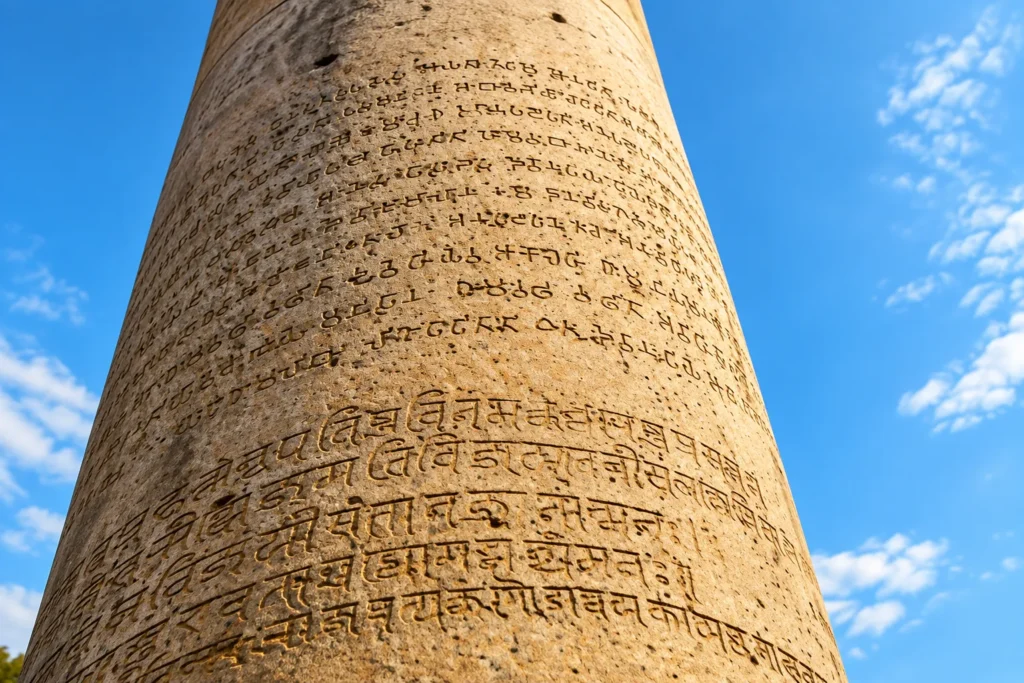
The Ashoka Rock Edicts are among the most important ancient monuments in the city. The Junagadh district administration dates the edicts to around 250 BC.
The site is particularly valuable when visited alongside Uparkot because it places the fort’s early-history traditions within the much better documented Mauryan-era archaeological landscape of Junagadh.
Girnar Hill

Girnar dominates the landscape east of Junagadh and is both a major pilgrimage destination and a significant natural and historical landmark.
If you intend to climb Girnar, treat it as a separate substantial activity rather than something to squeeze into the same short sightseeing window as Uparkot.
Mahabat Maqbara
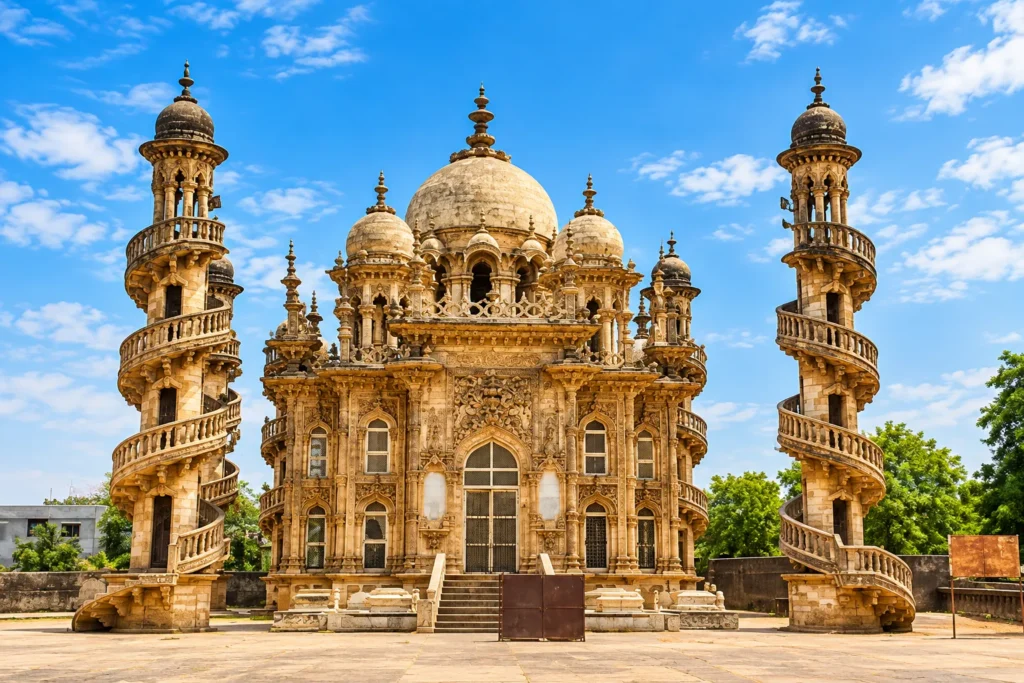
The elaborate Mahabat Maqbara complex is another of Junagadh’s architectural highlights and provides a striking contrast with the fort’s defensive and rock-cut architecture.
Sakkarbaug Zoological Garden
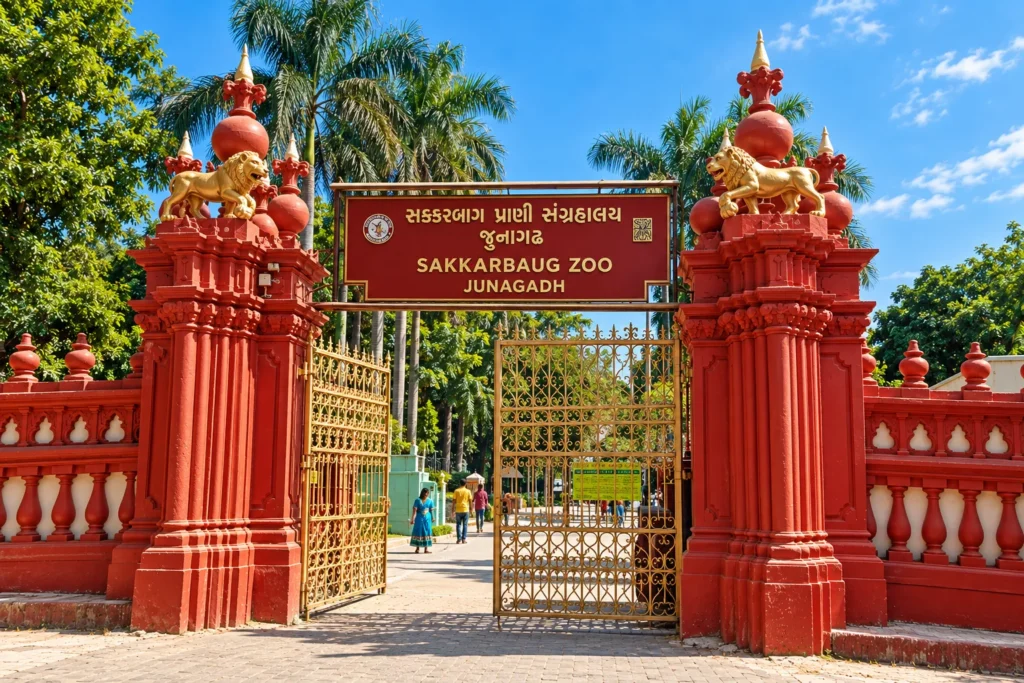
Sakkarbaug is one of Junagadh’s long-established attractions and can be added to an itinerary if you have more time in the city.
A useful Junagadh heritage itinerary
For travellers primarily interested in history, a logical sequence is:
Morning: Ashoka Rock Edicts → Uparkot Fort → Adi Kadi Vav → Navghan Kuvo → Buddhist caves
Afternoon: Mahabat Maqbara → Junagadh’s historic centre
Separate day or longer stay: Girnar
This arrangement lets you move chronologically as well as geographically—from the Mauryan-era inscriptions to the layered medieval fort and later Junagadh architecture.
Is Uparkot Fort worth visiting for history lovers?
Uparkot’s real strength is not a single spectacular monument. It is the concentration of different historical layers inside one fortified landscape.
The early-history tradition associated with the Mauryan period, Buddhist rock-cut architecture, Chudasama-era water structures, Gujarat Sultanate buildings and later artillery all survive within the same complex.
The result is a monument where the architecture itself tells the story of changing political power, technology and water management.
Just remember that not every story attached to Uparkot has the same historical status. The Mauryan foundation date, the rediscovery narrative, the 12-year siege and the stories surrounding Adi and Kadi all require different degrees of qualification.
That distinction makes the fort more interesting, not less: Uparkot is a place where archaeology, documented history and living local tradition overlap.
Frequently asked questions
1. What is Uparkot Fort famous for?
Uparkot Fort is famous for its ancient fortifications, Adi Kadi Vav, Navghan Kuvo, Buddhist rock-cut caves, historic cannons, former Jama Masjid and views over Junagadh.
2. How old is Uparkot Fort?
Gujarat Tourism associates Uparkot with a traditional Mauryan-period date of 319 BC, but describes that origin as something the fort is believed to have. The surviving complex has been altered and expanded over many centuries, so it is more accurate to describe Uparkot as a multi-period historic fort than as a monument built entirely in 319 BC.
3. What are Uparkot Fort’s timings?
The current visitor-information page lists 8:00 am to 4:00 pm for the fort. Timings may change, so verify them before travelling.
4. What is the Uparkot Fort entry fee?
The current listed fee is ₹100 for Indian visitors aged 12 and above, ₹50 for Indian children below 12, ₹50 for eligible Junagadh residents aged 12 and above, ₹25 for Junagadh children below 12, and ₹500 for foreign visitors.
5. How much time is needed for Uparkot Fort?
Allow approximately 2–3 hours if you want to see the major structures rather than simply enter, photograph the fort and leave.
6. Is Navghan Kuvo inside Uparkot Fort?
Yes. Navghan Kuvo is another major rock-cut water structure inside Uparkot.
Final takeaway
Uparkot Fort is best understood as a layered heritage complex rather than a single ancient fort frozen in time.
Its defensive walls and gateways explain its military role; Adi Kadi Vav and Navghan Kuvo demonstrate sophisticated approaches to water security; the Buddhist caves connect Junagadh to early rock-cut monastic traditions; and the later mosque, cannons and other structures record successive phases of political and architectural change.
For a first visit, give it at least two hours, start early, wear shoes suitable for uneven surfaces, and make time for the stepwells and caves rather than seeing only the main gateway.
Most importantly, treat the legends as part of Uparkot’s cultural history while keeping them separate from what can actually be established from historical and archaeological evidence.