


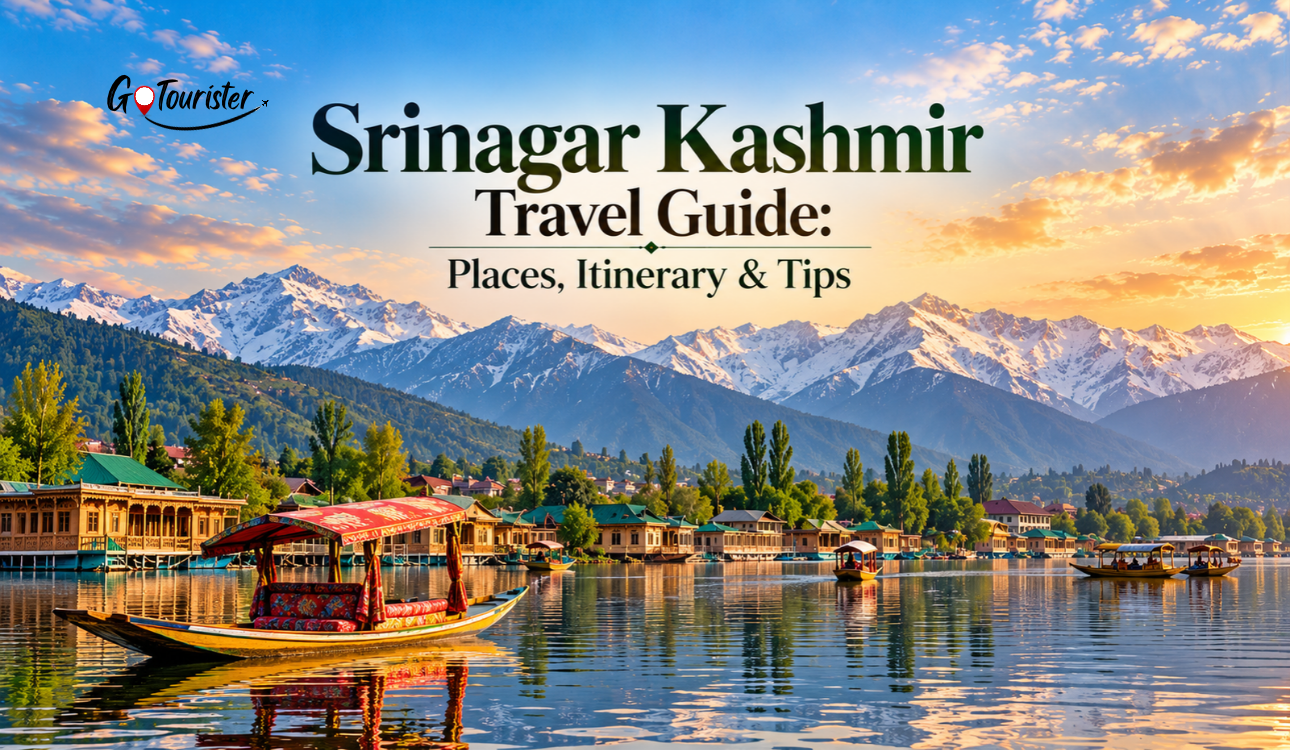
Srinagar is one of the most beautiful destinations in northern India, known for its peaceful lakes, snow-covered mountain views, historic gardens and traditional Kashmiri culture. Located in the Kashmir Valley along the Jhelum River, the city offers a memorable combination of natural beauty, heritage, shopping and local cuisine.
From watching the sunrise over Dal Lake to staying in a traditional houseboat, Srinagar gives visitors several ways to experience Kashmir beyond its famous photographs. The city is also an excellent starting point for exploring nearby destinations such as Gulmarg, Pahalgam and Sonamarg.
Whether you are planning a family holiday, a honeymoon, a photography trip or a relaxing mountain escape, this Srinagar Kashmir travel guide covers the major attractions, activities, food, accommodation options and travel arrangements you should know before planning your visit.
Why Should You Visit Srinagar?
Srinagar offers a different experience in every season. Spring brings colourful flowers and blooming gardens, summer provides pleasant weather for sightseeing, autumn transforms the chinar trees into shades of gold and red, and winter introduces a colder landscape with opportunities to experience snowfall when conditions permit.
The city is especially popular for its traditional houseboats, shikara rides, Mughal-era gardens, Kashmiri handicrafts and distinctive cuisine. Visitors can spend their mornings exploring historical landmarks, afternoons shopping in local markets and evenings enjoying views of the surrounding mountains.
Another advantage is its location. Srinagar provides convenient access to several popular destinations in the Kashmir Valley, making it suitable for both short city breaks and longer holidays.
Best Places to Visit in Srinagar, Kashmir
1. Dal Lake
Dal Lake is the most recognisable attraction in Srinagar and a major highlight of any Kashmir holiday. Surrounded by mountains and traditional houseboats, the lake offers beautiful scenery throughout the day.
A shikara ride is one of the most popular activities here. These traditional wooden boats take visitors across the water, past floating gardens, lakeside settlements and other scenic spots. Early mornings offer a peaceful atmosphere, while evenings provide beautiful sunset views.
Visitors can also explore the lake’s floating market, depending on the time and local activity. For a memorable experience, consider staying in a well-reviewed houseboat and enjoying the views directly from the water.
2. Nishat Bagh
Nishat Bagh is a historic Mughal garden located along the eastern side of Dal Lake. It is known for its terraced layout, fountains, green lawns and views of the Zabarwan mountain range.
The garden is particularly attractive during spring and summer, when flowers and greenery create a refreshing setting. Its elevated terraces also provide excellent viewpoints for photography.
Nishat Bagh is a good choice for travellers who enjoy history, landscaped gardens and peaceful outdoor walks.
3. Shalimar Bagh
Shalimar Bagh is another important Mughal-era garden in Srinagar. Built during the reign of Emperor Jahangir, it reflects the architectural and landscaping traditions associated with the Mughal period.
The garden features landscaped terraces, water channels, fountains and rows of trees. Its historical character and carefully designed layout make it a worthwhile stop for visitors interested in Kashmir’s royal heritage.
You can combine Shalimar Bagh with Nishat Bagh during the same sightseeing day.
4. Shankaracharya Temple
Situated on Shankaracharya Hill, this ancient temple is one of Srinagar’s important religious landmarks. Its elevated location offers impressive views of Dal Lake, the city and the surrounding landscape.
The visit involves reaching the hilltop and climbing steps to the temple area. Travellers should check current access arrangements and follow the site’s rules before visiting.
Because the temple is a place of worship, modest clothing and respectful behaviour are recommended.
5. Hazratbal Shrine
Hazratbal Shrine is a prominent Muslim religious site on the northern side of Dal Lake. Its white architecture and lakeside setting make it one of Srinagar’s most recognisable landmarks.
The shrine holds deep religious significance and attracts visitors throughout the year. Its peaceful surroundings and views across the lake add to the experience.
Visitors should dress respectfully and check any restrictions relating to entry, photography and visiting hours.
6. Chashme Shahi
Chashme Shahi is a smaller historic garden known for its natural spring, landscaped terraces and views of the Kashmir Valley.
Compared with some of Srinagar’s larger gardens, it can be explored in a relatively short visit. It is particularly suitable for travellers who want to include several gardens in their itinerary without spending the entire day at one location.
7. Pari Mahal
Pari Mahal is a historic terraced monument situated above Dal Lake. Its elevated position offers panoramic views of the city, the lake and the surrounding mountains.
The site combines historical architecture with scenic surroundings, making it popular among photographers and visitors interested in Srinagar’s heritage.
It can be included alongside Chashme Shahi, depending on available time and current access conditions.
8. Old Srinagar and Jamia Masjid
Old Srinagar offers a closer look at the city’s traditional architecture, religious heritage, markets and everyday life. The historic neighbourhoods around Jamia Masjid are particularly interesting for visitors who want to explore beyond the lakeside tourist areas.
Jamia Masjid is known for its distinctive wooden architecture and spacious courtyard. Nearby streets offer opportunities to discover traditional shops, local food and handicrafts.
A walk through the old city can provide a deeper understanding of Srinagar’s cultural identity. Visitors should dress appropriately when entering religious sites and ask permission before photographing people.
9. Nigeen Lake
Nigeen Lake offers a quieter alternative to some of the busier areas of Dal Lake. Surrounded by trees and mountains, it is a suitable destination for travellers seeking a more relaxed lakeside atmosphere.
The lake is known for its houseboats and boating experiences. Accommodation options here may appeal to couples and visitors who prefer a peaceful setting away from the busiest tourist areas.
When choosing between Dal Lake and Nigeen Lake, compare the location, facilities, reviews and accessibility of individual properties.
10. Lal Chowk and Local Markets
Lal Chowk is one of Srinagar’s well-known commercial areas and a useful stop for shopping and experiencing city life.
Visitors can explore shops selling clothing, handicrafts, dry fruits and other local products. Depending on the market and seller, you may also find traditional Kashmiri textiles and decorative items.
Take time to compare prices, particularly when purchasing expensive products such as Pashmina shawls or handcrafted goods.
Best Things to Do in Srinagar
Srinagar is not just about sightseeing. The city also offers several experiences that allow visitors to enjoy its landscape, traditions and local lifestyle.
Enjoy a shikara ride: Take a boat ride on Dal Lake or Nigeen Lake and admire the surrounding scenery. Early morning and late afternoon are popular times, although the experience varies with weather and season.
Stay in a traditional houseboat: A houseboat stay provides a different type of accommodation experience. Before booking, confirm the exact property, room facilities, heating, meals, access arrangements and recent guest reviews.
Explore the Mughal gardens: Spend time walking through Nishat Bagh, Shalimar Bagh and Chashme Shahi to discover their historical layouts, fountains and scenic viewpoints.
Taste Kashmiri cuisine: Try traditional dishes such as Rogan Josh, Dum Aloo, Yakhni and Kashmiri Kahwa. Travellers interested in a traditional Wazwan meal can ask restaurants about available menus and serving arrangements.
Shop for local handicrafts: Srinagar is known for products such as papier-mâché crafts, walnut woodwork, carpets, embroidered textiles and Pashmina shawls. Check product authenticity and compare prices before purchasing.
Explore the old city: Walk through traditional neighbourhoods, visit historic landmarks and discover local markets to experience another side of Srinagar.
Best Time to Visit Srinagar, Kashmir
The ideal time to visit Srinagar depends on the kind of holiday you want. Each season offers a different combination of scenery, weather and activities.
Spring: March to April
Spring is a beautiful time to explore Srinagar’s gardens and enjoy the changing landscape. Flowers begin to bloom, and the famous Indira Gandhi Memorial Tulip Garden becomes a seasonal attraction.
The exact flowering period varies with weather conditions, so check the garden’s opening dates before planning your visit around the tulips.
Summer: May to August
Summer is popular for sightseeing, shikara rides and exploring the wider Kashmir Valley. The weather is generally more comfortable than in many Indian plains, making this period suitable for families and first-time visitors.
However, popular tourist areas can become busy during peak holiday periods. Booking accommodation and transport in advance is advisable.
Autumn: September to November
Autumn brings changing colours to Srinagar’s chinar trees and creates a distinctive atmosphere around the lakes and gardens.
This season is especially appealing to photographers and travellers who prefer cooler weather and colourful landscapes.
Winter: December to February
Winter is the season for experiencing Srinagar’s cold weather and occasional snowfall. Temperatures can fall significantly, and Dal Lake may develop icy patches during particularly cold periods.
Snowfall in Srinagar itself is not guaranteed. Visitors hoping to see snow should check current weather forecasts and road conditions before travelling to higher-altitude destinations.
How to Reach Srinagar
Srinagar is accessible by air and road, while rail journeys generally require a combination of train travel and onward connections depending on the departure city and available services.
By Air
Srinagar International Airport is the most convenient arrival point for many visitors. Flights connect Srinagar with major Indian cities, with routes and frequencies depending on the airline and season.
After landing, travellers can arrange a prepaid taxi, an authorised transfer or transport through their hotel. Confirm the transfer cost and pickup location before starting the journey.
By Train
Rail travel can be part of the journey to Kashmir, but the appropriate route depends on your starting location and current train services. Travellers may use rail connections through Jammu or services operating within the Kashmir Valley, where available.
Check the latest railway timetable and connectivity before booking, as the best route can differ by date and origin.
By Road
Srinagar is connected to Jammu and other parts of the region through road networks, including the Jammu–Srinagar National Highway.
Road journeys can be scenic, but travel times depend on traffic, weather, roadworks and mountain conditions. During winter or periods of heavy rain or snowfall, delays and temporary closures may occur.
For longer road journeys, check official traffic updates before departure and allow extra time.
How to Travel Around Srinagar
Local transport options include taxis, private cars, auto-rickshaws on suitable routes and shikaras for lake experiences.
For sightseeing across different parts of the city, hiring a local taxi or arranging a private vehicle can make the day easier. If you plan to visit multiple gardens, religious landmarks and nearby destinations, discuss the itinerary and total fare with the driver in advance.
Walking is useful for exploring market areas and parts of the old city, although traffic, pedestrian access and local conditions vary.
For destinations outside Srinagar, such as Gulmarg, Pahalgam and Sonamarg, check the transport arrangements for each location. Certain local sightseeing areas may have separate vehicle or access requirements.
Famous Food to Try in Srinagar
Kashmiri cuisine is an important part of the travel experience. The region is known for aromatic spices, slow-cooked meat dishes, rice preparations, yoghurt-based gravies and traditional beverages.
Here are some popular options to look for during your visit.
Rogan Josh: A well-known Kashmiri meat preparation cooked with aromatic spices and a rich gravy.
Kashmiri Dum Aloo: Potatoes prepared in a spiced gravy, with recipes varying between restaurants and households.
Yakhni: A traditional yoghurt-based curry commonly prepared with meat and aromatic seasonings.
Wazwan: A traditional Kashmiri multi-course feast, especially associated with celebrations and gatherings.
Kashmiri Kahwa: A traditional tea-style drink prepared with green tea and aromatic ingredients such as saffron, cardamom and cinnamon. Recipes vary, and almonds may also be added.
Kashmiri breads: Local bakeries offer traditional breads that pair well with tea and make for a simple breakfast or snack.
Food preferences and preparation methods differ between establishments, so ask about ingredients if you have dietary restrictions.
Where to Stay in Srinagar
Srinagar offers accommodation for different budgets, from economical guesthouses to premium hotels and traditional houseboats.
Houseboats on Dal Lake: Suitable for visitors who want a distinctive Kashmir experience with lake views and access to shikara rides.
Accommodation around Boulevard Road: A convenient option for travellers who want to stay near Dal Lake, restaurants and popular sightseeing areas.
Hotels in central Srinagar: These can be useful for visitors who prioritise city access, shopping and transport connections.
Stays around Nigeen Lake: Worth considering for a quieter lakeside atmosphere, depending on the property’s location and facilities.
When comparing properties, look beyond photographs. Check recent guest reviews, heating facilities during winter, bathroom amenities, meal options, cancellation policies and the exact distance from your planned attractions.
Suggested 3-Day Srinagar Itinerary
A three-day itinerary gives first-time visitors enough time to explore the city’s main attractions without making every day feel rushed.
Day 1: Dal Lake and Lakeside Experiences
Arrive in Srinagar and check into your hotel or houseboat. Keep the first part of the day flexible, especially if your flight arrives late or you have travelled a long distance.
Spend the afternoon exploring Dal Lake and enjoying a shikara ride. If time permits, take a walk around the lakeside area and enjoy dinner at a local restaurant.
Stay overnight in Srinagar.
Day 2: Mughal Gardens and Scenic Viewpoints
Start the day with a visit to Nishat Bagh and Shalimar Bagh. Continue to Chashme Shahi and Pari Mahal if access and timing allow.
You can also include Shankaracharya Temple, depending on your preferred route and physical comfort.
Finish the day with a relaxed evening around Dal Lake or at your accommodation.
Stay overnight in Srinagar.
Day 3: Old City, Shrines and Shopping
Visit Hazratbal Shrine and explore the historic parts of Srinagar, including the area around Jamia Masjid.
Spend some time browsing local markets for handicrafts, traditional textiles and dry fruits. If your departure is later in the day, keep sufficient time for airport transfers.
If you have an additional day, consider a trip to Gulmarg, Pahalgam or Sonamarg instead of trying to fit a distant destination into an already busy sightseeing schedule.
Explore More Places Near Srinagar
Srinagar is an excellent base for discovering other popular destinations in Kashmir. If you have five to seven days available, consider extending your trip beyond the city.
Gulmarg: Known for mountain scenery, meadows, winter sports and the Gulmarg Gondola. Gondola operations and access to higher areas depend on weather and operating conditions.
Pahalgam: Popular for river views, pine forests and scenic valleys, including Aru Valley and Betaab Valley. Local sightseeing arrangements may vary by destination.
Sonamarg: Known for dramatic mountain landscapes, river scenery and seasonal access to high-altitude attractions. Snow and road conditions influence which areas can be visited.
These destinations are spread across the valley, so avoid assuming that all three can be explored comfortably as short excursions from Srinagar on consecutive days without substantial road travel.
Travel Tips for Visiting Srinagar
A little preparation can make a Kashmir holiday more comfortable and easier to manage.
- Pack according to the season: Carry warm layers for cooler evenings and winter trips. Weather can change quickly, especially in the mountains.
- Check weather and road conditions: Review current forecasts and access updates before travelling to Gulmarg, Pahalgam or Sonamarg.
- Book accommodation carefully: Read recent reviews and confirm the facilities included in your booking, especially for houseboats.
- Plan realistic travel days: Avoid scheduling too many distant attractions on the same day.
- Respect local customs: Dress appropriately at religious sites and follow photography restrictions.
- Compare shopping prices: Ask about the material, workmanship and authenticity of expensive handicrafts before making a purchase.
- Keep some flexibility: Weather, traffic and seasonal opening schedules can affect your plans.
- Confirm transport costs: Agree on the fare and sightseeing stops before beginning a private taxi journey.
- Carry essential documents: Keep identification, booking details and travel confirmations accessible.
- Check current travel advisories: Review relevant official guidance and local conditions before departure.
Estimated Budget for a Srinagar Trip
The total cost of a Srinagar holiday depends on your departure city, travel season, accommodation, food preferences, group size and sightseeing plans.
Budget travellers may reduce costs by choosing simple accommodation, eating at reasonably priced local restaurants and sharing transport. Mid-range travellers can consider comfortable hotels, selected houseboat stays and private sightseeing transfers. Premium trips may include luxury accommodation, upgraded houseboats and customised travel arrangements.
Flights or long-distance train journeys can make a significant difference to the overall budget. Popular holiday periods and winter travel dates may also affect accommodation and transport prices.
For a useful estimate, calculate your expenses under five categories: transport to Srinagar, accommodation, meals, local travel and sightseeing. Add a reserve for shopping and unexpected travel changes. Compare current prices for your intended dates rather than relying on a fixed budget published for another season.
Conclusion
Srinagar combines natural beauty, traditional architecture, historic gardens and distinctive local culture in a way that makes it one of India’s most memorable holiday destinations. From a peaceful shikara ride on Dal Lake to exploring Mughal gardens and tasting Kashmiri cuisine, the city offers experiences for different kinds of travellers.
Three days is a useful starting point for exploring Srinagar itself, while five to seven days allows more time for nearby destinations such as Gulmarg, Pahalgam and Sonamarg. By choosing the right season, checking local travel conditions and planning a balanced itinerary, visitors can enjoy a more comfortable and rewarding Kashmir holiday.
FAQs
How many days are enough to visit Srinagar?
Two to three days are generally sufficient to explore Srinagar’s main attractions, including Dal Lake, the Mughal gardens, historic landmarks and local markets. Allow additional days if you want to visit nearby mountain destinations.
What is Srinagar famous for?
Srinagar is famous for Dal Lake, shikara rides, traditional houseboats, Mughal gardens, Kashmiri handicrafts, historic religious sites and local cuisine.
Which month is best for visiting Srinagar?
April and May are popular for spring flowers and pleasant sightseeing, while September and October offer autumn colours. December to February is worth considering for a winter experience, although snowfall in the city is not guaranteed.
Is three days enough for Srinagar and Gulmarg?
Three days can cover Srinagar and a short visit to Gulmarg, but the schedule may feel rushed. Four days or more gives you additional flexibility for travel, sightseeing and weather-related changes.
Is a houseboat stay in Srinagar worth it?
Yes, a houseboat stay can be a memorable part of a Kashmir holiday. Compare recent reviews, facilities, heating, location and the exact property before booking.
What is the best way to reach Srinagar?
Flying into Srinagar International Airport is often the most convenient option for travellers from major Indian cities. Rail and road journeys are alternatives depending on your departure city and current transport services.
Can Srinagar be visited during winter?
Yes, Srinagar can be visited during winter. However, temperatures can fall considerably, so travellers should pack warm clothing and check weather, road and flight updates before departure.
What should I buy in Srinagar?
Popular purchases include Kashmiri handicrafts, papier-mâché products, walnut wood items, carpets, embroidered textiles, Pashmina shawls and dry fruits. Compare prices and confirm product authenticity before buying expensive items.
Is Srinagar suitable for a family holiday?
Srinagar can be a good family destination, with sightseeing, gardens, lake experiences and opportunities to explore local culture. Families should plan transport and activities according to children’s ages, weather conditions and individual mobility needs.
One response to “Srinagar Kashmir Travel Guide: Places, Itinerary & Tips”
[…] called “Paradise on Earth,” Kashmir remains one of the most romantic destinations in India. The stunning landscapes, […]