


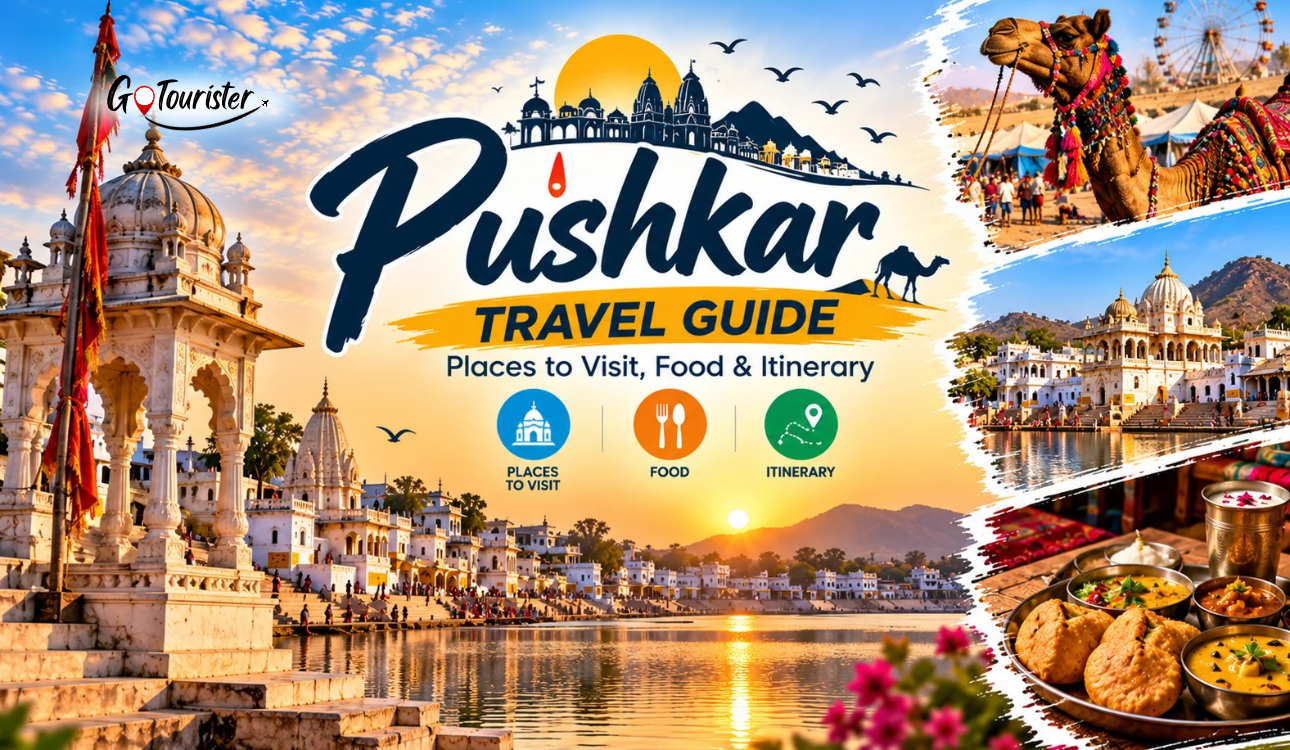
Pushkar is a place where Rajasthan reveals a different side of itself. Instead of grand forts and royal palaces, this small town welcomes travellers with sacred lakefront steps, centuries-old temples, colourful bazaars, rooftop cafés and desert landscapes that glow under the evening sun. Located near Ajmer and surrounded by the Aravalli Hills, Pushkar offers a memorable mix of spirituality, culture and relaxed travel.
The town is best known for Pushkar Lake, the famous Brahma Temple and the annual Pushkar Camel Fair. However, there is much more to discover beyond these popular attractions. You can watch the first light of the morning fall across the ghats, explore narrow market lanes, visit hilltop temples, taste traditional Rajasthani sweets or head outside town for a camel ride across the desert.
Whether you are planning a weekend getaway, a spiritual journey, a solo trip or a longer Rajasthan holiday, this Pushkar travel guide covers the best places to visit, things to do, local food, shopping, travel routes and a practical two-day itinerary.
Pushkar at a Glance
| Travel Detail | Information |
|---|---|
| Location | Ajmer district, Rajasthan |
| Famous For | Pushkar Lake, Brahma Temple and Camel Fair |
| Best Time to Visit | October to March |
| Ideal Trip Duration | 1–2 days |
| Nearest Major Railway Station | Ajmer Junction |
| Nearest Major Airport | Jaipur International Airport |
| Local Transport | Walking, auto-rickshaws, taxis and selected two-wheeler rentals |
| Popular Experiences | Temple visits, lake walks, desert safaris and shopping |
Why Should You Visit Pushkar?
Pushkar stands apart from many other Rajasthan destinations because its appeal comes from a combination of faith, local traditions and a laid-back atmosphere. The town is an important Hindu pilgrimage centre, yet it also attracts backpackers, photographers, international visitors and people looking for a peaceful break.
According to Hindu mythology, Lord Brahma dropped a lotus flower to the earth, and Pushkar Lake emerged where its petals fell. The sacred lake remains the centre of religious life in the town, with temples and bathing ghats surrounding its banks.
Beyond its spiritual identity, Pushkar is known for its rose-growing traditions, traditional crafts, vegetarian food, café culture and desert experiences. Its compact centre also makes it easy to explore many attractions on foot.
Pushkar is especially suitable for travellers who want to slow down rather than rush between sightseeing spots. You can spend the morning visiting temples, enjoy a leisurely lunch, browse local shops in the afternoon and end the day watching the sunset over the surrounding hills.
Best Places to Visit in Pushkar
1. Pushkar Lake: The Spiritual Heart of the Town
A visit to Pushkar feels incomplete without spending time beside Pushkar Lake, also known as Pushkar Sarovar. Surrounded by 52 bathing ghats and numerous temples, the lake holds deep religious significance for Hindu devotees.
The atmosphere changes throughout the day. Early mornings often bring a quieter setting, with pilgrims visiting the ghats and the sound of temple bells carrying across the water. In the evening, the lakefront becomes a beautiful place to observe local rituals and enjoy the changing colours of the sky.
You can walk along the ghats, admire the surrounding architecture and learn about the lake’s religious traditions. However, remember that these are sacred spaces rather than ordinary tourist viewpoints. Follow local instructions, avoid restricted photography and respect people performing rituals.
Best experience: Visit early in the morning for a peaceful walk or around sunset for the atmosphere and views.
2. Brahma Temple: One of Pushkar’s Most Important Landmarks
The Brahma Temple is one of the town’s most recognisable attractions. Dedicated to Lord Brahma, the Hindu deity associated with creation, it is among the very few prominent temples dedicated to him.
The temple is known for its red spire, sacred symbolism and distinctive idol of Brahma with four faces. Its religious importance draws devotees throughout the year, particularly during important Hindu observances and the Pushkar pilgrimage season.
The temple is close to the lake and can easily be included in a walking route through the old town. Visit with enough time to follow the temple’s entry procedures, which may vary during busy periods.
Dress respectfully, follow the instructions of temple authorities and check the current visiting arrangements before travelling.
3. Savitri Temple: Hilltop Views Over Pushkar
For a different perspective of the town, head towards Savitri Temple on Ratnagiri Hill. Dedicated to Goddess Savitri, the temple is a popular destination for both pilgrims and travellers who enjoy panoramic views.
The elevated location provides sweeping views of Pushkar Lake, the surrounding settlements and the Aravalli landscape. Sunrise and sunset are particularly appealing times to visit, although the climb and conditions should influence your plans.
Depending on current operations, visitors may be able to reach the temple using the ropeway or by climbing the steps. Check availability and operating hours before setting out.
If you choose to walk uphill, carry water, wear comfortable footwear and allow extra time in hot weather.
4. Varaha Temple: A Glimpse of Ancient Religious Heritage
The Varaha Temple is dedicated to Lord Vishnu’s boar incarnation, known as Varaha. It is one of Pushkar’s significant historic temples and adds another layer to the town’s religious landscape.
The temple’s history, architecture and devotional traditions make it worth including in a heritage walk. It is also a useful stop for travellers who want to explore beyond the better-known Brahma Temple.
As with other religious sites, check current access arrangements and respect any restrictions during worship.
5. Rangji Temple: A Distinctive Blend of Architectural Styles
Rangji Temple stands out because its architecture reflects different influences, including South Indian, Rajput and Mughal styles. Its prominent gateway and distinctive design make it one of Pushkar’s most interesting religious landmarks.
The temple is dedicated to Lord Rangji, associated with Lord Vishnu. It offers a different architectural experience from the Brahma Temple and helps visitors understand the variety of traditions represented in Pushkar.
Check local access timings before visiting, as entry arrangements may differ between temple sections or during religious occasions.
6. Pushkar Bazaar: Shop for Handicrafts and Traditional Finds
The markets around the town centre are among the most enjoyable places to explore at a relaxed pace. Pushkar Bazaar and the surrounding shopping lanes sell colourful textiles, embroidered clothing, jewellery, accessories, handicrafts and souvenirs.
You may also find items such as decorative wall hangings, bags, traditional garments, silver-look jewellery and rose-based products. The range varies by shop and season, so take time to compare quality and prices.
Bargaining may be possible in some stores, but keep the conversation polite. If you are buying jewellery or other higher-value products, check the material and ask for a receipt where appropriate.
7. Pushkar Camel Fair Ground: Experience Rajasthan’s Festival Culture
The Pushkar Camel Fair is one of Rajasthan’s best-known cultural events. Traditionally associated with the Kartik period and Kartik Purnima, the fair combines livestock trading with religious activity, local markets and cultural programmes.
Depending on the year’s schedule, visitors may encounter camel and livestock displays, competitions, folk performances, handicraft stalls and other organised events. The exact dates and programme change annually, so check the official schedule before planning your visit around the fair.
Outside the festival period, the fairground may still be part of desert excursions or local sightseeing routes. However, the atmosphere during the main event is very different from that of an ordinary day in Pushkar.
Accommodation can become expensive and availability may be limited during the fair. Book transport and rooms early if you intend to visit during this busy period.
8. Man Mahal: Heritage Architecture Beside the Lake
Man Mahal is a historic palace associated with Raja Man Singh I of Amber. Located near Pushkar Lake, it is known for its traditional Rajasthani architectural character and lake-facing setting.
The building has also been associated with heritage accommodation, so check its current use and public-access arrangements before including an interior visit in your plan.
Even if you only admire the building from the surrounding area, it offers another perspective on Pushkar’s historic relationship with royal visitors, religious travellers and the lake.
9. Gurudwara Singh Sabha: A Place of Peace and Reflection
Gurudwara Singh Sabha commemorates the visits of Sikh Gurus to Pushkar and provides another important dimension to the town’s religious heritage.
Visitors can experience a calm environment away from the busier market lanes. Follow the gurudwara’s etiquette, cover your head as required and respect the customs of the place.
10. Desert Outskirts and Sunset Viewpoints
The landscape beyond Pushkar’s main streets offers a change of pace from temples and shopping. Depending on the season and local operators, travellers can explore nearby rural routes, open landscapes and desert-style settings through guided excursions.
Camel rides and jeep safaris may be available, but the exact experience depends on the operator, route and weather. Choose responsible providers, agree on the price and duration in advance, and prioritise animal welfare and personal safety.
You do not need to book an expensive activity to enjoy the scenery. A quiet walk at an appropriate public viewpoint or a relaxed evening at a rooftop café can also make a memorable end to the day.
Best Things to Do in Pushkar
Pushkar rewards travellers who combine its famous landmarks with small local experiences. Consider adding these activities to your trip:
- Walk around Pushkar Lake: Explore the ghats in the morning and observe the town’s daily rhythm.
- Visit the Brahma Temple: Learn about the religious traditions that make Pushkar an important pilgrimage destination.
- Watch the evening rituals: Observe prayers and aarti where ceremonies are taking place, while respecting local customs.
- Explore the bazaars: Browse textiles, jewellery, handicrafts and regional souvenirs.
- Watch the sunset: Visit a suitable viewpoint or hilltop location, depending on access and weather.
- Try a desert excursion: Consider a camel ride or jeep safari with a reputable local operator.
- Enjoy the café culture: Spend time at a rooftop café or a relaxed restaurant in the old town.
- Attend the Camel Fair: If your dates match the annual event, experience its cultural programmes and festival atmosphere.
- Explore local wellness activities: Yoga and meditation sessions may be available at local centres and retreats.
You do not need to fit everything into one day. Choose a few experiences that suit your interests and leave room to explore the town at your own pace.
What to Eat in Pushkar
Food is an enjoyable part of a Pushkar visit. Many eateries cater to vegetarian preferences, reflecting the town’s religious atmosphere. You will find traditional Rajasthani dishes alongside Indian snacks and international café-style food.
Local Dishes Worth Trying
Dal Baati Churma: A classic Rajasthani combination of lentils, baked wheat balls and sweetened or flavoured crushed wheat.
Kachori: A popular snack with a crisp exterior and a savoury filling. It is often served with chutneys or spicy accompaniments.
Malpua: A sweet, syrup-soaked pancake that is especially popular in parts of Rajasthan.
Gatte Ki Sabzi: A traditional curry made with gram-flour dumplings cooked in a spiced gravy.
Rajasthani Thali: A useful option for trying several regional dishes in one meal.
Lassi and Rabri: These dairy-based favourites offer a sweet finish to a meal, depending on the preparation and availability.
Pushkar also has cafés serving dishes such as pizza, falafel, sandwiches and other international options. This variety makes the town convenient for travellers with different tastes.
Food offerings, opening hours and dietary practices vary by establishment. If you have specific dietary requirements, confirm ingredients with the restaurant before ordering.
Shopping in Pushkar: What Should You Buy?
Shopping is best enjoyed as a relaxed walk through the town rather than a rushed stop. Browse the main market streets for colourful clothing, embroidered textiles, handicrafts, bags, jewellery, home décor and small gifts.
Rose-based products are another interesting purchase because Pushkar and its surrounding region are associated with rose cultivation and rose products. Depending on the shop, you may find rose water, fragrance products and other locally marketed items.
Before buying, compare prices and check product quality. Ask whether an item is handmade, what material it contains and whether the shop can provide a receipt. For fragile purchases, request suitable packaging for your journey home.
Best Time to Visit Pushkar
The best time to visit Pushkar is generally from October to March, when the weather is more comfortable for sightseeing and outdoor activities.
October to March: Best for Sightseeing
Cooler weather makes it easier to walk around the lake, explore temples and markets, and plan desert excursions. This period also includes the season in which the Pushkar Camel Fair usually takes place, although the exact dates vary each year.
If you are visiting during the fair, expect larger crowds and higher demand for accommodation.
April to June: Hot Summer Days
Summer can bring intense daytime heat, making extended outdoor sightseeing uncomfortable. If you travel during these months, plan walks for early morning or late afternoon, carry water and take breaks indoors during the hottest part of the day.
July to September: Monsoon Season
The monsoon can bring occasional rain and greener surroundings. However, weather conditions may affect outdoor activities and travel plans. Check the forecast before arranging a desert excursion or hilltop visit.
Travel tip: For a first visit, choose a date between October and March if possible. If attending the Camel Fair is your priority, confirm the annual dates before booking.
How to Reach Pushkar
Pushkar is located near Ajmer and can be reached by air, train and road.
By Air
Jaipur International Airport is the nearest major airport commonly used by visitors travelling to Pushkar. It is roughly 145–150 km away by road, depending on the route and starting point.
From Jaipur, you can arrange a taxi or continue by bus and other available transport options. Allow extra time for road traffic, especially during festivals and peak travel periods.
By Train
Ajmer Junction is the main railway connection for most visitors. Ajmer is approximately 14–15 km from Pushkar, and the onward journey can be completed by taxi, auto-rickshaw or bus, depending on availability.
Check train schedules and onward transport before travelling, particularly if your train arrives late at night or during the busy fair season.
By Road
Pushkar is accessible by road from several Rajasthan cities. Approximate distances can vary according to your route and exact starting point.
| From | Approximate Road Distance |
|---|---|
| Ajmer | 15 km |
| Jaipur | 145–150 km |
| Jodhpur | 185–200 km |
| Delhi | Around 400–430 km |
| Udaipur | Around 280–300 km |
Buses, taxis and private vehicles are common options. Check current routes, travel times and bus availability before departure.
Getting Around Pushkar
The central area is compact, and walking is often the easiest way to visit the lake, temples and markets. Auto-rickshaws and taxis can help with longer distances, while two-wheeler rentals may be available through local providers.
Some streets around religious sites can be narrow or restricted to certain vehicles. Confirm where your accommodation is located and whether a vehicle can reach its entrance.
Where to Stay in Pushkar
Your choice of accommodation depends on whether you prefer easy access to the old town, a quieter retreat or a resort-style stay.
Budget stays: Guesthouses, hostels and simple hotels can suit solo travellers, backpackers and visitors who plan to spend most of their time sightseeing.
Mid-range hotels: These offer a balance of comfort and price, with options around the town and on its outskirts.
Resorts and luxury stays: Properties outside the busiest lanes may offer gardens, pools, spa facilities or a more secluded setting.
If you want to explore temples and markets on foot, choose accommodation within convenient walking distance of the central area. If you prefer open landscapes and a quieter atmosphere, consider a property outside the town centre and check transport arrangements.
Prices depend heavily on the season, room type and local events. Compare current rates and recent reviews rather than relying on fixed price estimates. Book early for the Camel Fair and other busy festival dates.
Suggested Two-Day Pushkar Itinerary
A two-day Pushkar itinerary provides enough time to explore the major attractions without making the trip feel rushed.
Day 1: Temples, Lake and Local Markets
Morning: Start with a walk around Pushkar Lake. Visit the Brahma Temple and spend time exploring the surrounding streets.
Afternoon: Enjoy lunch at a local restaurant, then visit Varaha Temple and Rangji Temple if they fit your interests and their visiting arrangements allow.
Evening: Browse Pushkar Bazaar and return to the lakefront to observe the evening atmosphere. Finish the day with dinner at a café or restaurant.
Day 2: Hilltop Views and Desert Experiences
Morning: Visit Savitri Temple. Choose the ropeway if it is operating and suitable for your plans, or consider the climb if you are comfortable with the route and weather.
Afternoon: Explore local handicraft shops, visit Gurudwara Singh Sabha or spend time at a café. Keep the schedule flexible so you can enjoy the town without rushing.
Evening: Arrange a camel ride or another suitable excursion outside the town, or select a safe, accessible viewpoint for sunset. Check the timing of any activity with the operator before setting out.
If you are visiting during the Pushkar Camel Fair, you may want to dedicate a larger part of your second day to the fairground and its scheduled events.
Places to Visit Near Pushkar
Pushkar also works well as part of a wider Rajasthan itinerary.
Ajmer
Approximately 15 km away, Ajmer is an easy addition to a Pushkar trip. Popular attractions include Ajmer Sharif Dargah and Ana Sagar Lake. Travellers often combine both towns because of their close proximity.
Kishangarh
Kishangarh is known for its marble industry and distinctive artistic heritage. It can be considered as an additional stop if you have time and transport arranged.
Jaipur
Around 145–150 km away, Jaipur offers forts, palaces, historic neighbourhoods, markets and museums. It is a useful starting or ending point for a longer Rajasthan journey.
Jodhpur
Jodhpur is famous for its blue-painted old city and Mehrangarh Fort. It is farther away, so plan it as a separate travel leg rather than a quick excursion from Pushkar.
Udaipur
Known for its lakes, palaces and historic streets, Udaipur is another option for travellers planning a multi-city Rajasthan holiday.
Distances are approximate and may change according to the route selected.
Estimated Budget for a Pushkar Trip
Your Pushkar travel budget depends on accommodation, transport, meals, shopping and the activities you choose. Festival dates can significantly affect prices.
| Travel Style | Indicative Daily Budget per Person |
|---|---|
| Budget traveller | ₹1,500–₹3,000 |
| Comfortable mid-range trip | ₹3,000–₹7,000 |
| Premium or resort-focused stay | ₹7,000 and above |
These are planning estimates, not live quotations. They may exclude long-distance travel, major shopping expenses and special festival accommodation. Check current prices before booking.
Useful Travel Tips for Pushkar
- Respect religious customs: Dress modestly near temples and ghats, and follow instructions from local authorities.
- Ask before taking photographs: Some religious areas restrict photography, and visitors should respect the privacy of people performing rituals.
- Plan outdoor activities carefully: Early mornings and late afternoons are usually more comfortable than the hottest part of the day.
- Confirm desert activity details: Agree on the price, duration, route and safety arrangements before starting a camel ride or jeep safari.
- Carry some cash: Small vendors and market stalls may not accept every digital payment method.
- Book early during festivals: The Camel Fair can bring substantial crowds and increased accommodation demand.
- Check current timings: Temple access, ropeway operations and local activities may change.
- Keep the lake clean: Follow local rules and avoid leaving litter around the ghats.
- Allow time to walk: Some of Pushkar’s best experiences come from exploring its lanes at a relaxed pace.
Frequently Asked Questions About Pushkar
What is Pushkar famous for?
Pushkar is famous for its sacred lake, Brahma Temple, historic temples, colourful markets, desert experiences and annual Camel Fair.
How many days are enough to explore Pushkar?
One full day can cover several major attractions, but two days are better for exploring the temples, lake, markets and nearby desert landscape at a comfortable pace.
What is the best time to visit Pushkar?
October to March is generally the most comfortable period for sightseeing. Travellers planning to attend the Camel Fair should confirm that year’s dates in advance.
Is Pushkar suitable for a family trip?
Yes. Families can visit the lake, temples and markets, enjoy local food and arrange suitable excursions. Plan around walking distances, weather and the needs of children or older travellers.
Can I visit Ajmer and Pushkar on the same day?
Yes. Ajmer is approximately 15 km from Pushkar, so visiting both on the same day is possible. However, allowing more time will make the experience less rushed.
Is Pushkar a good destination for solo travellers?
Pushkar can be a rewarding destination for solo travellers because its central attractions are relatively close together and it has a range of accommodation and cafés. As with any destination, use normal precautions, confirm transport arrangements and be mindful of local customs.
Is Pushkar worth visiting without the Camel Fair?
Absolutely. The lake, temples, markets, surrounding hills and relaxed atmosphere make Pushkar worth visiting throughout the year. The fair adds a special cultural dimension, but it is not the only reason to go.
Final Thoughts
Pushkar is a destination best explored with a little time and an open mind. Its appeal lies not only in its famous temples or annual fair but also in the everyday scenes that give the town its character: morning rituals beside the lake, conversations in market lanes, the fragrance of local food and the sunset colours spreading across the surrounding hills.
A well-planned two-day trip lets you experience its spiritual landmarks, browse its bazaars and enjoy the landscapes beyond the town centre. If you are exploring Rajasthan, Pushkar also pairs naturally with nearby Ajmer and can form part of a longer journey through Jaipur, Jodhpur or Udaipur.
Whether you visit for faith, culture, photography or a peaceful break, Pushkar offers a memorable experience that feels distinct from the rest of Rajasthan.