


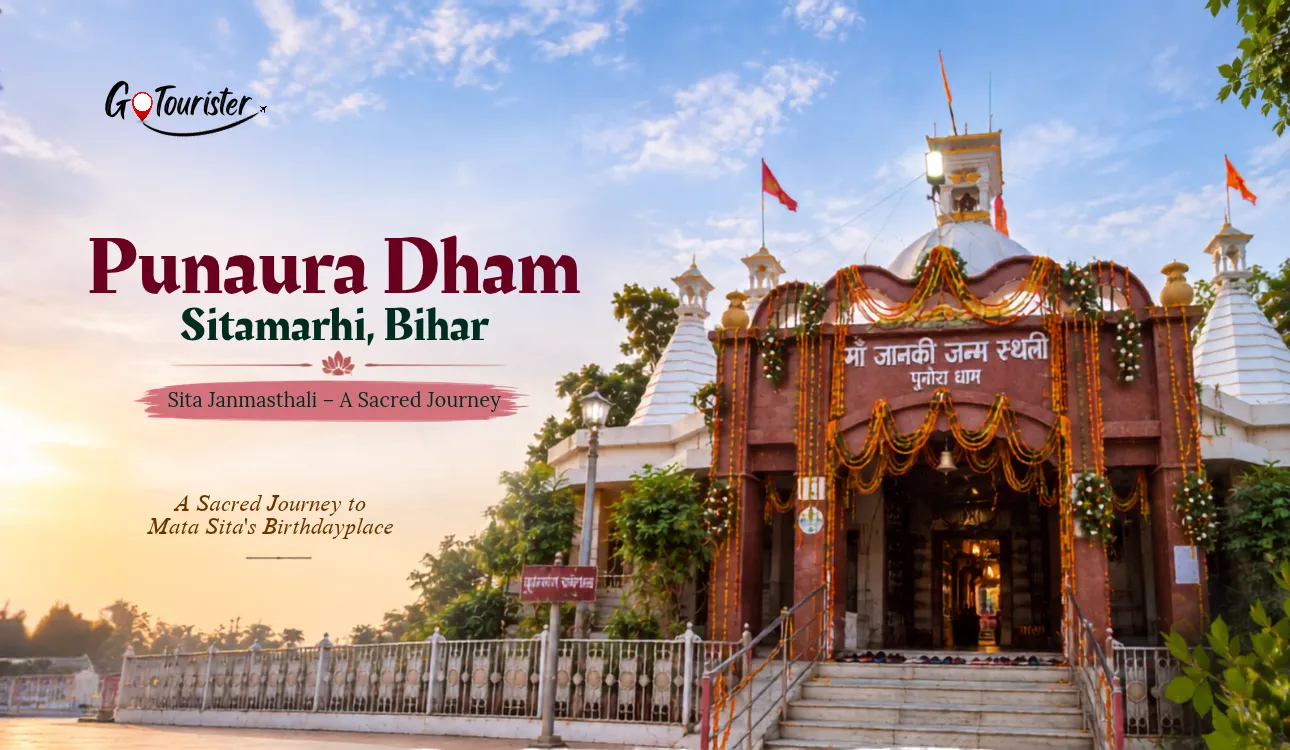
If you are searching for Punaura Dham because you want to visit the place traditionally associated with the birth of Mata Sita, this is the key distinction to know first: Punaura Dham is a separate pilgrimage site from the Janaki Temple in Sitamarhi town.
Punaura Dham lies about 5 km west of Sitamarhi and is revered as Sita Janmasthali—the place traditionally regarded as Sita’s birthplace. The site has a Janaki temple and Sita Kund, and it is an important stop on Bihar’s Ramayana pilgrimage circuit.
For a pilgrim, the visit is relatively straightforward: reach Sitamarhi, take local road transport to Punaura, allow a few hours for darshan and the sacred places around the temple, and check current access arrangements before travelling, particularly during major festivals.
What Is Punaura Dham?
Punaura Dham is a Hindu pilgrimage site in Punaura, Sitamarhi district, Bihar, associated with Mata Sita’s birth. The Sitamarhi district administration describes it as a sacred place considered to be the birthplace of Mata Sita, while Bihar Tourism identifies it as an important pilgrimage destination linked with Sita’s birth.
The principal attraction is the Janaki temple, along with the sacred Sita Kund. The district administration also identifies the temple complex as containing a statue of Sita Mata, a worship area and a havan mandap.
For devotees following the Ramayana tradition, the importance of Punaura Dham is therefore not simply that it is another temple in Sitamarhi. It is revered specifically as Janaki Janmabhoomi, the place associated with the earthly appearance or birth of Sita.
Why Is Punaura Dham Considered Sita’s Birthplace?
According to religious tradition, King Janaka was ploughing the land in Mithila when he discovered the infant Sita. The Sitamarhi district administration’s account says that Sita was found in a golden pot while Janaka was ploughing, and identifies the associated place as Sita Kund.
The story is part of the religious tradition surrounding Sita and Janaka. Devotees therefore revere Punaura Dham as Sita Janmasthali.
It is important, however, to distinguish this religious significance from archaeological proof. The official Sitamarhi history page presents the Sita-birth account as Hindu mythology/tradition and also notes that the town contains no relics of archaeological interest establishing the story as a historically verified event.
So, when Punaura Dham is described as the birthplace of Sita, the most accurate wording is that it is traditionally and religiously revered as Sita’s birthplace.
What to See at Punaura Dham
Janaki Temple
The Janaki temple at Punaura Dham is the main place of worship. It is dedicated to Sita and forms the centre of the pilgrimage experience. The district administration specifically highlights the temple, Sita’s image, worship area and havan mandap within the complex.
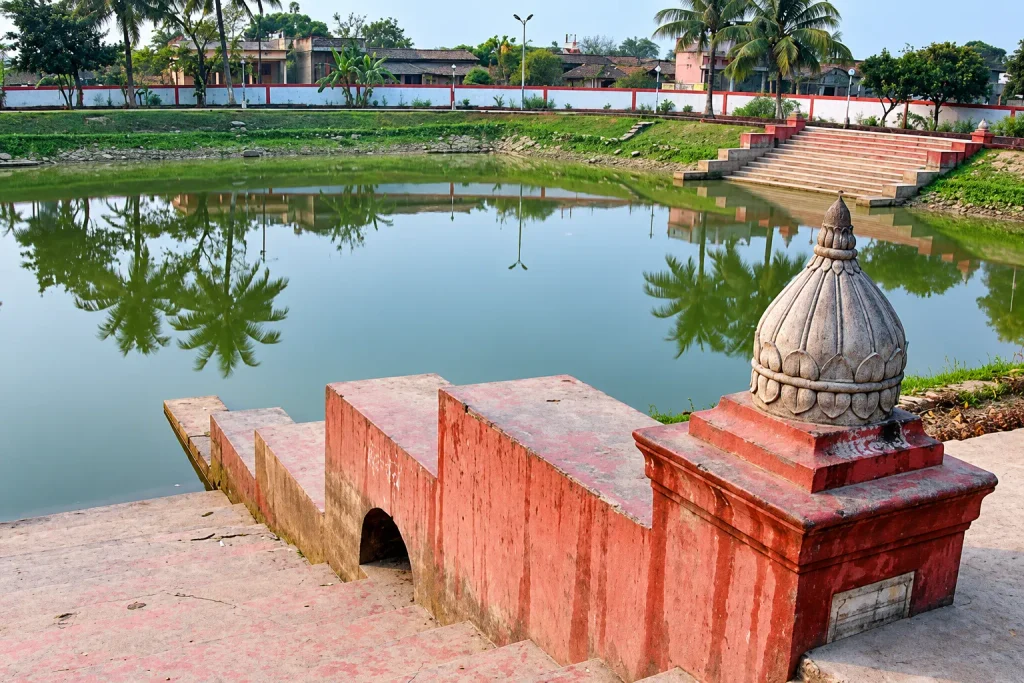
Sita Kund
Sita Kund is the sacred water body associated with the Sita Janmasthali tradition. According to the local religious account, this is the place associated with King Janaka’s discovery of Sita while ploughing the land.
For pilgrims, Sita Kund is therefore an important part of the visit rather than an unrelated sightseeing stop.
Nearby pilgrimage places
Punaura can also be combined with other sites around Sitamarhi. The district administration mentions Panth Pakar, Janaki Sthan Temple and Janaki Kund among nearby places of interest. Haleshwar Sthan is another Ramayana-linked pilgrimage site, and Bihar Tourism notes that a road connects it with Punaura Dham.
Ongoing development
Punaura Dham is currently undergoing major development. A 2025 Bihar State Tourism Development Corporation tender described an overall development project for the site, and in August 2026 the Bihar Chief Minister’s Secretariat reported that construction of a grand Mata Sita temple complex was underway. The state government has said the grand temple is targeted for completion by 31 December 2028.
That means the physical appearance and visitor facilities at Punaura Dham can change as work progresses. Travellers should not assume that information published before the redevelopment remains current.
Punaura Dham vs Janaki Temple in Sitamarhi
This is one of the most important things to understand before planning a Sitamarhi pilgrimage.
Punaura Dham and the Janaki Temple in Sitamarhi town are separate places. The Sitamarhi district tourism page lists the town’s Janaki Temple separately from Janaki Temple, Punaura, which it places about 5 km west of Sitamarhi.
| Janaki Temple, Sitamarhi | Punaura Dham | |
| Location | Sitamarhi town | Punaura, west of Sitamarhi |
| Main significance | Janaki/Sita temple and associated pilgrimage tradition | Traditionally revered as Sita Janmasthali |
| Approx. distance | About 1.5 km from Sitamarhi railway station | About 5 km from Sitamarhi railway station |
| Visit planning | Easy to combine with the town | Best treated as a separate stop |
The distance figures above come from current district information. The official page gives about 1.5 km for the town Janaki Temple from the railway station and about 5 km for Punaura Dham.
So if your main objective is to visit the traditionally identified Sita birthplace, make sure your itinerary specifically includes Punaura Dham.
How to Reach Punaura Dham
From Sitamarhi railway station
The easiest approach for most pilgrims is to travel first to Sitamarhi railway station and continue by local road transport.
The Sitamarhi district administration currently lists the railway station at about 5 km from Punaura Dham. Auto-rickshaws and buses are available from Sitamarhi.
Because local traffic and road conditions can affect travel time, the distance is more useful for planning than a fixed journey duration.
From Sitamarhi town
Punaura Dham is approximately 5 km west of Sitamarhi town. Local autos, buses and other road transport can be used to reach the temple.
For a first-time visitor, telling the driver you want Punaura Dham / Janaki Janmasthali helps avoid confusion with the Janaki Temple located within Sitamarhi town.
By air
The district administration lists Darbhanga Airport, approximately 90 km away, as the nearest airport.
For most pilgrims arriving by air, the practical final leg is therefore a road journey to Sitamarhi and then onward to Punaura Dham.
Punaura Dham Temple Timings and Darshan
Official Bihar Tourism currently lists Punaura Dham as 6:00 AM–6:00 PM, with free entry, under its Ramayana Circuit information.
However, temple schedules can change for rituals, festivals, special events or ongoing redevelopment. For that reason, do not plan a long-distance pilgrimage around an unofficial website’s claimed minute-by-minute darshan schedule.
For a normal visit, it is sensible to arrive during the published daytime visiting window and verify local arrangements on the day.
Bihar Tourism also says mobile phones, cameras and electronic gadgets are allowed at the site, while advising visitors to remove footwear and pray respectfully.
How Much Time Do You Need at Punaura Dham?
For most pilgrims, 2–3 hours is a practical allowance for Punaura Dham if the objective is darshan, seeing the temple complex and visiting Sita Kund without rushing.
A useful way to plan it is:
- Quick darshan: around 1 hour if you only want to offer prayers and leave.
- Normal pilgrimage visit: around 2–3 hours for the temple, Sita Kund and a more relaxed visit.
- Festival day: keep substantially more time because queues, traffic and crowd movement can change the experience.
If you are combining Punaura with the Janaki Temple in Sitamarhi and other nearby pilgrimage sites, treat Punaura as its own stop rather than trying to fit everything into one rushed visit.
Best Time to Visit Punaura Dham
Bihar Tourism currently identifies September to April as the preferred period to visit Punaura Dham.
For a comfortable pilgrimage, the cooler months are generally easier for walking and moving between sites.
There is another consideration: religious importance and crowd levels are not the same thing. Ram Navami and Sita Navami (Janaki Navami) draw devotees and special activity to the site. The district administration specifically notes large numbers of devotees during Ram Navami, Sita Navami and other religious occasions.
If you want a quieter darshan, an ordinary non-festival day is likely to be easier than visiting during a major religious celebration. If you specifically want the festival atmosphere, expect heavier crowds and allow additional time.
Punaura Dham During Festivals
The biggest practical difference on festival days is crowd management.
During major occasions:
- darshan can take longer;
- road traffic around the pilgrimage site can increase;
- local transport can become busier;
- accommodation in and around Sitamarhi may be under greater pressure;
- temple access and movement arrangements can change.
The 2026 Sitamarhi Mahotsav was inaugurated at Punaura Dham on Janaki Navami, illustrating how the site can become a major focal point for religious and cultural activity during important occasions.
For a festival visit, check current district or temple announcements rather than relying on an old travel blog.
Can Punaura Dham Be Combined With Janaki Temple?
Yes. In fact, this is one of the simplest ways to understand Sitamarhi’s Sita-related pilgrimage landscape.
Start with the Janaki Temple in Sitamarhi town, then travel roughly 5 km west to Punaura Dham. If time permits, other Ramayana-associated sites such as Haleshwar Sthan and Panth Pakar can be added. Bihar Tourism also describes Punaura as part of the state’s Ramayan Circuit.
Punaura Dham and Janakpur
Punaura Dham also makes sense within the wider Mithila–Ramayana pilgrimage tradition.
Sitamarhi in Bihar and Janakpur in Nepal are both strongly associated with the Sita-Janaka tradition, and Bihar Tourism’s Punaura page notes a daily bus service connecting Punaura with places including Haleshwar Sthan, Panth Pakar and Janakpur Temple, Nepal.
The important point for a Punaura visit is that Janakpur is a broader pilgrimage extension, not a substitute for visiting Punaura itself if your purpose is to see the site traditionally revered as Sita Janmasthali.
FAQs About Punaura Dham
1. Is Punaura Dham the birthplace of Sita?
Punaura Dham is traditionally revered as the birthplace of Mata Sita. The Sitamarhi district administration describes it as a place considered to be Sita’s birthplace. This is a matter of religious tradition and pilgrimage belief, rather than an archaeologically verified historical fact.
2. Where is Punaura Dham located?
Punaura Dham is in Punaura, Sitamarhi district, Bihar, about 5 km west of Sitamarhi town. Its listed address is Punaura, Sitamarhi, Bihar 843302.
3. How far is Punaura Dham from Sitamarhi railway station?
The Sitamarhi district administration currently gives the distance as about 5 km.
4. How do I reach Punaura Dham?
From Sitamarhi, you can use auto-rickshaws, buses or other local road transport. The nearest railway station is Sitamarhi railway station, while the district administration lists Darbhanga Airport about 90 km away.
5. What is famous about Punaura Dham?
Punaura Dham is famous primarily for its association with Sita Janmasthali, along with the Janaki temple and Sita Kund. It is also an important stop on Bihar’s Ramayana Circuit.
Punaura Dham: What a Pilgrim Should Remember
If your reason for coming to Sitamarhi is “I want to visit the place traditionally associated with Sita’s birth,” then Punaura Dham is the site you should specifically put on your itinerary.
It is not the same as the Janaki Temple in Sitamarhi town. Punaura is roughly 5 km away and is centred on the Sita Janmasthali tradition, the Janaki temple and Sita Kund.
The most useful approach is to treat the visit as both a religious pilgrimage and a practical day stop: arrive in Sitamarhi, travel to Punaura, allow a few hours for darshan and Sita Kund, and check current arrangements before setting out. With major redevelopment underway, today’s Punaura Dham is also a site in transition, so current official information is more reliable than older descriptions of the complex.