


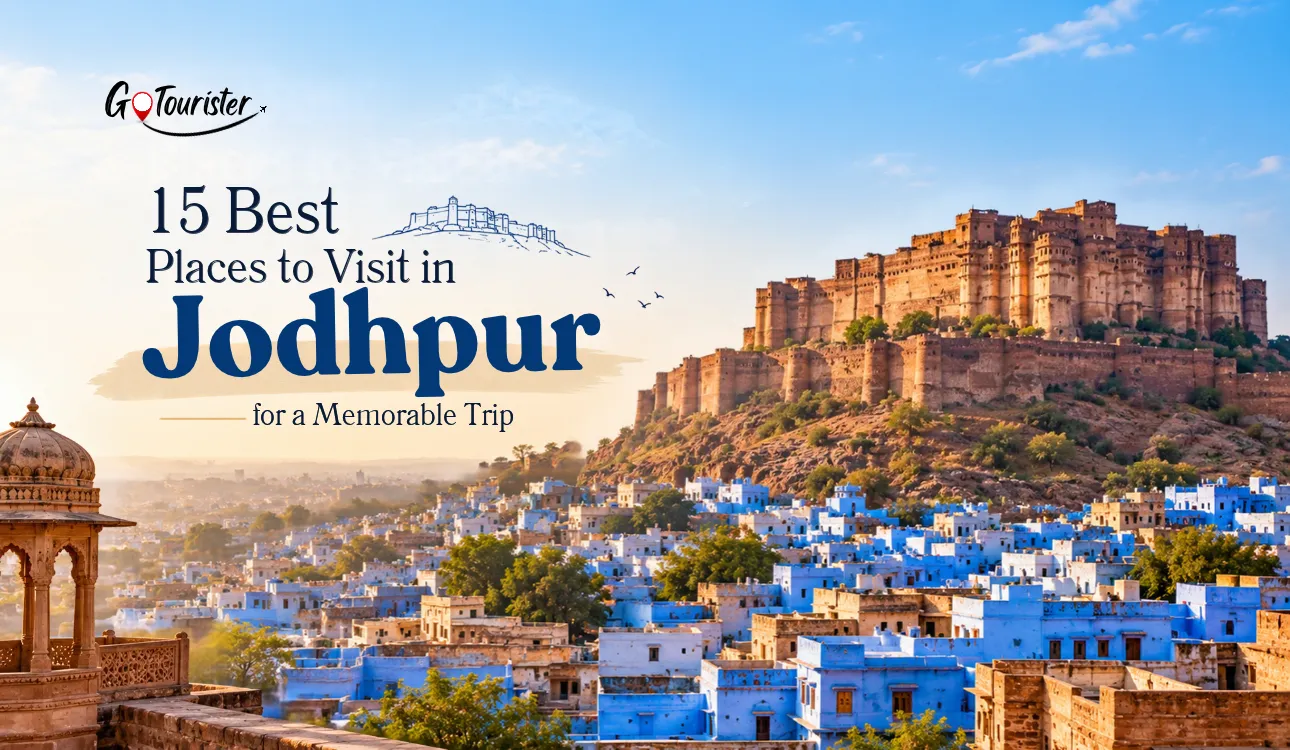
Jodhpur, popularly known as the Blue City of Rajasthan, combines imposing forts, royal palaces, blue-painted neighbourhoods, historic markets and peaceful lakes. For travellers searching for the best places to visit in Jodhpur, the city offers a good mix of major heritage attractions and a few quieter places away from the busiest sights.
The current search results for places to visit in Jodhpur, Jodhpur tourist places and Jodhpur sightseeing generally use a numbered-list format, with roughly 12–20 attractions. Major travel pages typically give each attraction a short description, its main reason to visit and, where useful, suggested visiting time or practical information.
This list follows that format and focuses on 15 of the most consistently relevant Jodhpur attractions, rather than expanding the article with marginal sights.
Also Read: Jodhpur Travel Guide: Blue City, Mehrangarh Fort & the Best of Marwar
1. Mehrangarh Fort
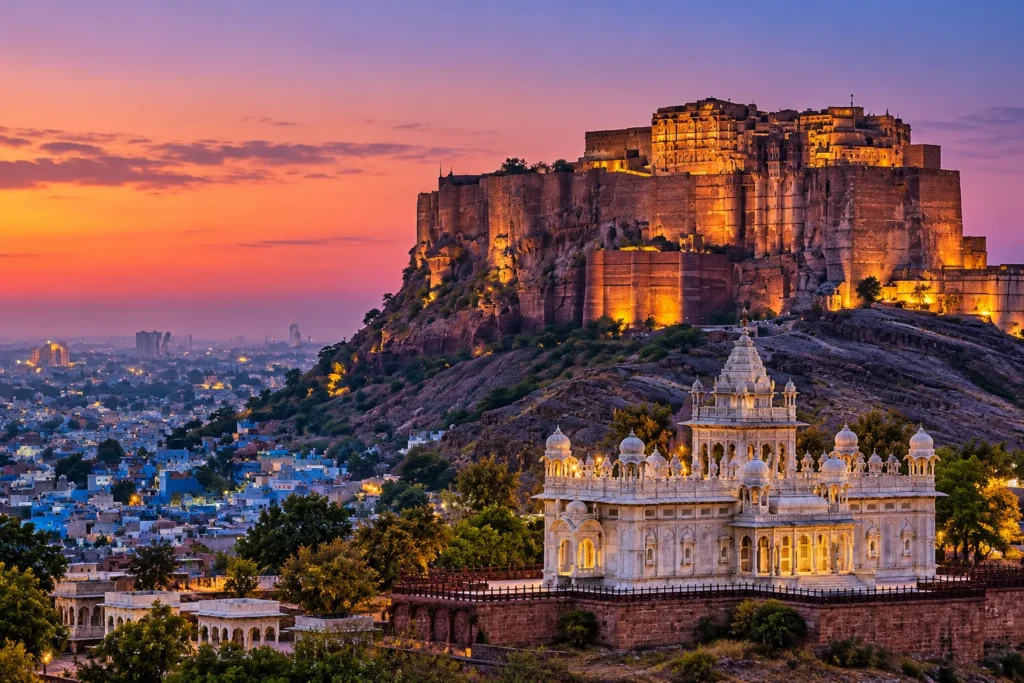
Mehrangarh Fort is the most important of the Jodhpur tourist places and the landmark that dominates the city’s skyline. Built by Rao Jodha in the 15th century, the hilltop fort contains impressive gates, courtyards, palaces and the Mehrangarh Museum.
Inside, visitors can see richly decorated spaces including Moti Mahal, Phool Mahal and Sheesh Mahal, along with collections of royal artefacts. The elevated position also provides excellent views across the Blue City.
Why visit: Jodhpur’s finest combination of history, architecture, museum collections and city views.
Current visitor information: The Mehrangarh Museum Trust currently lists the museum as open 9:00 AM–5:00 PM. Current museum admission is ₹200 for domestic visitors and ₹800 for international visitors. Check the official site before visiting because fees and arrangements can change.
2. Umaid Bhawan Palace
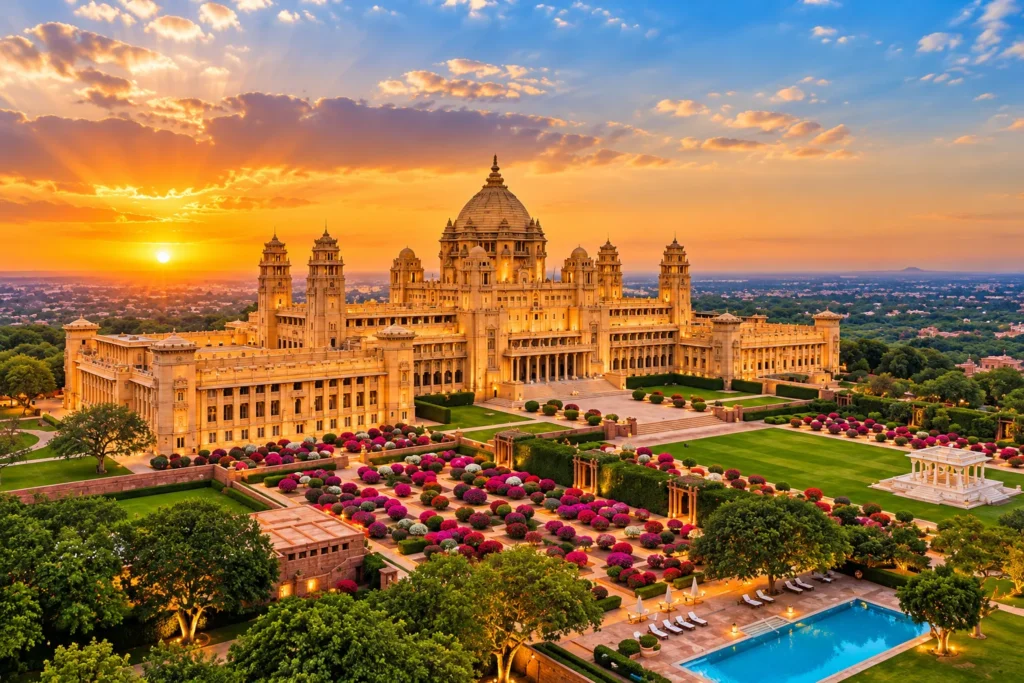
One of India’s most recognisable royal residences, Umaid Bhawan Palace was commissioned by Maharaja Umaid Singh. Construction began in 1928 and was completed in 1943, with the building combining Indo-Saracenic, Classical Revival and Art Deco influences.
Part of the palace remains a royal residence, while other sections operate as a heritage hotel and museum. The museum gives visitors a glimpse into Jodhpur’s royal history through memorabilia and vintage objects.
Why visit: Grand architecture, royal history and one of Jodhpur’s most distinctive buildings.
Current visitor information: Incredible India currently lists opening hours as 9:00 AM–5:00 PM.
3. Jaswant Thada
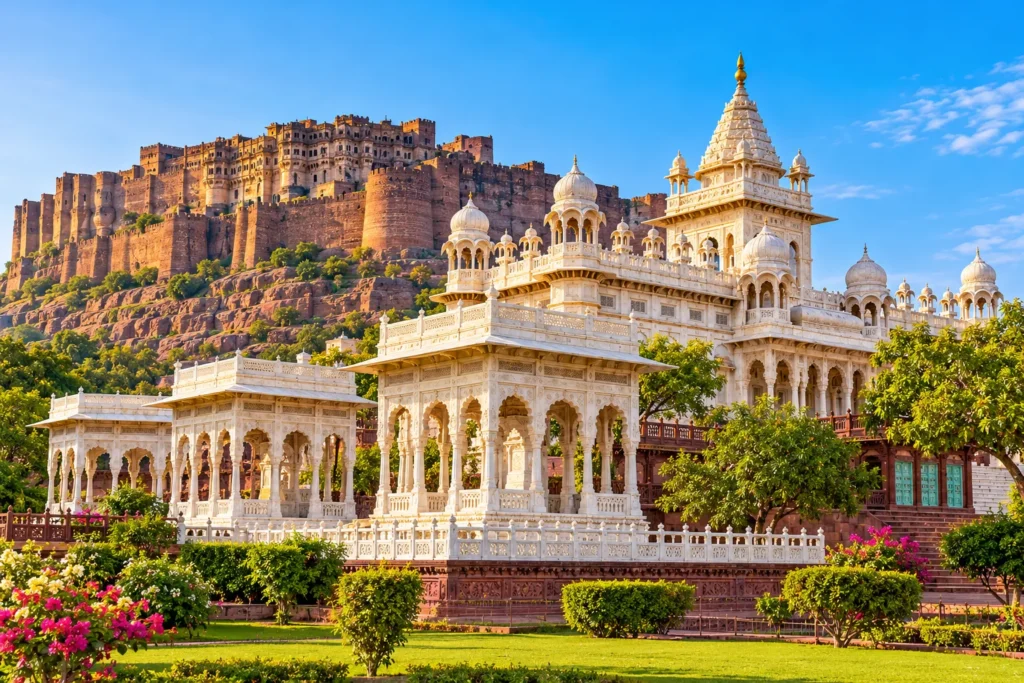
Jaswant Thada is a white-marble memorial built in honour of Maharaja Jaswant Singh II. Located close to Mehrangarh Fort, it offers a quieter contrast to the imposing sandstone fortress.
The memorial is known for its carved marble screens, domes and portraits of the rulers of Marwar. Its grounds also provide attractive views towards Mehrangarh and the surrounding landscape.
Why visit: Elegant marble architecture, royal history and a peaceful setting.
Current visitor information: The Mehrangarh Museum Trust currently lists 9:00 AM–5:00 PM. Current admission is ₹50 for domestic visitors and ₹100 for international visitors.
4. Jodhpur Blue City
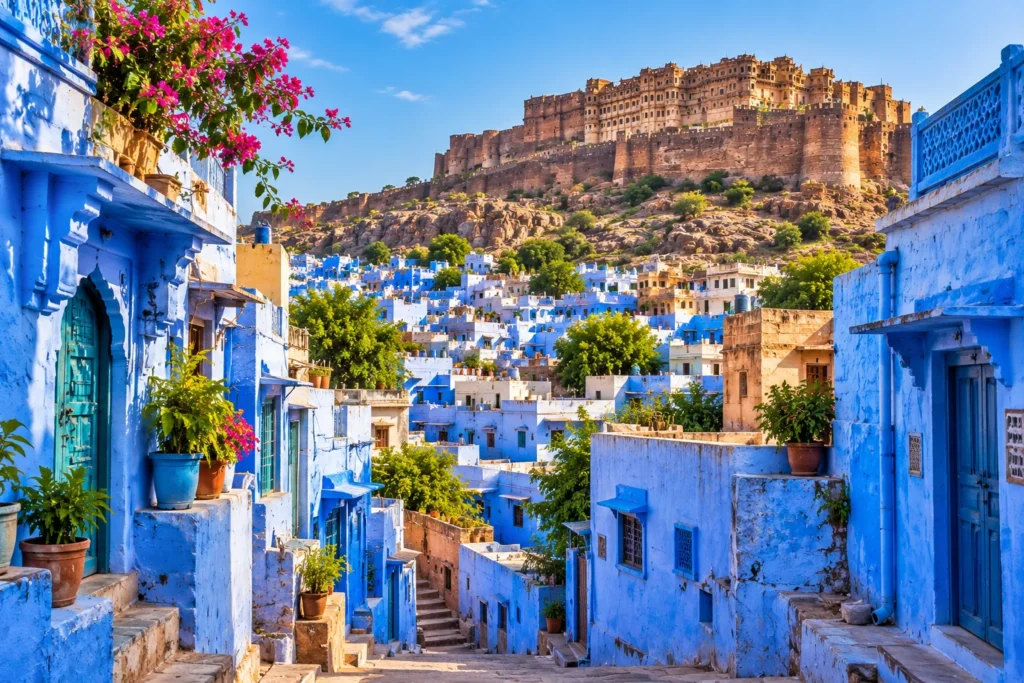
The Blue City is not one individual monument but the historic neighbourhood spread below Mehrangarh Fort. Its blue-painted houses have become one of the defining images of Jodhpur.
The old lanes are particularly attractive from elevated viewpoints around the fort, while walking through the neighbourhood gives a closer look at the city’s traditional architecture and everyday life. Incredible India describes the blue-painted old city as one of Jodhpur’s defining visual characteristics.
Why visit: Traditional architecture, photography and the atmosphere of Jodhpur’s historic centre.
Planning note: For a detailed walking route through the blue neighbourhoods, use a dedicated Jodhpur Blue City walking route rather than trying to cover it all in this attraction guide.
5. Clock Tower and Sardar Market
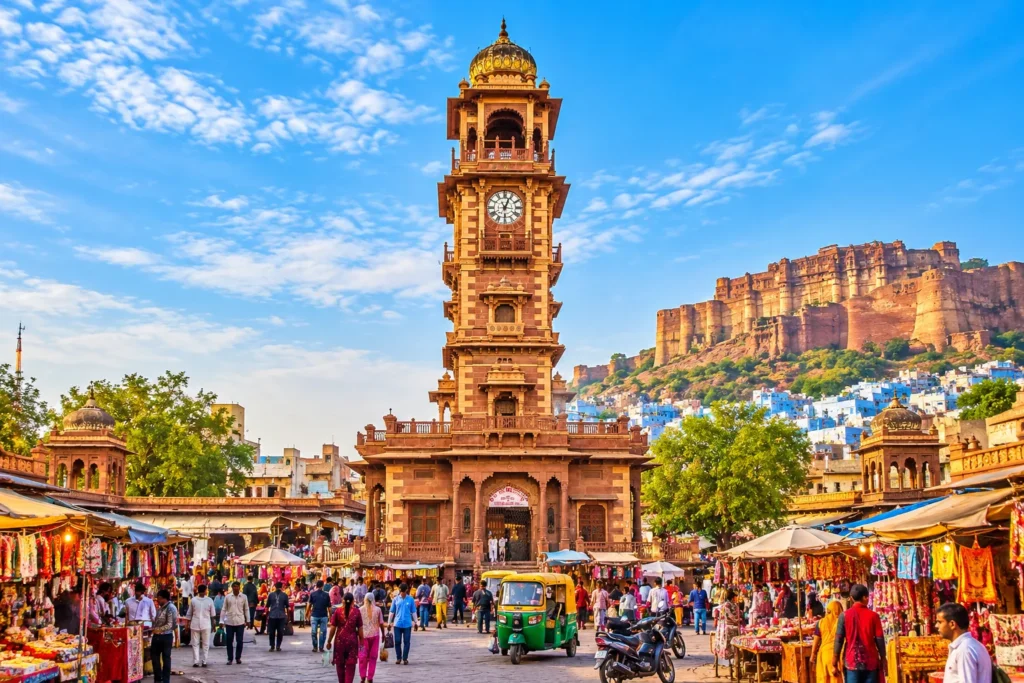
The Clock Tower, locally known as Ghanta Ghar, is one of the best-known landmarks in Jodhpur’s Old City. The surrounding Sardar Market is a lively commercial area filled with shops selling spices, textiles, jewellery, handicrafts and traditional products.
Rajasthan Tourism identifies the Clock Tower as a landmark and a starting or ending point for heritage walks through the Blue City.
Why visit: Local atmosphere, shopping, street food and Old City architecture.
Location: Old City, around the Clock Tower.
6. Toorji Ka Jhalra
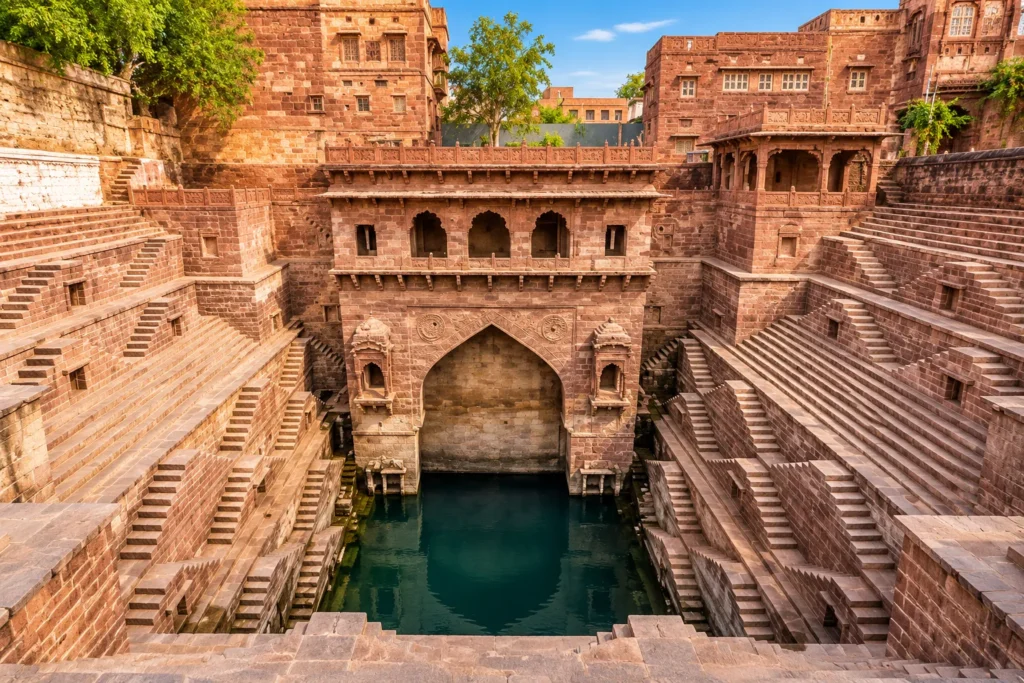
Toorji Ka Jhalra is an ornate historic stepwell in the Old City. Its symmetrical sandstone stairways descend deep into the structure, creating one of Jodhpur’s most distinctive architectural scenes.
The stepwell is believed to date from the 18th century and reflects the importance of traditional water management in a dry region.
Why visit: Striking architecture, photography and an easy addition to Old City sightseeing.
Current visitor information: Incredible India currently lists the stepwell as open 24 hours. Daylight is the most practical time for sightseeing and photography.
7. Rao Jodha Desert Rock Park
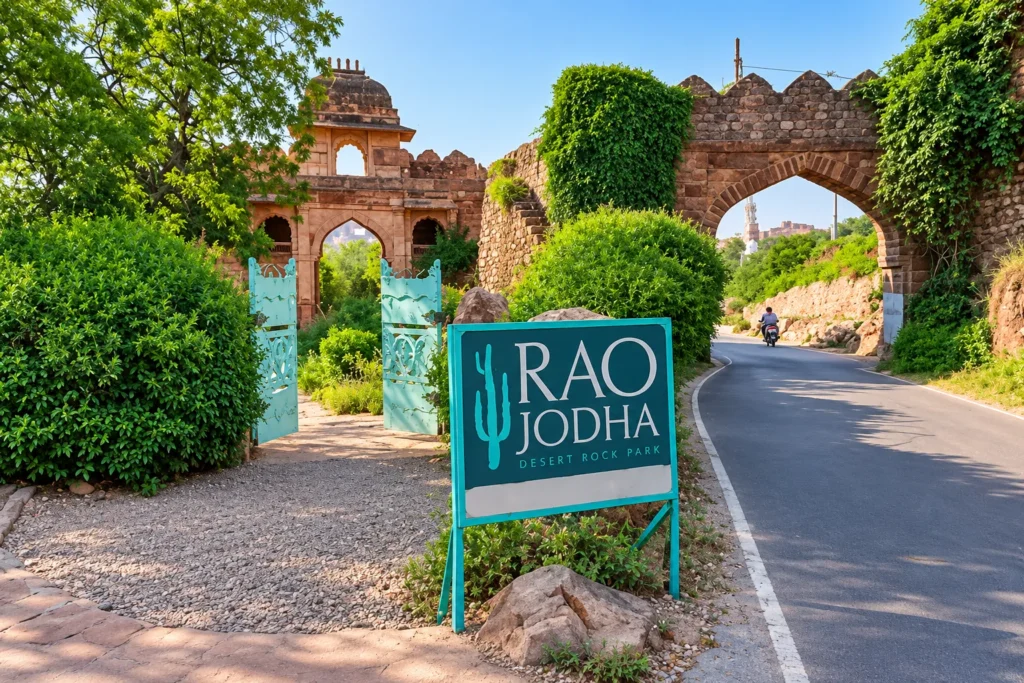
Immediately below Mehrangarh Fort, Rao Jodha Desert Rock Park covers a large rocky landscape restored with native desert vegetation.
The park provides walking trails and a different perspective on the natural environment surrounding Jodhpur. It is particularly useful for visitors who want some open space after exploring the fort and Old City. Incredible India describes the park as an ecological restoration project showcasing native desert flora.
Why visit: Desert landscape, native plants, walking trails and fort views.
Tip: Plan your visit around the weather because much of the park is exposed.
8. Mandore Gardens
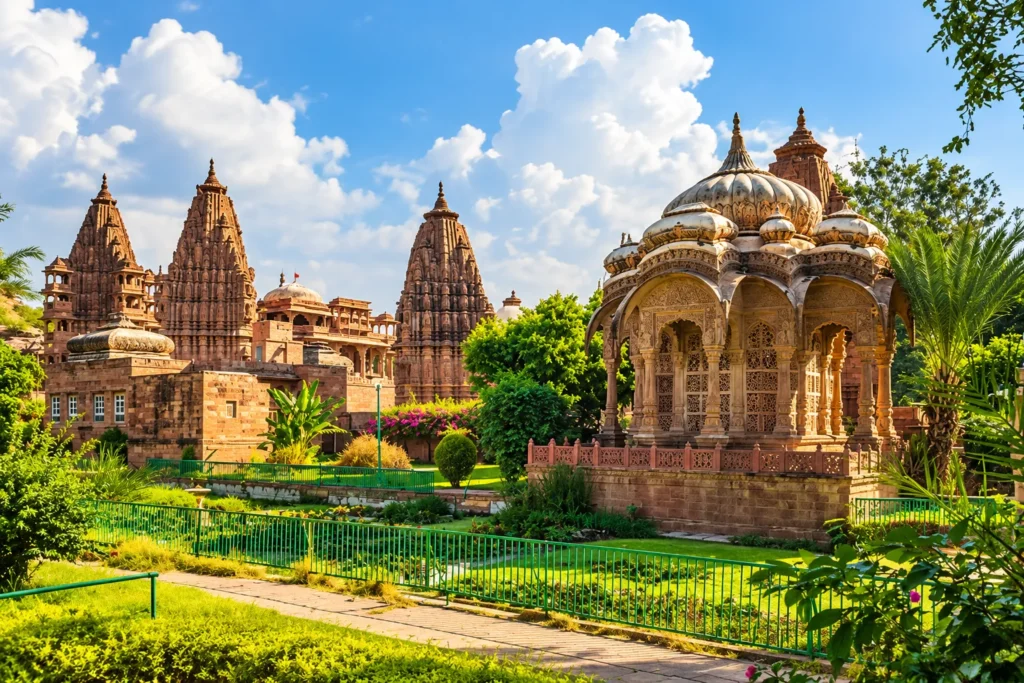
Mandore Gardens occupies the site of the former capital of Marwar before Jodhpur became the centre of the kingdom. The gardens contain impressive cenotaphs, temples, memorials and landscaped areas.
The red sandstone architecture and royal memorials make Mandore a useful addition for visitors interested in the history of Marwar beyond Mehrangarh.
Why visit: Marwar history, cenotaphs, temples and open gardens.
Location: Mandore, north of central Jodhpur.
9. Balsamand Lake
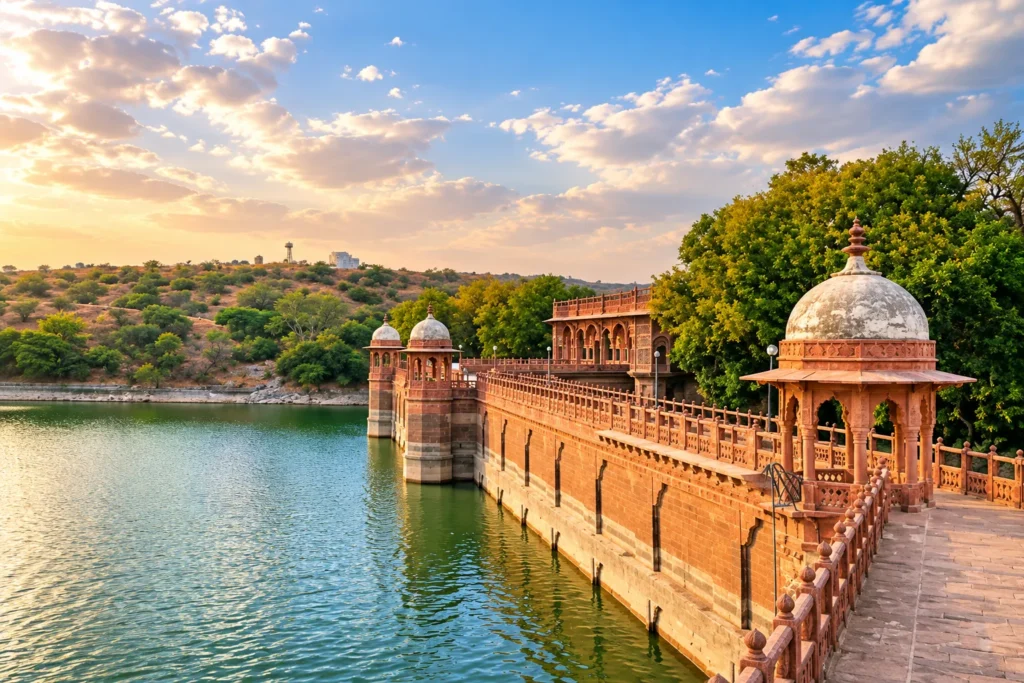
Balsamand Lake is a historic artificial lake on the Jodhpur–Mandore Road. It was created as a water reservoir for Mandore, and the Balsamand Lake Palace was later built along its shore as a summer retreat.
The lake and surrounding greenery offer a calmer sightseeing experience than Jodhpur’s crowded historic centre.
Why visit: Lakeside scenery, greenery and a quieter side of Jodhpur.
10. Kaylana Lake
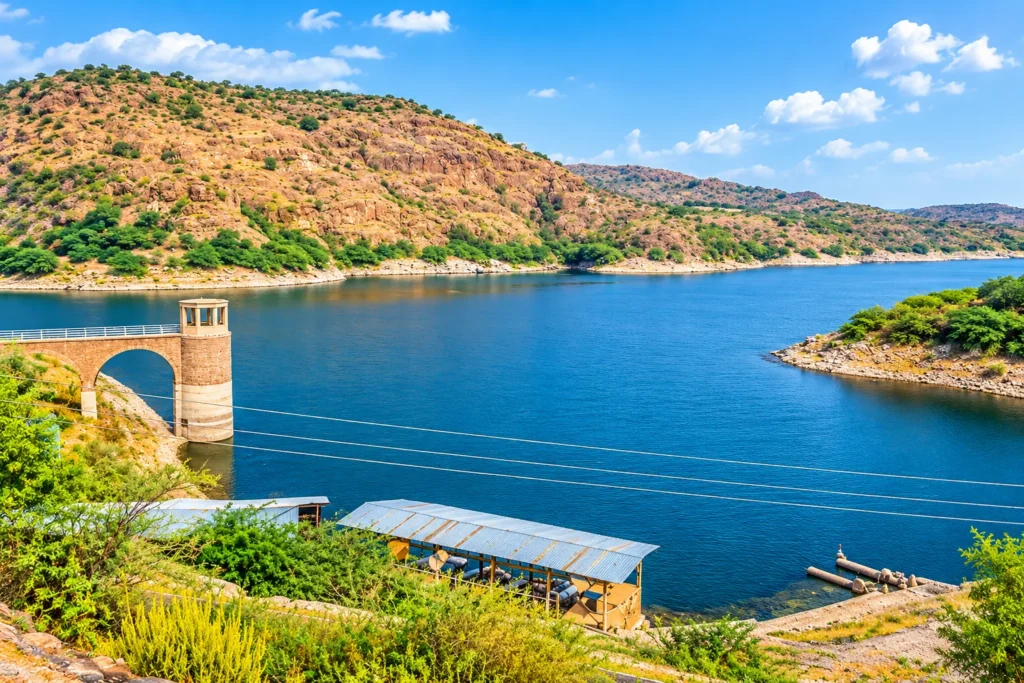
Located west of the city, Kaylana Lake is a man-made reservoir created in 1872 under Pratap Singh. Today it is known for its open landscape, water views and birdlife.
The lake is particularly appealing around sunset, when the wide sky and surrounding arid landscape create a very different atmosphere from central Jodhpur.
Why visit: Sunset views, nature and a break from the city’s monuments.
Location: About 8 km west of central Jodhpur, according to Incredible India.
Current visitor information: Incredible India currently lists 9:00 AM–5:00 PM.
11. Sardar Government Museum
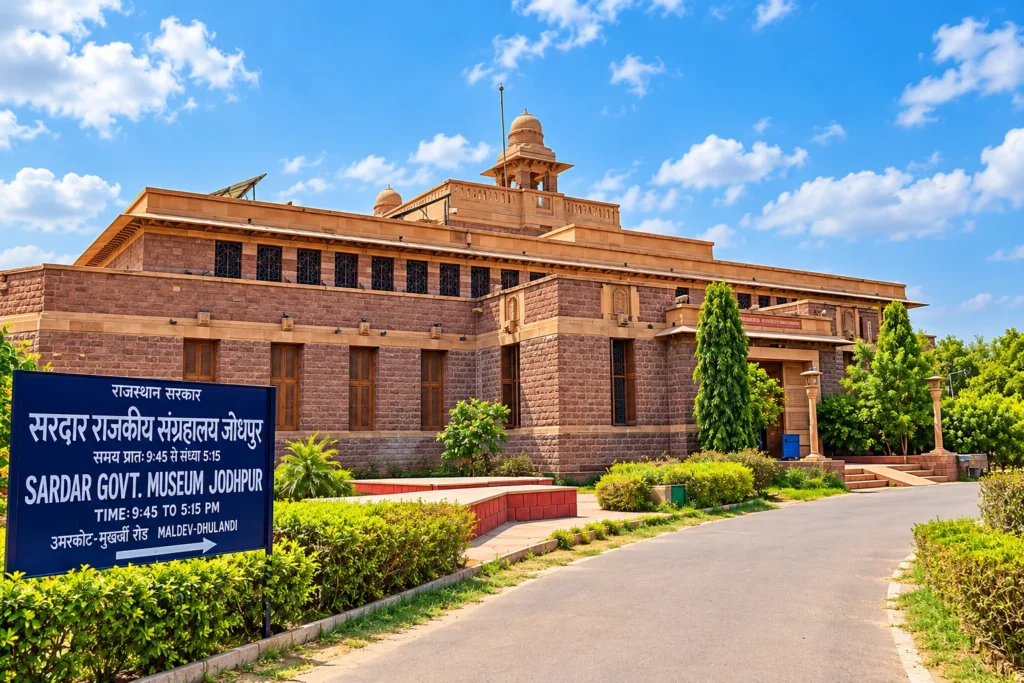
Located inside Umaid Garden, the Sardar Government Museum houses collections connected with the history and culture of the former Marwar region.
Rajasthan Tourism lists collections including armoury, textiles, local art and crafts, miniature paintings, portraits and manuscripts, making it a useful stop for travellers who want more historical context beyond the major palaces and forts.
Why visit: Regional history, art, weapons, textiles and museum collections.
Location: Umaid Garden, Jodhpur.
12. Machia Biological Park
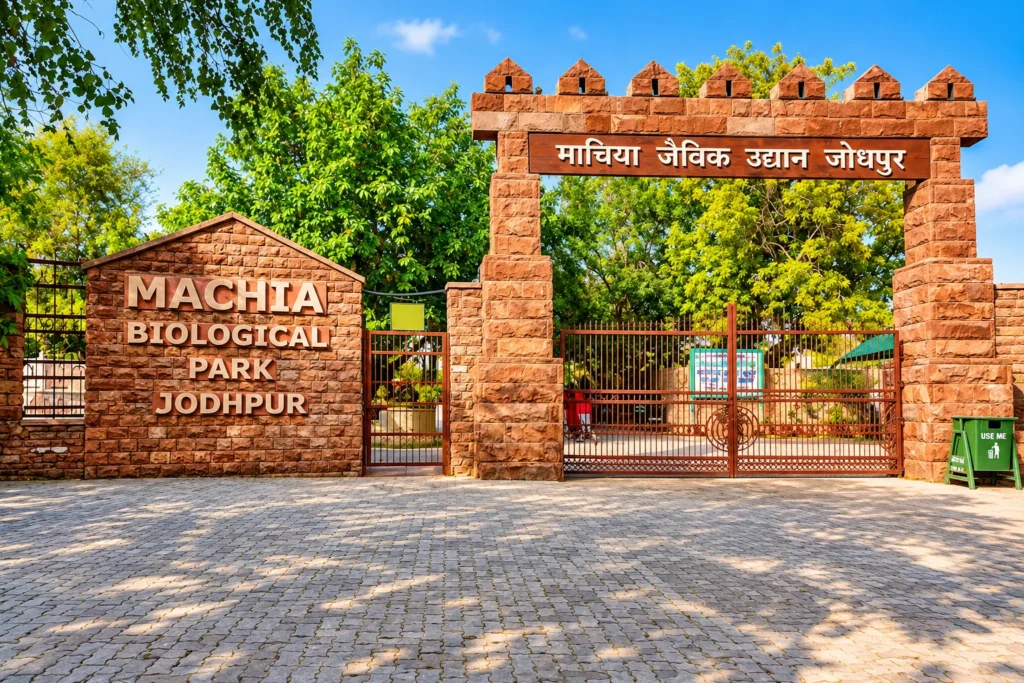
Machia Biological Park is a wildlife attraction on the Kayalana Road, close to Kaylana Lake. The park focuses on native flora and fauna and offers a different type of sightseeing from Jodhpur’s historic monuments.
It can be a useful option for families and travellers interested in wildlife and conservation. The park is officially listed by Rajasthan’s Forest Department and the Central Zoo Authority.
Why visit: Wildlife, nature and a family-friendly attraction.
Current visitor information: The park’s current visitor information lists 8:30 AM–5:00 PM in winter and 8:00 AM–6:00 PM in summer, with Tuesday closed.
13. Mahamandir Temple
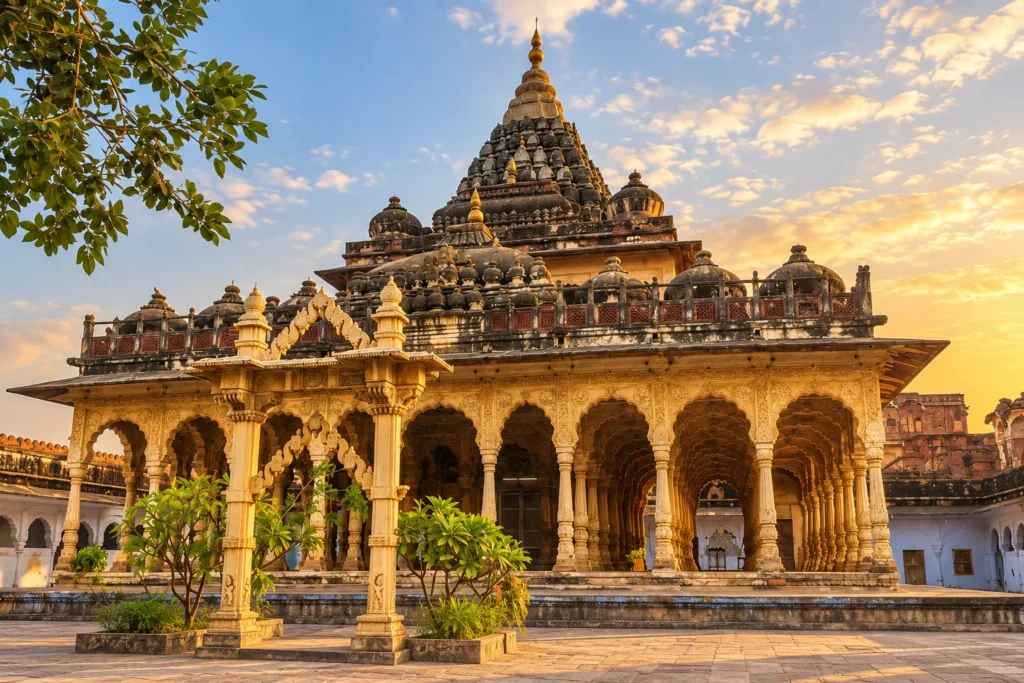
Mahamandir Temple is a historic Shiva temple known for its 84 carved pillars and detailed architectural decoration. The temple’s walls and pillars feature religious imagery and representations of yoga postures.
It is a worthwhile addition for visitors interested in religious architecture rather than only royal monuments.
Why visit: Temple architecture, stone carvings and spiritual heritage.
Current visitor information: Incredible India currently lists 10:00 AM–6:00 PM.
Visitor note: Dress respectfully and follow the temple’s photography and worship rules.
14. Chamunda Mata Temple
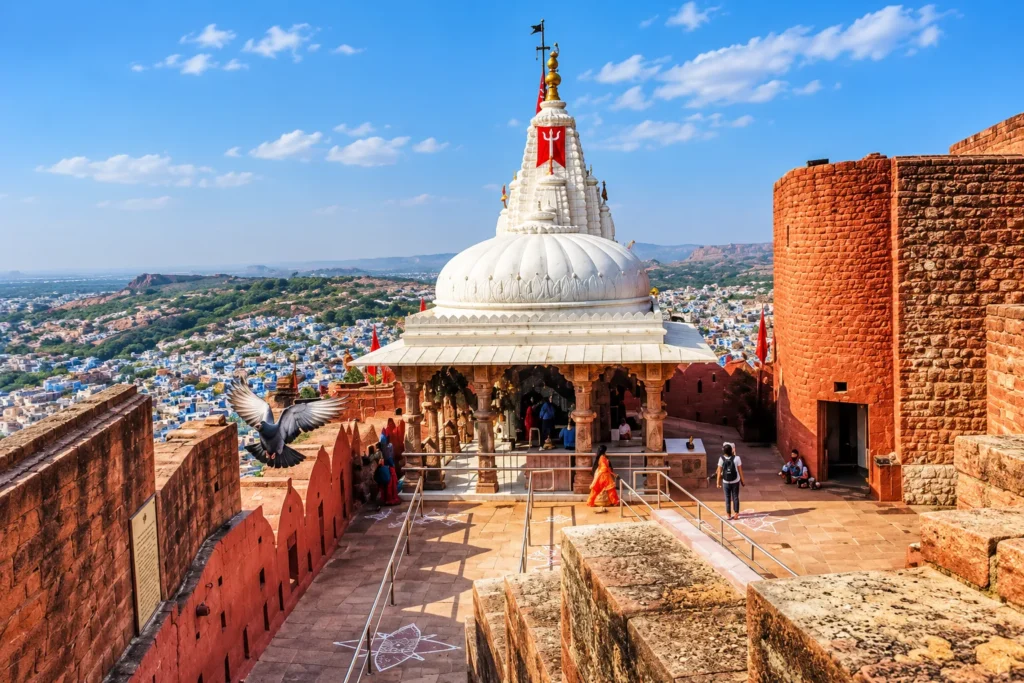
Located within the Mehrangarh Fort complex, Chamunda Mata Temple has an important connection with Jodhpur’s royal family. Rajasthan Tourism notes that Rao Jodha brought the idol of Chamunda Mata to the fort, and the goddess remains associated with the royal family’s religious traditions.
Because the temple is inside Mehrangarh, it is easy to include during a fort visit rather than treating it as a separate city excursion.
Why visit: Religious significance, fort history and a quieter spiritual element within Mehrangarh.
15. Mandaleshwar Mahadev Temple
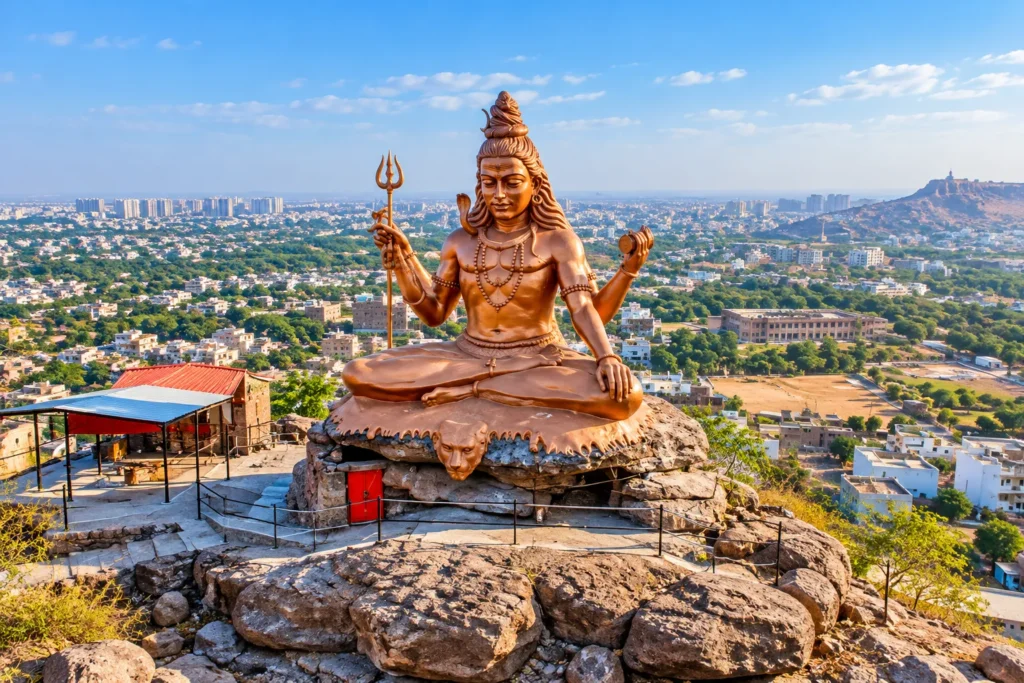
Mandaleshwar Mahadev is one of Jodhpur’s older Shiva shrines. Rajasthan Tourism attributes its construction to Mandal Nath in 923 AD and notes the temple’s paintings depicting Lord Shiva and Goddess Parvati.
It is a more specialised sightseeing choice than Mehrangarh or Umaid Bhawan, but worthwhile if you are interested in historic temples and Jodhpur’s religious heritage.
Why visit: Ancient temple architecture, paintings and religious history.
Which Jodhpur tourist places should you prioritise?
If this is your first visit, the attractions that deserve the highest priority are:
- Mehrangarh Fort
- Jaswant Thada
- Umaid Bhawan Palace
- Blue City / Old City
- Clock Tower & Sardar Market
- Toorji Ka Jhalra
- Rao Jodha Desert Rock Park
After these, choose according to your interests.
History: Mandore Gardens, Sardar Government Museum and Mandaleshwar Mahadev.
Nature: Kaylana Lake, Balsamand Lake and Machia Biological Park.
Architecture and culture: Mahamandir Temple and Chamunda Mata Temple.
This prioritisation also reflects the current search landscape: the major travel pages consistently place Mehrangarh, Umaid Bhawan, Jaswant Thada, Mandore, the Clock Tower/market and Rao Jodha among the core Jodhpur attractions, while lakes, wildlife parks and temples generally appear further down longer lists.
Final thoughts
Jodhpur sightseeing is easiest to enjoy when you don’t treat every attraction as equally important. Mehrangarh Fort, Jaswant Thada, Umaid Bhawan and the Old City provide the essential introduction to the Blue City, while places such as Mandore, the lakes, museums and temples add depth if you have more time.
For more specific planning, keep the detailed routes on separate pages rather than turning this attractions list into a full destination guide.