


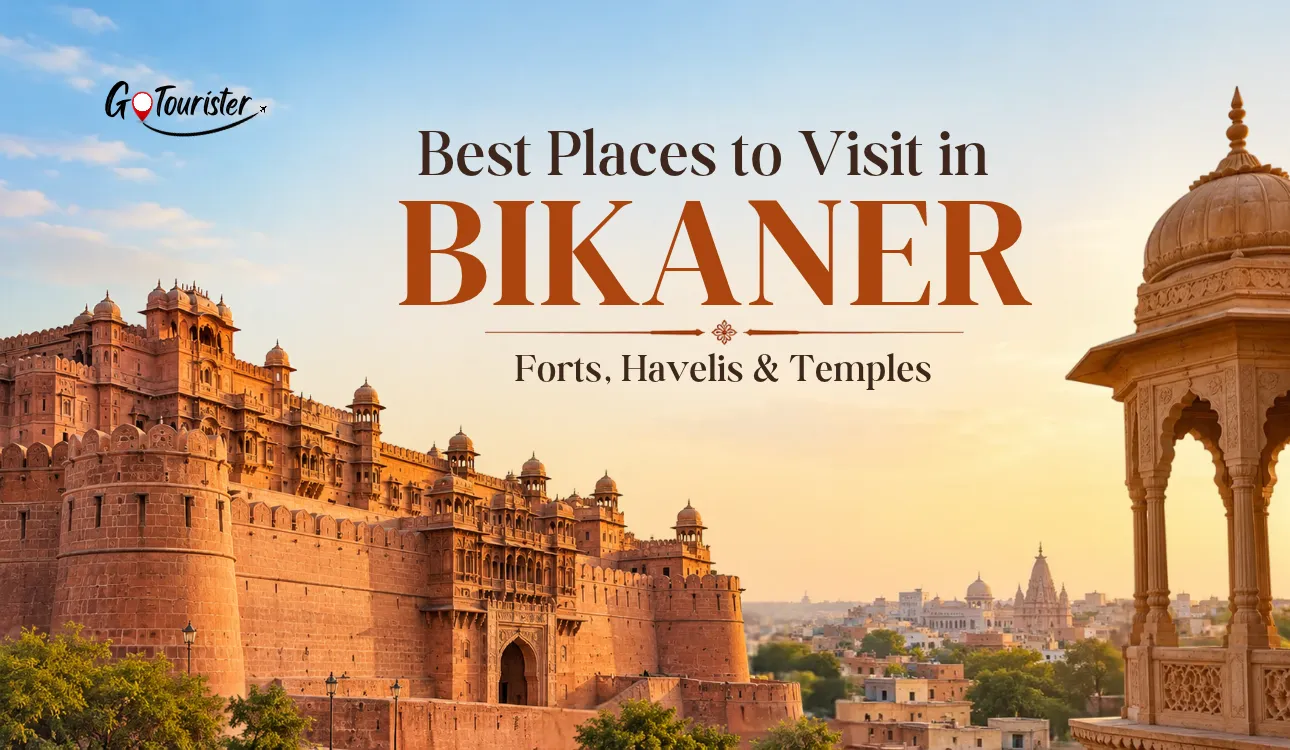
Bikaner, in northern Rajasthan, is known for its grand forts, intricately carved havelis, historic temples and distinctive desert heritage. Founded by Rao Bika in 1488, the city retains much of its old-world character through its red sandstone architecture, royal landmarks and traditional neighbourhoods. Whether you enjoy history, architecture or religious heritage, the best places to visit in Bikaner offer a rewarding introduction to Rajasthan beyond its more crowded tourist cities.
From the impressive courtyards of Junagarh Fort to the ornate façades of Rampuria Havelis, these Bikaner tourist places showcase the city’s cultural and architectural legacy.
1. Junagarh Fort
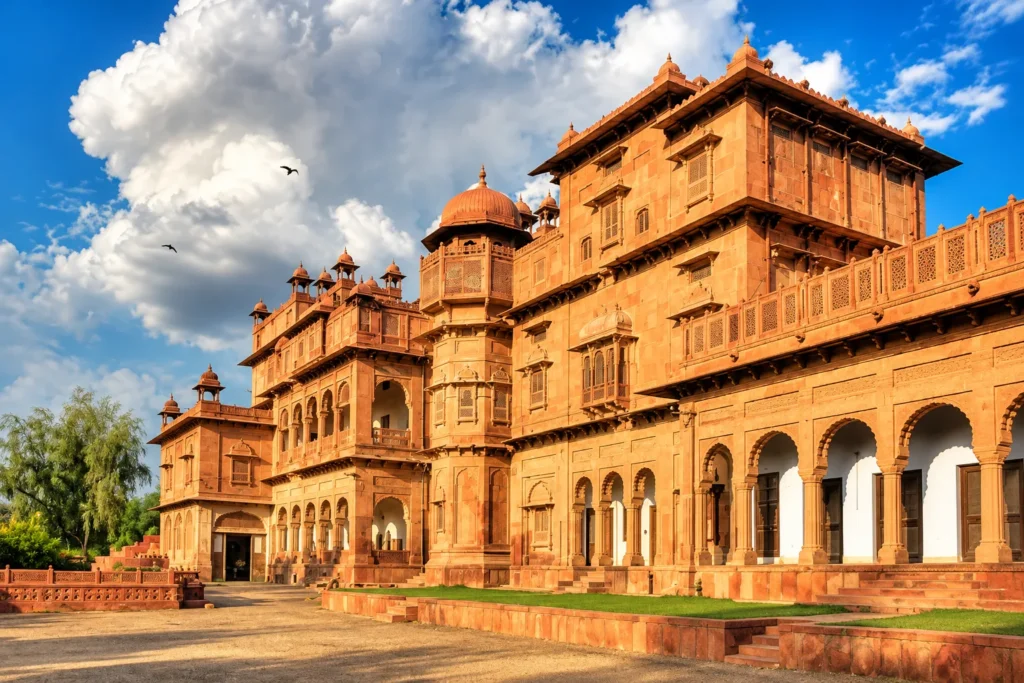
Junagarh Fort is one of the most important historical attractions in Bikaner and a natural starting point for sightseeing. Built under Raja Rai Singh in the late 16th century, the fort is notable for its imposing gateways, elaborate courtyards, carved balconies and palaces decorated with marble, stonework and detailed ornamentation.
Unlike many famous Rajasthani forts, Junagarh Fort stands on the plains rather than on a hill. Its palace interiors and historic architecture offer insight into the royal life of Bikaner’s former rulers. The fort complex also houses the Prachina Museum, which displays royal costumes, textiles and other cultural artefacts.
Visitor information
- Location: Within Bikaner city.
- Best for: History, architecture, palace interiors and photography.
- Timings and entry fee: Check the current visitor schedule and ticket rates before your visit; rates can vary by visitor category and the facilities included.
- Visiting tip: Allow enough time to explore the palace complex rather than seeing only the fort exterior.
2. Rampuria Havelis
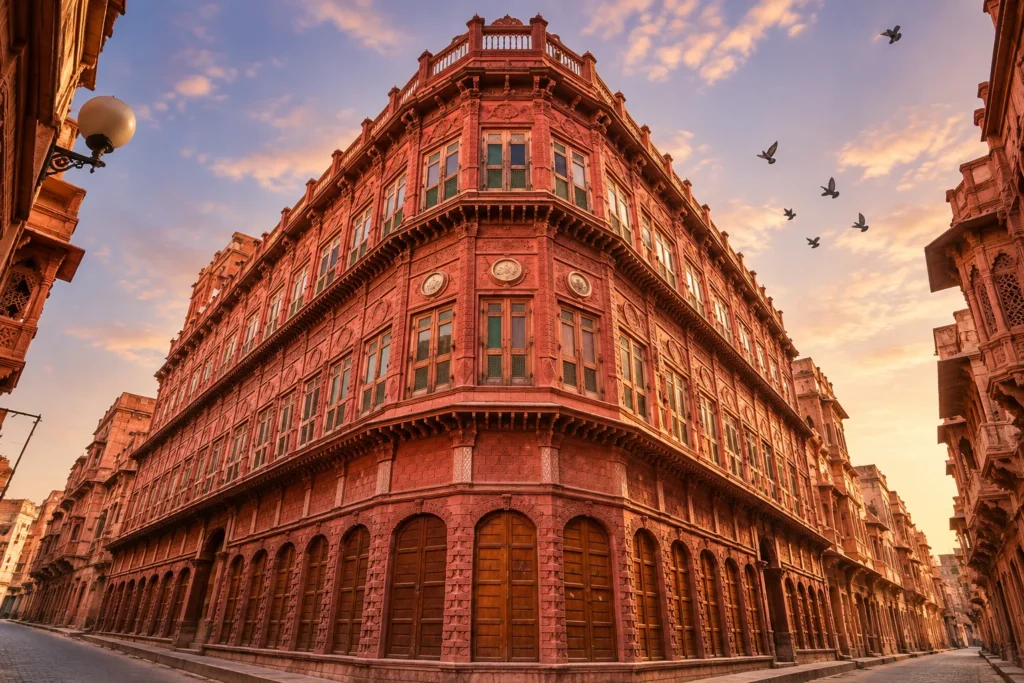
Rampuria Havelis are among the most distinctive architectural landmarks in Bikaner’s old city. These historic merchant mansions are known for their red Dulmera sandstone façades, ornate jharokhas, carved wooden details and decorative windows. Their architecture combines traditional Rajasthani craftsmanship with Mughal and European influences.
The havelis reflect the prosperity of Bikaner’s historic trading community and provide a different perspective on the city’s heritage from its royal forts and palaces. Walking through the surrounding lanes also reveals the character of the old city.
Visitor information
- Location: Old Bikaner, within the city.
- Best for: Heritage walks, architectural details and street photography.
- Timings and entry fee: The exterior façades can generally be viewed from public lanes during daylight. Many interiors are privately owned, so do not assume they are open to visitors.
- Visiting tip: Explore on foot and be respectful of residents, private entrances and photography restrictions.
3. Bhandasar Jain Temple
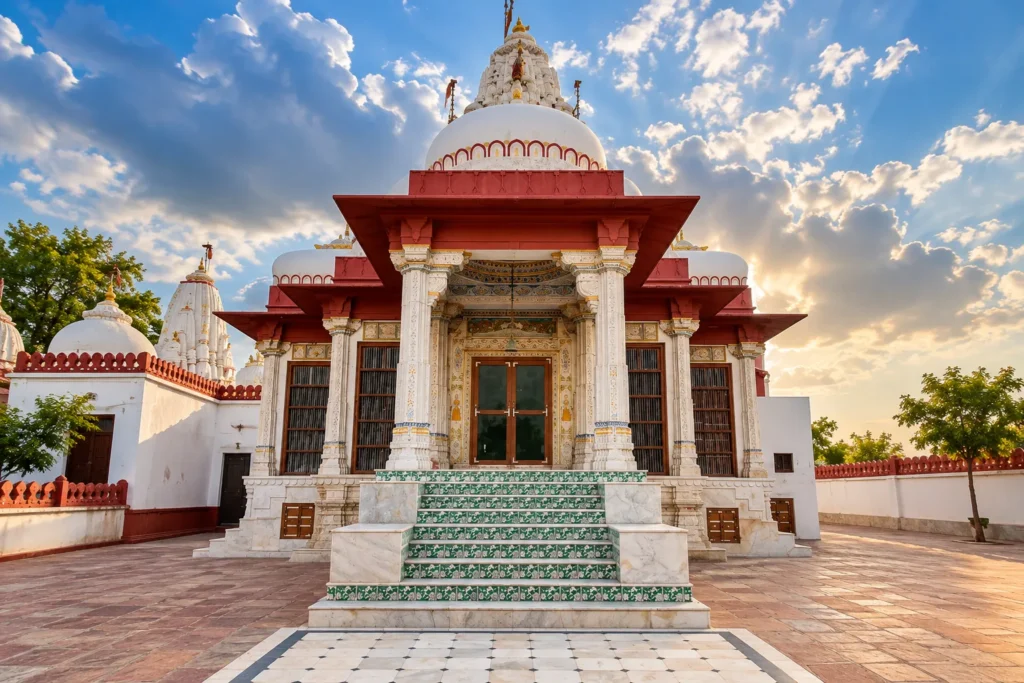
Bhandasar Jain Temple is a significant religious and architectural landmark in Bikaner. Dedicated to Sumatinath, the fifth Jain Tirthankara, the temple dates to the 15th century and is recognised for its richly decorated interiors, murals, mirror work and gold-leaf details.
Its painted surfaces and intricate ornamentation make it especially interesting to visitors who appreciate historic religious art. The temple is also an important place of worship, so sightseeing should be balanced with respect for devotees and temple customs.
Visitor information
- Location: Within Bikaner city.
- Best for: Jain heritage, religious architecture and traditional paintings.
- Timings and entry fee: Confirm current visiting and worship hours locally. Do not assume every interior area is accessible throughout the day.
- Visiting tip: Dress modestly, follow photography rules and remove footwear where required.
4. Shri Laxminath Temple
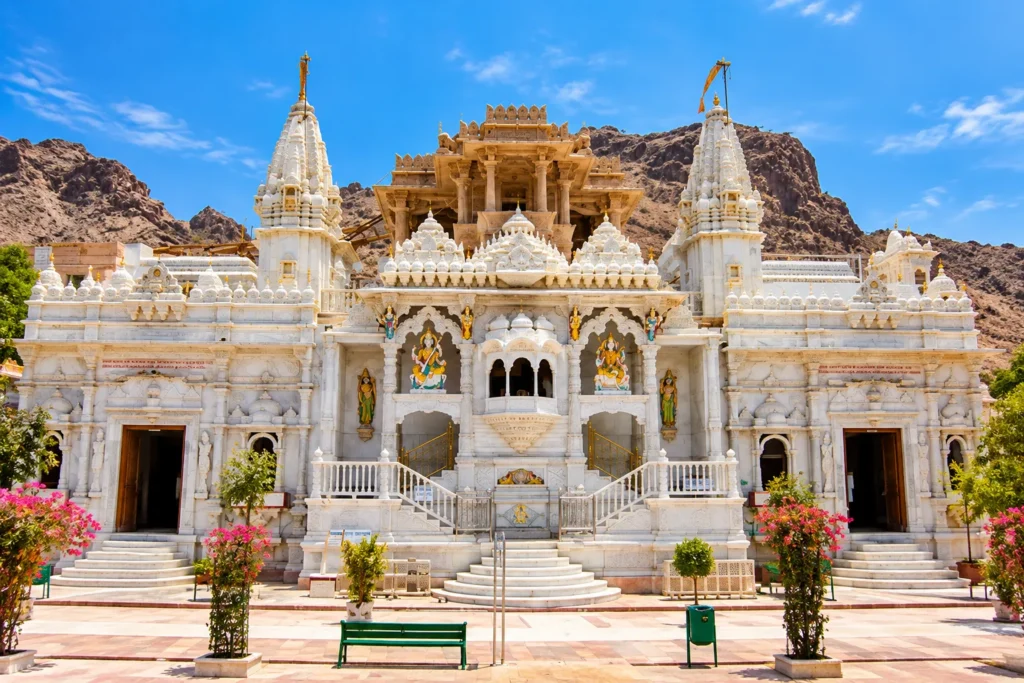
Shri Laxminath Temple is one of Bikaner’s important Hindu shrines. Dedicated to Lord Vishnu and associated with Goddess Lakshmi, the temple reflects the religious traditions of the former Bikaner royal family. Its red sandstone and marble architecture make it another worthwhile stop for visitors interested in the city’s temple heritage.
The temple provides a quieter counterpoint to the elaborate palace architecture of Junagarh Fort and the merchant mansions of the old city. Visitors can observe local worship practices and appreciate the craftsmanship of the shrine.
Visitor information
- Location: Within Bikaner city.
- Best for: Religious heritage, temple architecture and local cultural traditions.
- Timings and entry fee: Temple schedules may vary according to worship rituals and festivals. Check the current darshan timings before travelling; confirm any applicable visitor charges locally.
- Visiting tip: Avoid interrupting prayers, follow the temple’s dress and footwear requirements, and ask before taking photographs.
5. Lalgarh Palace and Museum
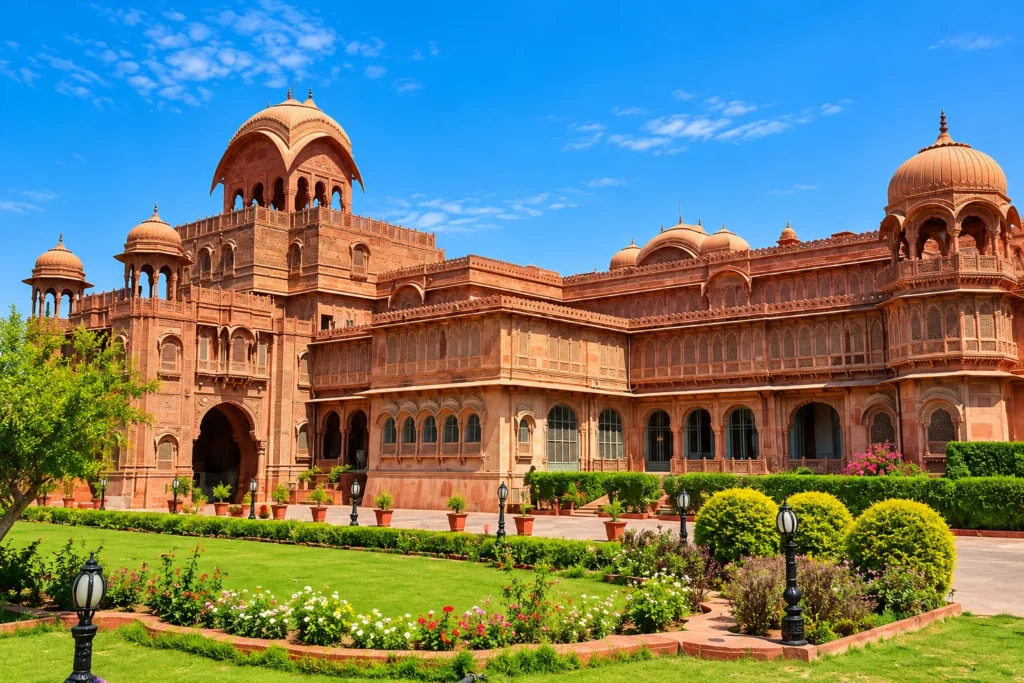
Lalgarh Palace is a prominent example of Bikaner’s royal architecture. Commissioned by Maharaja Ganga Singh in memory of his father, Maharaja Lal Singh, the palace was designed by British architect Sir Swinton Jacob. Its red sandstone construction combines Rajput, Mughal and European architectural elements.
The building’s carved stonework, arches and expansive architectural composition make it a notable landmark. The wider Lalgarh complex is associated with royal heritage, although access to particular buildings and collections depends on their current use and management.
Visitor information
- Location: Within Bikaner city.
- Best for: Heritage architecture and royal history.
- Timings and entry fee: Public access to the palace, museum and hotel-operated areas may differ. Verify which sections are open to visitors and whether tickets are required before setting out.
- Visiting tip: Do not assume the entire palace is open for sightseeing simply because the building is a well-known landmark.
6. National Research Centre on Camel
The National Research Centre on Camel offers a different kind of sightseeing experience, focusing on the animal closely associated with life in Rajasthan’s desert regions. The centre conducts camel research and breeding activities and is also a recognised visitor attraction.
Depending on the facilities available during your visit, you may be able to learn about camel breeds, see the animals up close and sample camel-milk products. The centre provides an educational perspective on the importance of camels to desert communities and regional livelihoods.
Visitor information
- Location: On the outskirts of Bikaner, approximately 8 km from the city according to Rajasthan Tourism.
- Best for: Families, wildlife and animal enthusiasts, and travellers interested in desert culture.
- Timings and entry fee: Confirm the current public visiting hours, ticket rates and availability of visitor activities directly with the centre. Research facilities may have different access arrangements from visitor areas.
- Visiting tip: Check opening arrangements before travelling, particularly if camel rides or food products are important to your plans.
7. Ganga Government Museum
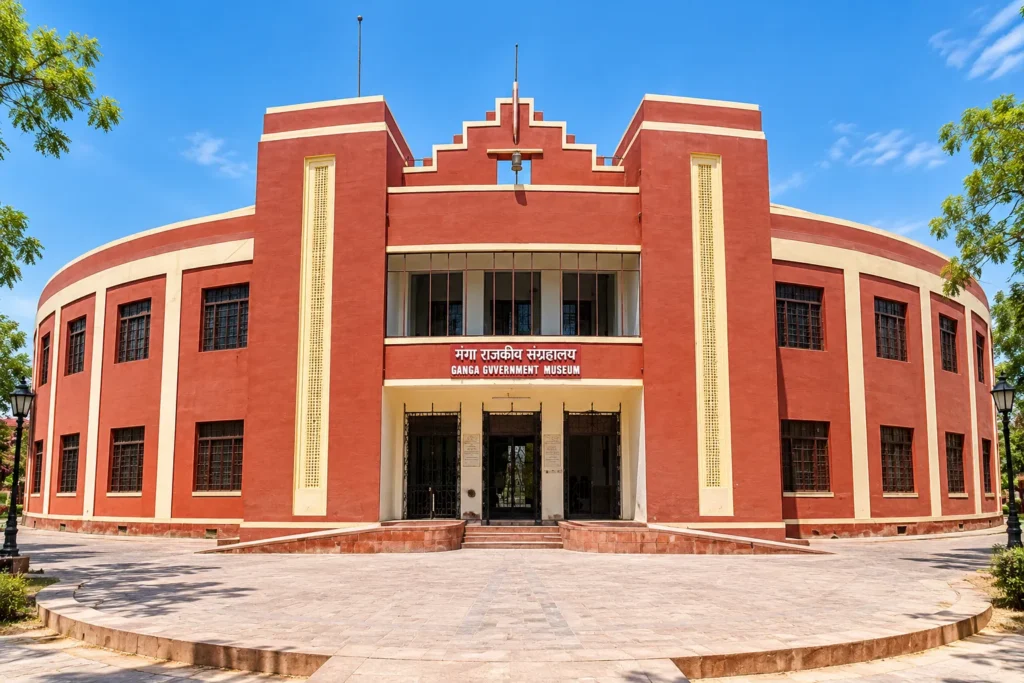
Ganga Government Museum is a useful stop for visitors who want to understand Bikaner’s history beyond its monuments. Its collections include archaeological objects, paintings, handicrafts, pottery, coins and historical weapons. These exhibits help place the city’s royal and regional heritage within a wider historical context.
A museum visit can complement sightseeing at Junagarh Fort and Lalgarh Palace, particularly for travellers interested in artefacts and traditional art rather than architecture alone.
Visitor information
- Location: Within Bikaner city.
- Best for: History, archaeology, art and cultural collections.
- Timings and entry fee: Confirm current museum opening days, hours and admission rates before visiting.
- Visiting tip: Check whether the galleries you most want to see are open on your chosen day.
8. Devi Kund Sagar
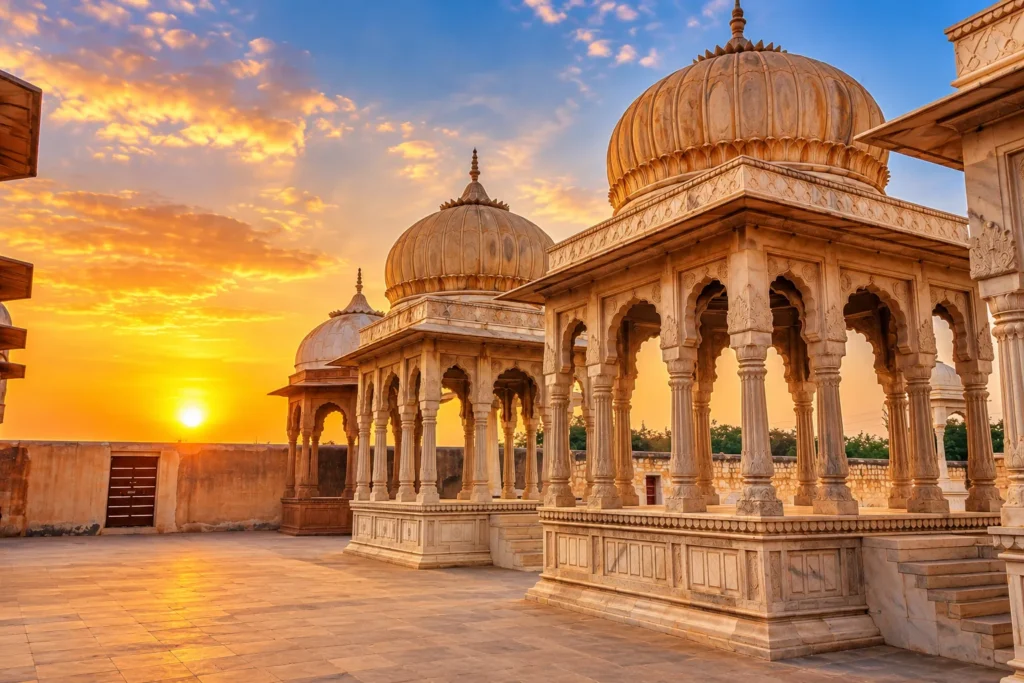
Devi Kund Sagar, also known as the royal cenotaph complex, is a historic memorial site associated with Bikaner’s former ruling family. Its chhatris, or domed cenotaphs, display a variety of architectural details and decorative elements. The white marble cenotaph associated with Maharaja Surat Singh is among the notable features of the complex.
The site offers a quieter heritage experience than the city’s main fort and provides another perspective on the architectural traditions of Bikaner’s royal era.
Visitor information
- Location: Approximately 8 km from Bikaner city, according to Rajasthan Tourism.
- Best for: Royal memorial architecture, heritage photography and a quieter sightseeing stop.
- Timings and entry fee: Confirm current access arrangements and any admission charges locally.
- Visiting tip: Treat the complex as a memorial site and respect its cultural and religious significance.
Places to Visit Near Bikaner
If you have additional time, a few attractions outside the main city are worth considering. They should be treated as separate excursions rather than central Bikaner sightseeing stops.
Karni Mata Temple, Deshnok: Located in Deshnok, outside Bikaner city, this well-known temple is famous for the rats that live within its precincts. It is a major pilgrimage destination and can be considered as a separate outing. Visitors interested in this temple should check its current opening arrangements and religious customs before travelling.
Gajner Palace and Wildlife Sanctuary: Situated outside Bikaner, the Gajner area combines a historic palace with a landscape of woodland and lake scenery. It is better suited to travellers with time for a longer excursion than to those concentrating on the city’s main monuments.
Tips for Bikaner Sightseeing
- Plan around opening hours: Forts, museums, temples and research facilities have different visitor schedules. Confirm the latest information before leaving your accommodation.
- Allow time for the old city: Rampuria Havelis are best explored on foot, while the larger monuments may require separate transport.
- Respect religious sites: Follow footwear, clothing and photography rules at temples.
- Check access before visiting palaces: Some heritage buildings are privately managed, partly converted into hotels or open only in designated areas.
- Choose the season carefully: Cooler months are generally more comfortable for exploring Bikaner’s outdoor monuments and streets.
For a complete travel experience, explore our Bikaner Travel Guide for the best places to visit, things to do, and travel tips.
Frequently Asked Questions
1. What are the best places to visit in Bikaner?
Junagarh Fort, Rampuria Havelis, Bhandasar Jain Temple, Shri Laxminath Temple, Lalgarh Palace, the National Research Centre on Camel, Ganga Government Museum and Devi Kund Sagar are among the principal attractions to consider.
2. Is one day enough for Bikaner sightseeing?
One day can cover several of the city’s main attractions, depending on opening hours, travel time and how long you spend at each site. A longer visit allows more time for museums, the old city and places outside the centre.
3. Which places in Bikaner are best for architecture lovers?
Junagarh Fort, Rampuria Havelis, Bhandasar Jain Temple and Lalgarh Palace are especially worthwhile for their historic design, decorative stonework and architectural detail.
4. Is the National Research Centre on Camel inside Bikaner city?
It is on the outskirts, approximately 8 km from the city according to Rajasthan Tourism. Plan for a short drive rather than assuming it is part of the central old-city walking area.
5. Is Karni Mata Temple in Bikaner city?
No. Karni Mata Temple is in Deshnok, outside Bikaner city, and is best planned as a separate excursion.
One response to “Best Places to Visit in Bikaner: Forts, Havelis & Temples”
[…] For a detailed sightseeing list, see our guide to places to visit in Bikaner. […]