



Junagadh is one of Gujarat’s most fascinating destinations, combining ancient history, sacred mountains, royal architecture, Gujarati food and easy access to the wildlife of the Gir region.
Located at the foothills of Girnar, the city has something for very different kinds of travellers. History lovers can explore Uparkot Fort and Ashoka’s Rock Edicts, architecture enthusiasts can admire Mahabat Maqbara, pilgrims can spend a day on Girnar, and wildlife enthusiasts can continue towards Gir National Park.
The best way to explore Junagadh is to give each experience enough time rather than trying to cover every attraction in a single day.
Junagadh at a Glance
| Information | Details |
| State | Gujarat |
| Region | Saurashtra |
| Main attraction | Girnar |
| Ideal trip duration | 2–3 days |
| Best time to visit | November to February |
| Major heritage sites | Uparkot Fort, Ashoka’s Rock Edicts, Mahabat Maqbara |
| Nearest major airport | Rajkot |
| Railway station | Junagadh Junction |
| Nearby wildlife destination | Gir National Park |
Why Visit Junagadh?
Junagadh is more than just a gateway to Girnar.
The city has a history stretching back more than two thousand years and contains evidence of several different periods of Gujarat’s history. Mauryan-era inscriptions, medieval fortifications, Jain and Hindu pilgrimage sites and Nawab-era buildings can all be found within and around the city.
Its location also makes Junagadh a useful base for exploring the wider Saurashtra region.
The highlights include:
- Girnar Hill and its temples
- Uparkot Fort
- Ashoka’s Rock Edicts
- Mahabat Maqbara
- Sakkarbaug Zoological Garden
- Darbar Hall Museum
- Damodar Kund
- Bhavnath Mahadev Temple
- Gujarati and Kathiawadi food
- Easy access to Gir’s wildlife region
Best Places to Visit in Junagadh
1. Girnar Hill
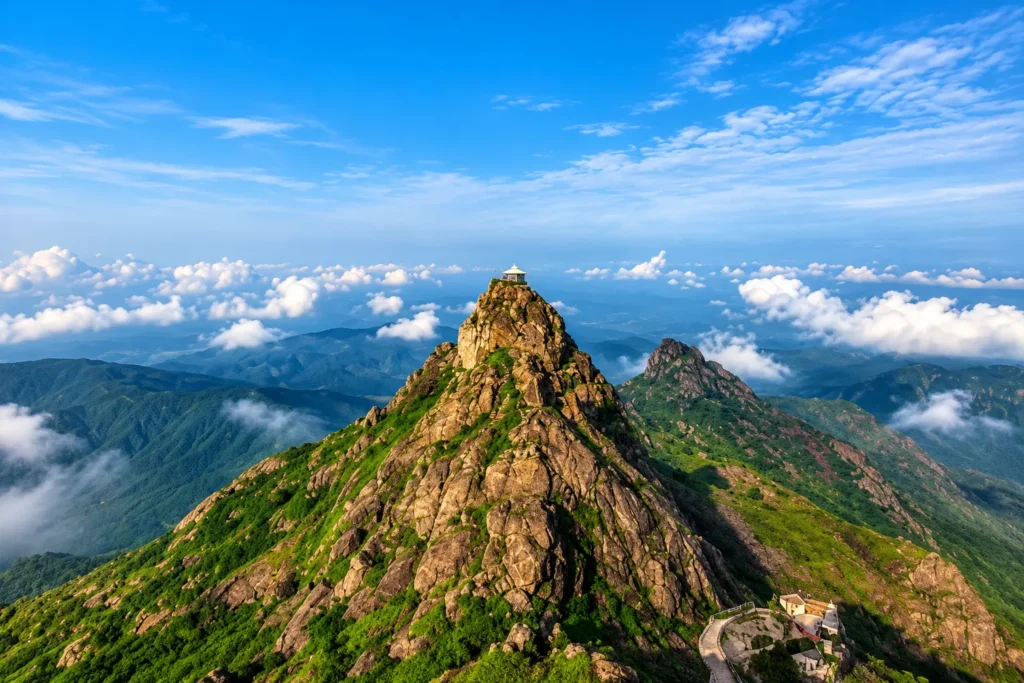
Girnar is the most important attraction in Junagadh and one of the city’s defining landmarks.
The mountain is sacred to both Hindus and Jains and contains several temples along its long staircase route. Important religious sites include the Ambaji Temple, Jain temples associated with Neminath, Gorakhnath Temple and Dattatreya Temple.
Gujarat Tourism describes the climb as roughly 10,000 steps and recommends starting early in the morning. Reaching the higher temples can require most of a day.
Girnar should therefore be treated as a major part of your itinerary rather than a quick sightseeing stop.
Girnar Ropeway
The Girnar Udan Khatola makes the mountain more accessible by carrying visitors from the foothills towards the Ambaji area.
The official operator currently lists a regular ticket at ₹699 and a child ticket at ₹350. A personal cabin is also available, listed at ₹5,600 for up to eight passengers.
The ropeway ride takes approximately nine minutes.
However, the ropeway does not take you to every temple on Girnar. Visitors wanting to reach the higher shrines still need to walk considerable distances.
Check the official operator website for current fares, operating hours and weather-related changes before travelling.
2. Uparkot Fort
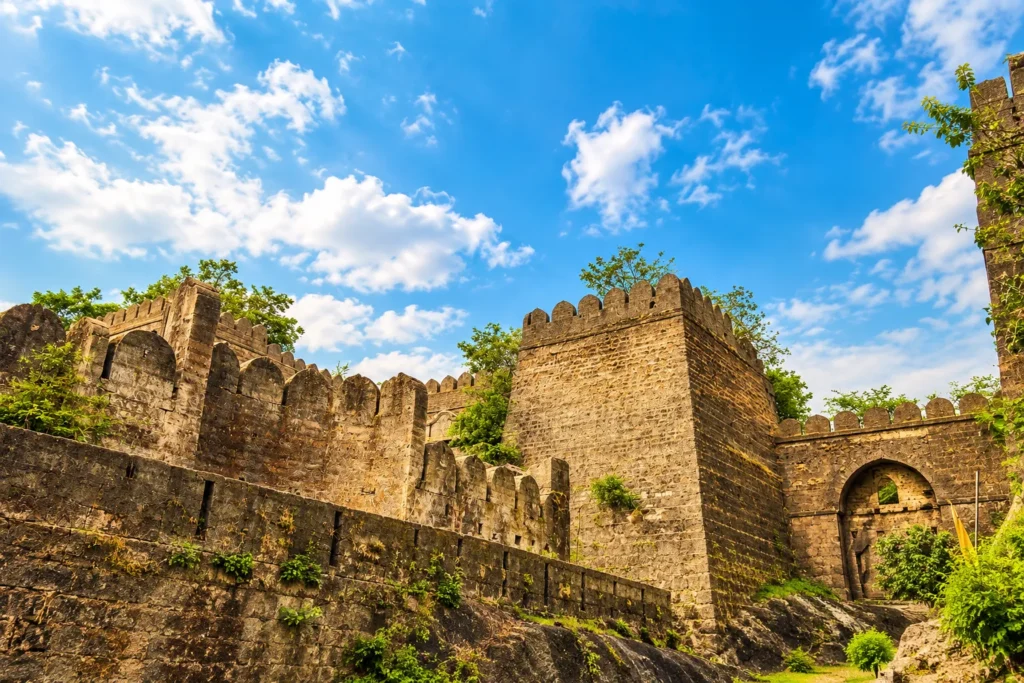
Uparkot Fort is one of the best places to understand Junagadh’s long history.
The ancient fort contains massive defensive walls, historic gateways, Buddhist cave remains and remarkable water structures.
Two of its most interesting features are Adi Kadi Vav and Navghan Kuvo.
Adi Kadi Vav
Adi Kadi Vav is unusual because it was carved directly into rock rather than constructed in the style of Gujarat’s famous architectural stepwells.
The Junagadh district administration describes a staircase of around 120 steps leading down into the structure.
Navghan Kuvo
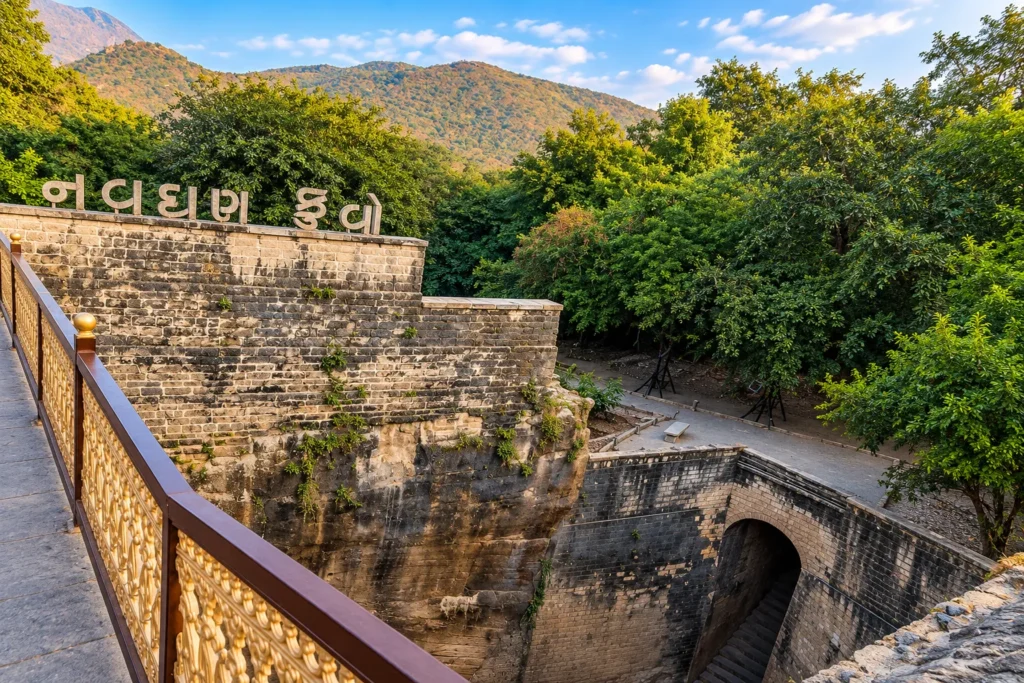
Navghan Kuvo is another impressive water structure inside Uparkot.
The well extends roughly 52 metres into the rock, with steps descending around the shaft.
These structures show how important water management was to the survival of the fortified city.
Allow around two to three hours if you want to explore Uparkot properly.
3. Mahabat Maqbara
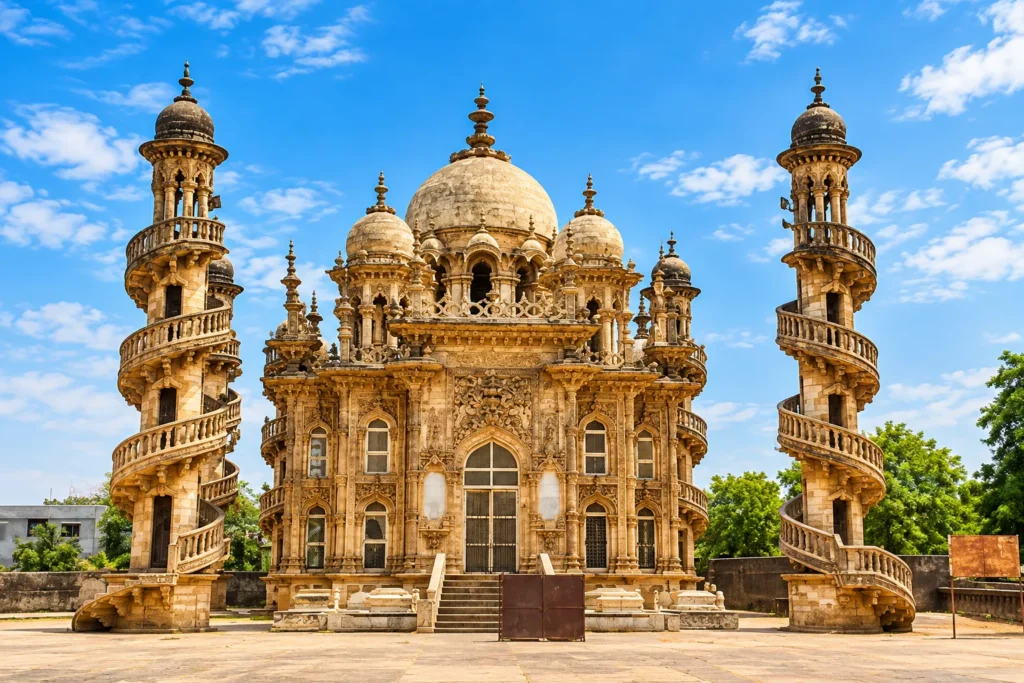
Mahabat Maqbara is one of Junagadh’s most distinctive architectural landmarks.
The mausoleum was constructed during the Nawab period and combines Indo-Islamic architecture with European influences.
Its elaborate exterior features:
- Ornamental stonework
- Domes
- Decorative arches
- Spiral minarets
- Gothic-inspired elements
- Intricate doors and windows
It is particularly convenient to visit as part of a heritage tour of central Junagadh.
4. Ashoka’s Rock Edicts
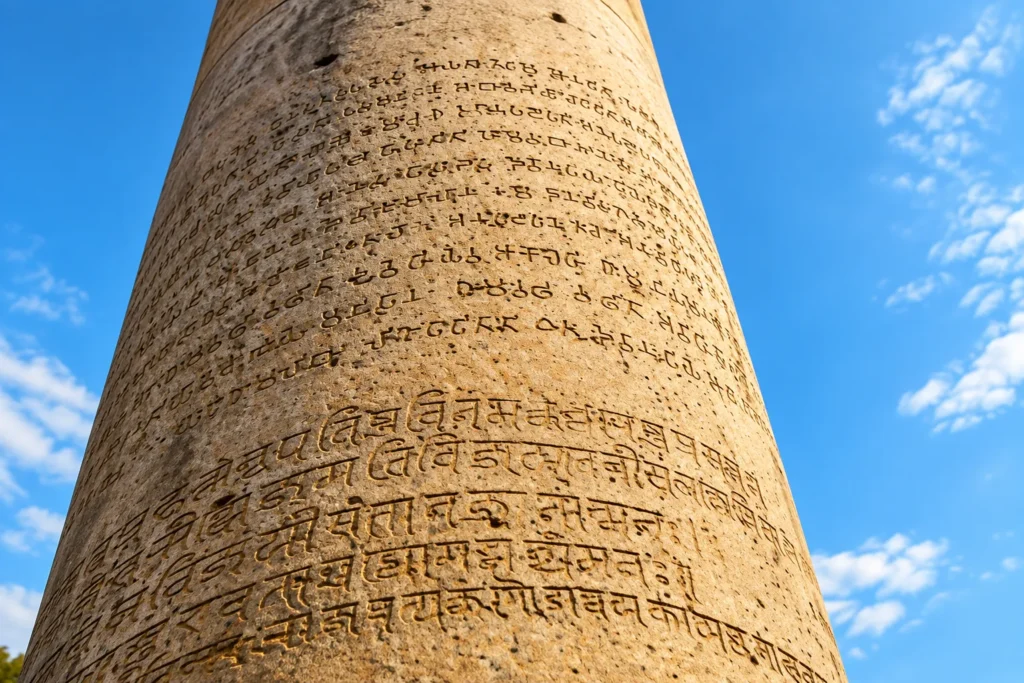
History enthusiasts should not miss Ashoka’s Rock Edicts.
The inscriptions date to around the 3rd century BCE and are associated with Emperor Ashoka. The inscriptions are written in Brahmi script and provide important evidence of the political and cultural history of ancient India.
The Junagadh district administration currently lists the site as open from 8:00 AM to 6:00 PM.
Entry information can change, so check the official local tourism information before visiting.
5. Sakkarbaug Zoological Garden
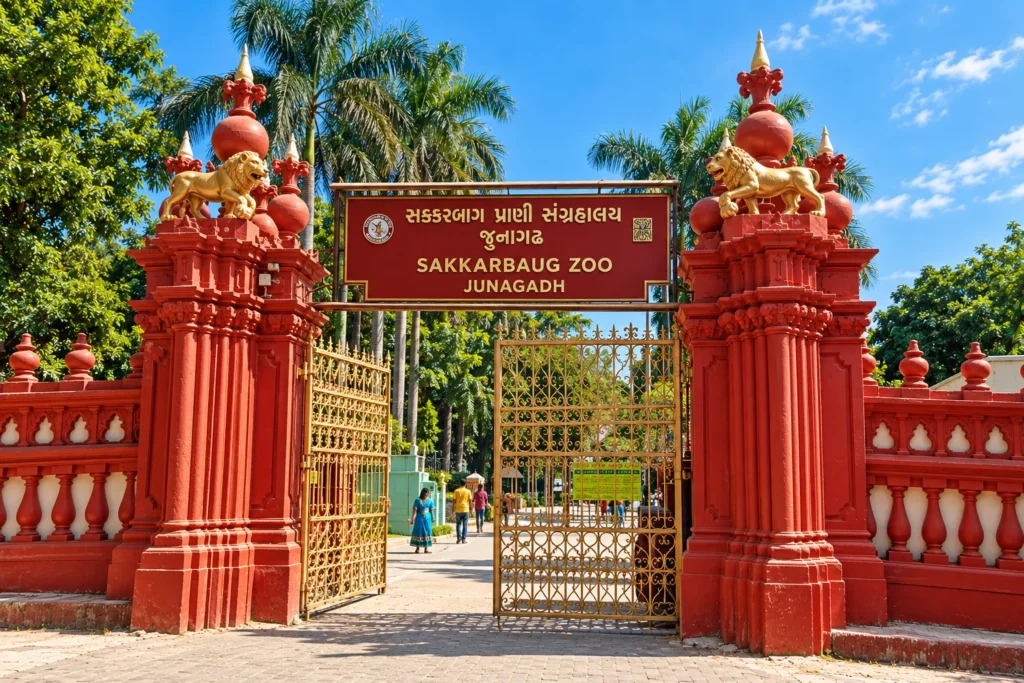
Sakkarbaug Zoological Garden, popularly known as Sakkarbaug Zoo, dates back to 1863.
It covers around 200 hectares and has been associated with conservation and captive breeding programmes for Asiatic lions.
It can be a good addition to a Junagadh itinerary for families and travellers interested in wildlife who do not have time for a full Gir safari.
The Junagadh district administration currently lists its opening hours as 9:00 AM to 6:30 PM, with Wednesday as the weekly closing day.
6. Darbar Hall Museum
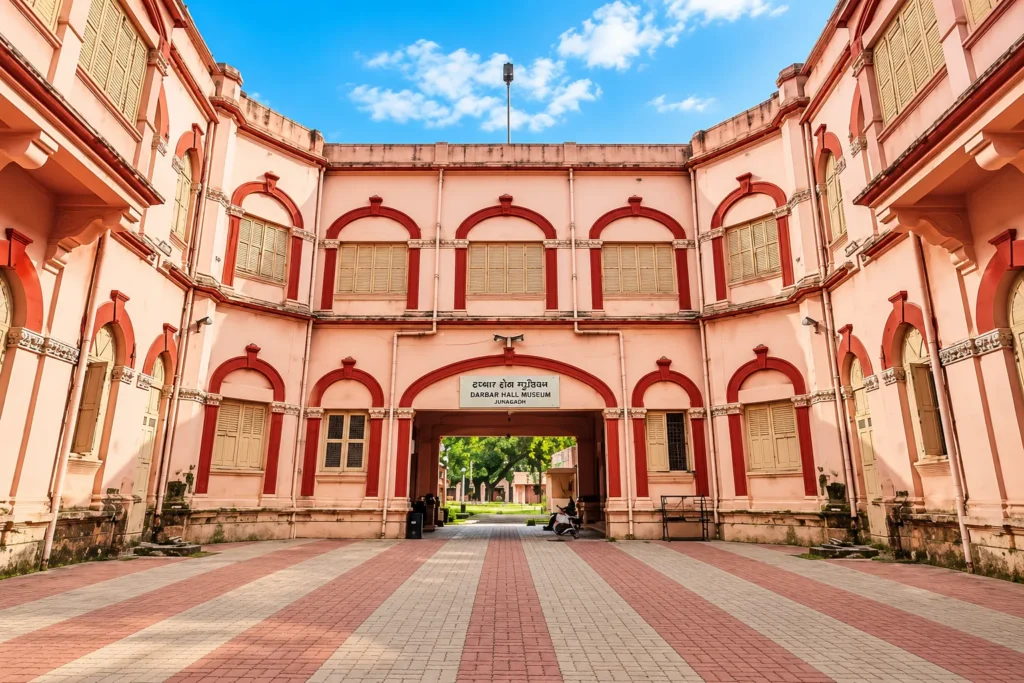
Darbar Hall Museum offers a glimpse into Junagadh’s Nawab-era history.
The collection includes historical photographs, weapons, armour, textiles, silver objects, royal belongings and other artefacts.
Museum timings and operational status can change, so it is worth checking current information before making it a fixed part of your itinerary.
7. Damodar Kund
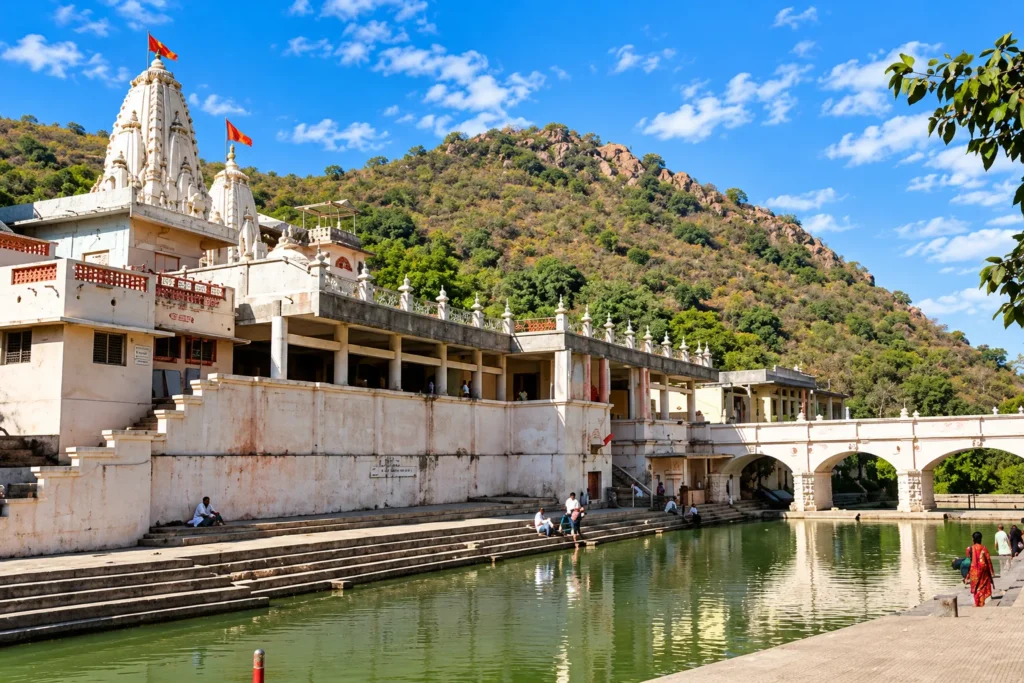
Damodar Kund is located at the foot of Girnar and is an important Hindu pilgrimage site.
The sacred water body is surrounded by a ghat and is closely connected with the Girnar pilgrimage route.
Because of its location, it is easy to combine Damodar Kund with a Girnar visit.
8. Bhavnath Mahadev Temple
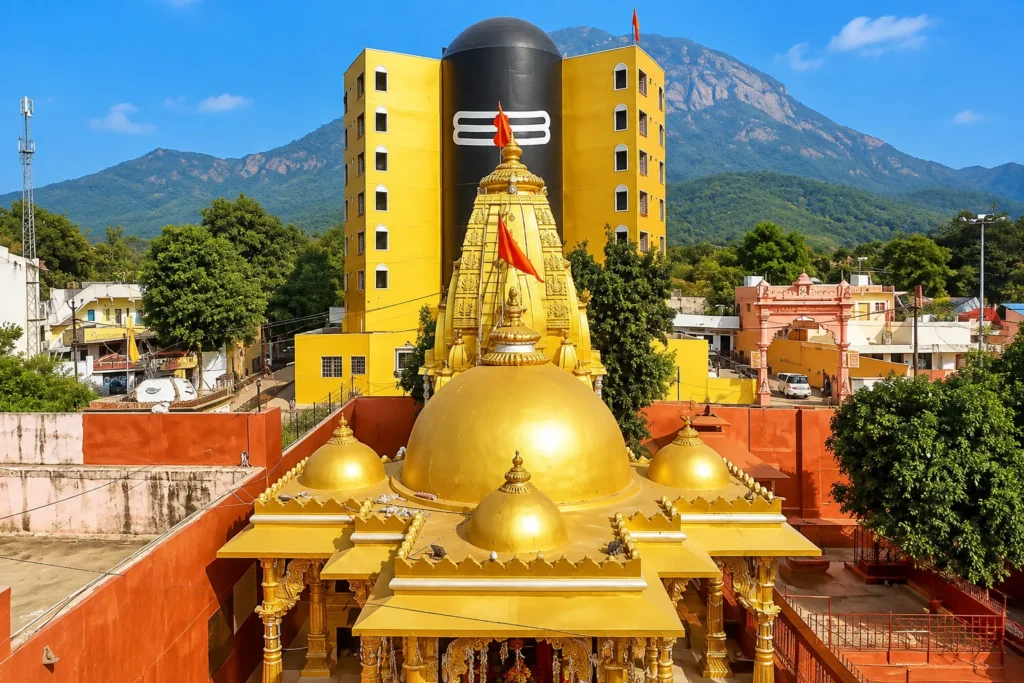
Bhavnath Mahadev Temple is located near Girnar Taleti.
The temple is particularly famous for the annual Bhavnath Maha Shivratri Mela, which attracts pilgrims, sadhus and visitors.
If you visit during the festival, expect much larger crowds and increased traffic around the Girnar foothills.
9. Datar Hill
Datar Hill is another religious site around Junagadh and is associated with the shrine of Jamiyal Shah Datar.
It can be included if you have additional time beyond the main Girnar and heritage itinerary.
Best Things to Do in Junagadh
Instead of simply ticking off tourist places, consider these experiences:
Climb Girnar
For physically fit travellers, the Girnar climb is one of the most memorable experiences in Junagadh.
Start early, carry water and wear comfortable footwear.
Ride the Girnar Ropeway
The ropeway is a convenient alternative to climbing the lower section of the mountain.
It is also a good way to see the surrounding landscape from above.
Explore Uparkot Fort
Spend enough time inside the fort to see the ancient wells, caves and defensive structures.
Discover Junagadh’s Architecture
Compare the very different architectural traditions represented by:
- Ashoka’s inscriptions
- Uparkot Fort
- Mahabat Maqbara
- Nawab-era buildings
Try Gujarati and Kathiawadi Food
Food is an important part of the Junagadh experience.
Try Gujarati thali, Kathiawadi dishes, dhokla, khaman, thepla, kadhi-khichdi, farsan and seasonal undhiyu.
Visit Gir Wildlife Region
If you have an additional day, combine Junagadh with a Gir Jungle Safari.
Junagadh and Gir National Park: How to Plan Both
Gir and Junagadh are closely connected geographically, but they offer very different experiences.
Junagadh is primarily about history, Girnar, architecture and pilgrimage.
Gir National Park and the surrounding Gir landscape are about wildlife and the Asiatic lion.
The official booking system lists Gir Jungle Safari and Girnar Nature Safari as separate experiences.
The Gir Jungle Safari is seasonal and currently closes from 16 June to 15 October each year.
If wildlife is an important part of your trip, check the official booking calendar and arrange your safari permit in advance.
Do not assume that a Junagadh sightseeing day can comfortably accommodate a full Gir safari as well.
Best Time to Visit Junagadh
November to February
This is generally the most comfortable period for sightseeing and Girnar.
Temperatures are more suitable for outdoor activities, especially the long Girnar climb.
March to May
Summer becomes hot.
If you visit during these months, start outdoor activities as early as possible and avoid undertaking long climbs during the hottest part of the day.
June to October
The monsoon changes the landscape around Girnar, but it is not the best period if your primary purpose is a Gir safari.
The official Gir booking system currently closes the Gir Jungle Safari and Girnar Nature Safari from 16 June to 15 October.
Festivals
Junagadh can become particularly busy during major religious festivals, especially the Bhavnath Maha Shivratri Mela.
Book accommodation early if you specifically want to experience a major festival.
How Many Days Are Enough for Junagadh?
One day
A one-day trip is possible if you focus on the major heritage attractions.
Suggested route:
Uparkot Fort → Ashoka Edicts → Mahabat Maqbara → central Junagadh
Two days
Two days are better for a first visit.
Day 1: Junagadh heritage
Day 2: Girnar
Three days
Allow you to add wildlife in Three days.
Three days let you experience Junagadh’s heritage, Girnar, and the wildlife of Gir.
If your main objective is wildlife rather than Junagadh itself, consider staying closer to Sasan Gir for the safari night.
2-Day Junagadh Itinerary
Day 1: History and Heritage
Morning
Start with Uparkot Fort.
Explore the fort walls, Adi Kadi Vav, Navghan Kuvo and the other historical structures.
Late Morning
Visit Ashoka’s Rock Edicts.
Afternoon
Return towards central Junagadh and visit Mahabat Maqbara.
Late Afternoon
Visit Darbar Hall Museum, subject to its current opening schedule.
Evening
Explore local food spots and try Gujarati or Kathiawadi dishes.
Keep the evening relatively relaxed because the next day should start early.
Day 2: Girnar
Start early at Girnar Taleti.
Choose between:
- A full climb
- Ropeway followed by further walking
Visit the temples according to your physical ability and available time.
You can also include:
- Damodar Kund
- Bhavnath Mahadev Temple
Do not overload this day with unrelated city sightseeing.
3-Day Junagadh and Gir Itinerary
Day 1
Explore:
- Uparkot Fort
- Adi Kadi Vav
- Navghan Kuvo
- Ashoka Edicts
- Mahabat Maqbara
Day 2
Spend the day around Girnar:
- Girnar Ropeway or full climb
- Ambaji Temple
- Jain temples
- Damodar Kund
- Bhavnath
Day 3
Travel towards the Gir region and take a pre-booked Gir Jungle Safari, subject to the official operating season and availability.
How to Reach Junagadh
By Train
Junagadh Junction provides railway connectivity to the wider Gujarat network and is one of the most convenient ways to reach the city.
By Air
The Junagadh district administration currently identifies Rajkot Airport, approximately 100 km away, as the nearest airport.
Flight schedules change, so check current services before booking.
By Road
Junagadh is connected by road with major destinations across Gujarat.
Buses, taxis and private vehicles are available.
A private car can be particularly convenient if your itinerary includes Junagadh, Gir, Somnath and other destinations in Saurashtra.
How to Travel Around Junagadh
For sightseeing within the city, you can use:
- Auto-rickshaws
- Local taxis
- Private cabs
- Private vehicles
Walking is also practical around some of the central heritage areas.
For Girnar, however, plan your transport around your starting point at Girnar Taleti and the time required for the mountain experience.
Where to Stay in Junagadh
Near the city centre
Choose the city centre if your itinerary focuses on:
- Uparkot Fort
- Mahabat Maqbara
- Museums
- Old-city food
- Railway station access
Near Girnar/Bhavnath
This area is more convenient if you want an early start for Girnar.
Sasan Gir
If your main objective is a Gir Jungle Safari, staying in or around Sasan Gir can make more sense than travelling back and forth from Junagadh.
What to Eat in Junagadh
Junagadh is a good place to explore Gujarati and Kathiawadi flavours.
Some dishes worth trying include:
- Gujarati thali
- Kathiawadi food
- Dhokla
- Khaman
- Thepla
- Kadhi-khichdi
- Undhiyu
- Farsan
- Dabeli
- Doodhpak
For a more local experience, explore traditional food shops and busy local eating areas rather than limiting yourself to hotel restaurants.
Junagadh Trip Planner
| Category | Recommendation |
| Minimum time | 1 day |
| Recommended first trip | 2 days |
| Junagadh + Gir | 3 days |
| Best season | November–February |
| Must-see | Girnar |
| Best historical attraction | Uparkot Fort |
| Architectural highlight | Mahabat Maqbara |
| Ancient heritage | Ashoka’s Rock Edicts |
| Family attraction | Sakkarbaug Zoo |
| Wildlife extension | Gir National Park |
| Main railway station | Junagadh Junction |
| Nearest major airport | Rajkot |
| Best area for Girnar-focused stay | Girnar/Bhavnath |
| Best area for safari-focused stay | Sasan Gir |
Frequently Asked Questions About Junagadh
1. Is Junagadh worth visiting?
Yes, especially if you are interested in history, architecture, pilgrimage, mountains and wildlife. The city offers a combination of Girnar, Uparkot Fort, Ashoka’s Edicts, Mahabat Maqbara and access to Gir.
2. What is Junagadh famous for?
Junagadh is best known for Girnar, Uparkot Fort, its ancient Ashokan inscriptions, Nawab-era architecture and its proximity to Gir’s Asiatic lion habitat.
3. How many days are enough for Junagadh?
Two days are ideal for a first visit if you want to explore both the city and Girnar. Add a third day if you want to include a Gir safari.
4. How many steps are there in Girnar?
The Girnar pilgrimage route is commonly described as having roughly 10,000 steps. The exact number depends on the route and the point you are trying to reach.
5. Can Junagadh be covered in one day?
The major city attractions can be covered in one day, but adding the full Girnar experience makes a two-day itinerary much more practical.
Final Takeaway
Junagadh is best experienced as a combination of mountain, history and wildlife, rather than as a simple list of tourist attractions.
Spend one day discovering its forts, inscriptions and Nawab-era architecture. Give another day to Girnar. If you have more time, continue towards Gir for a wildlife experience.
That approach gives you enough time to appreciate what makes Junagadh different from other Gujarat destinations—and avoids turning a memorable trip into a rushed checklist.
One response to “Junagadh, Gujarat: A Complete Travel Guide to Girnar, Heritage, Food and Wildlife”
[…] Also Read: Junagadh, Gujarat: A Complete Travel Guide to Girnar, Heritage, Food and Wildlife […]