


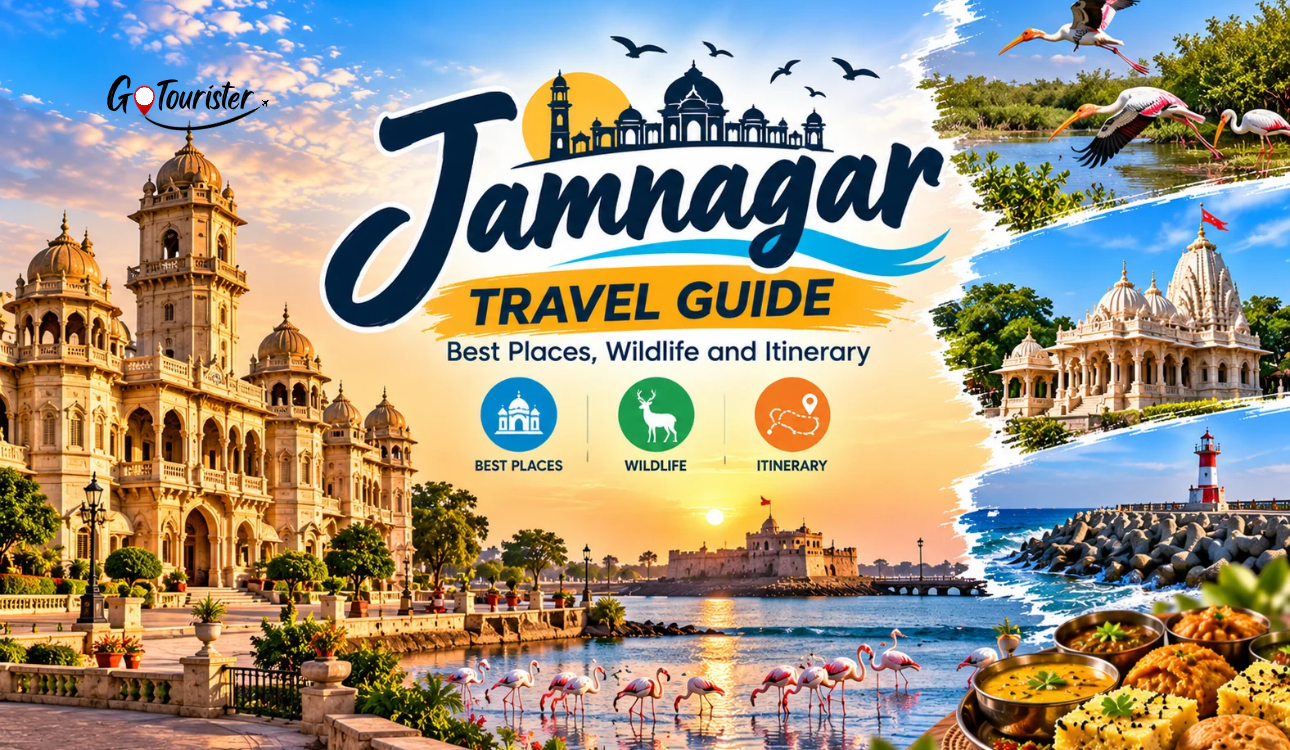
Imagine spending your morning beside a historic palace surrounded by a lake, exploring a colourful marine ecosystem in the afternoon and watching migratory birds in a peaceful wetland the next day. This is the kind of travel experience Jamnagar offers.
Located in Gujarat’s Saurashtra region, Jamnagar is a destination where royal architecture, religious traditions and natural beauty come together. Often called the Jewel of Kathiawar, the city is known for Lakhota Palace, Bala Hanuman Temple, traditional Bandhani textiles and its proximity to the Gulf of Kutch’s remarkable marine environment.
Many travellers treat Jamnagar as a stop on the way to Dwarka. However, the city and its surroundings deserve more attention, particularly if you enjoy wildlife, photography, heritage walks and destinations that offer something beyond conventional sightseeing.
This Jamnagar travel guide takes a different approach to exploring the city. Instead of simply listing tourist attractions, it helps you build a travel experience around heritage, nature, local culture and practical trip planning.
Start Your Journey at Lakhota Lake
If there is one place that captures the character of Jamnagar, it is Lakhota Lake. Situated in the heart of the city, this historic lake provides a scenic setting for one of Gujarat’s most recognisable landmarks.
Lakhota Lake and Lakhota Palace
Lakhota Lake, also known as Ranmal Lake, is a popular place to begin your Jamnagar sightseeing trip. The lake surrounds an island structure known as Lakhota Palace or Lakhota Kotha, which historically served defensive and royal purposes.
The combination of water, historic architecture and surrounding walkways makes this area particularly attractive for photography. Visit in the early morning for a quieter atmosphere or towards evening when the changing light creates beautiful views across the water.
The lake is also associated with birdlife, particularly during the cooler months. Take a leisurely walk around the accessible areas and enjoy the contrast between the historic structure and the everyday life of the city.
Explore the Lakhota Palace Museum
Inside the historic Lakhota structure, the Archaeological Museum of Jamnagar displays artefacts connected with the region’s past. Its collections include historical objects, sculptures and other material that helps explain the area’s cultural heritage.
The museum adds historical context to the lake. Rather than treating Lakhota Palace simply as a scenic landmark, visitors can understand how the structure formed part of Jamnagar’s royal and defensive history.
Travel tip: Check the current museum schedule before visiting. Published timings can vary by season, and the museum has specified weekly closing days and holiday restrictions.
Enjoy the Bala Hanuman Temple Experience
Jamnagar is also known for the Bala Hanuman Temple, situated near Ranmal Lake. The temple is famous for the continuous chanting of the Sri Ram, Jai Ram, Jai Jai Ram mantra that began in 1964.
The atmosphere is especially memorable for visitors interested in religious traditions. Rather than rushing through the temple as another sightseeing stop, spend some time observing the devotional environment respectfully.
Evening can be a good time to experience the temple’s atmosphere, although you should confirm current timings before planning your visit.
Together, Lakhota Lake, Lakhota Palace Museum and Bala Hanuman Temple make an excellent first-day sightseeing cluster.
Discover Jamnagar’s Royal Past
Jamnagar was founded in 1540 by Jam Rawal and developed as the capital of the former Nawanagar princely state. Its history remains visible in its palaces, gateways, historic neighbourhoods and distinctive architecture.
Travellers who enjoy heritage tourism can explore several additional landmarks beyond Lakhota Lake.
Pratap Vilas Palace
Pratap Vilas Palace is known for its architectural blend of Indian and European influences. Decorative details, carved columns and its grand exterior reflect the artistic tastes associated with the former royal establishment.
The palace is an interesting stop for architecture enthusiasts and photographers. However, access to the building’s interior may be restricted, so check current visitor permissions before including it in a detailed itinerary.
Darbargadh
Darbargadh is associated with the old royal residence of Jamnagar. Its historic architectural elements offer a glimpse into the city’s former princely identity.
Depending on the accessible areas, visitors may notice decorative stonework, carved details and traditional architectural features. As some heritage structures are in active urban areas or have restricted access, respect local boundaries and avoid entering private premises without permission.
Bhujiyo Kotho
Bhujiyo Kotho is another historic landmark associated with Jamnagar’s skyline. Its unusual appearance makes it an interesting subject for travellers who enjoy architectural photography and lesser-known heritage locations.
Before planning a visit, check whether the structure or its surrounding areas are open to the public. You can still explore the surrounding heritage neighbourhood where access is permitted.
Suggested experience: Dedicate a few hours to Jamnagar’s old city rather than visiting each monument separately. This creates a more meaningful heritage walk and helps you appreciate how the city’s history connects its landmarks.
Experience India’s Remarkable Marine Ecosystem
Jamnagar’s most distinctive natural attraction lies beyond its historic streets. The coastal region around the Gulf of Kutch contains mangroves, tidal flats, coral habitats and marine life that make it an important destination for nature enthusiasts.
The Marine National Park and Marine Sanctuary are among the strongest reasons to extend your Jamnagar trip beyond a single day.
Marine National Park: A Different Kind of Wildlife Experience
The Marine National Park in the Gulf of Kutch is recognised as India’s first marine national park. Its protected ecosystem includes coral reefs, mangroves, rocky shores, tidal pools and a variety of marine organisms.
Unlike a conventional zoo or safari, this experience depends heavily on natural conditions. Tides determine which parts of the intertidal environment become accessible, while weather and local permissions influence whether particular excursions can take place.
Depending on the location and conditions, visitors may learn about corals, sea anemones, crabs, starfish, molluscs and other marine organisms. Birdlife also forms an important part of the coastal environment.
The appeal lies in observing a living ecosystem rather than expecting a guaranteed wildlife sighting.
Pirotan Island: Plan Before You Go
Pirotan Island is one of the best-known destinations associated with Jamnagar’s Marine National Park. It lies offshore and is reached by boat from the coastal area near Bedi Port.
However, this is not a typical beach trip where you can simply arrive and start exploring. Visitors must obtain the required permissions, and boat arrangements depend on authorised operators, weather, tides and other local conditions.
Plan the excursion well in advance and confirm whether visits are permitted on your intended date. A knowledgeable guide can help you understand the fragile marine environment and follow the appropriate rules.
Keep in mind that you should not collect coral, shells or marine organisms from protected areas, disturb wildlife or leave waste behind.
Narara Marine National Park: An Alternative to Consider
Narara is another important access area associated with the Marine National Park region. It is often considered by travellers interested in observing intertidal marine life.
The experience differs from an offshore island excursion because the accessible habitat and route depend on the local shoreline and tidal conditions.
Before travelling, confirm current entry permissions, the recommended arrival time, safety requirements and whether guided visits are available. Never assume that low tide alone guarantees safe or authorised access.
Important: Marine excursions should be planned around official guidance rather than fixed online itineraries. Permissions, tidal windows and operating arrangements can change.
Spend a Morning at Khijadiya Bird Sanctuary
Jamnagar is not only a destination for marine life. It is also an excellent place for birdwatching, especially during the winter migration season.
Khijadiya Bird Sanctuary lies approximately 10–12 km from Jamnagar, depending on the route and starting point. Its distinctive landscape combines freshwater wetlands, saltwater marshes, mudflats, creeks and mangrove habitats.
This variety makes the sanctuary attractive to resident and migratory birds.
What Can You See at Khijadiya?
Birdwatchers may encounter flamingos, pelicans, herons, egrets, ducks, ibises and other wetland species, depending on the season and local conditions.
The sanctuary is particularly appealing to photographers because its habitats support different kinds of birdlife within the same broader landscape. However, sightings are never guaranteed, and the best results often come from spending time quietly observing the environment.
Bring binoculars, carry a camera if you enjoy wildlife photography and wear comfortable footwear. Follow marked routes and avoid approaching birds too closely.
When Should You Visit?
Early morning is a sensible choice for birdwatching because it allows you to explore during cooler hours. Winter is generally the preferred season for observing migratory birds.
Check current entry arrangements and access restrictions before travelling. If birdwatching is a major reason for your trip, allow enough time for the visit instead of treating it as a quick stop between other attractions.
Explore Jamnagar’s Spiritual Side
Jamnagar is sometimes described as Chhoti Kashi because of its many religious institutions and temples. Spiritual tourism can therefore form an important part of your visit.
Shri Swaminarayan Temple
The Shri Swaminarayan Temple is known for its religious significance and detailed architecture. It offers visitors an opportunity to experience the city’s devotional traditions and appreciate the craftsmanship associated with temple design.
Visitors should check the current darshan schedule, follow temple rules and dress respectfully.
Other Religious Landmarks
Jamnagar has several additional temples and religious sites, each connected with different traditions and local communities. Depending on your interests, you can explore these places alongside Bala Hanuman Temple.
For a more relaxed spiritual itinerary, avoid trying to visit every temple in one day. Select a few sites, allow time for prayer or observation and leave room for meals and transport.
What to Eat in Jamnagar
Food is an important part of experiencing Jamnagar. The city’s cuisine reflects Gujarati and Kathiyawadi traditions, with a mix of savoury snacks, regional meals and sweets.
Here are some local favourites worth trying during your stay.
Kathiyawadi thali: A hearty regional meal that may include spicy vegetable preparations, bajra rotla, chutneys and other traditional accompaniments.
Gujarati thali: A varied meal featuring vegetables, dal, rice, breads and sweet or savoury accompaniments, depending on the restaurant.
Gathiya: A popular savoury snack that is often enjoyed with chutneys or other accompaniments.
Fafda and jalebi: A well-known Gujarati combination of savoury fried snack and sweet jalebi.
Methi gota: Fried savoury fritters made with fenugreek leaves and gram-flour batter.
Sev tameta nu shaak: A tangy tomato curry topped with sev, often served with traditional Indian breads.
Khichu: A soft, steamed preparation made from seasoned flour and commonly enjoyed as a snack.
Sutarfeni and ghughra: Traditional sweets that you may find at local sweet shops, depending on the season and availability.
For an authentic experience, visit a well-regarded local eatery and try a regional thali. If you prefer mild food, ask about spice levels before ordering because some Kathiyawadi dishes can be quite spicy.
Shopping in Jamnagar: Bring Home Something Local
Jamnagar is known for its traditional textile and craft heritage. Shopping provides an opportunity to explore these traditions while supporting local businesses.
Bandhani Textiles
Bandhani is a traditional tie-dye textile craft associated with Gujarat and neighbouring regions. You can look for sarees, dupattas, dress materials and other garments featuring colourful patterns.
When shopping, compare fabric quality, dyeing techniques and prices. Ask the seller about care instructions, especially if you are buying a delicate garment.
Brass Products and Handicrafts
Jamnagar has a history of metalworking and brass products. Depending on the shops you visit, you may find decorative pieces, household items and other craft products.
Choose established sellers for higher-value purchases and check the finish, weight and material before paying.
Local Markets
Traditional shopping areas such as Chandi Bazaar and other established city markets are worth exploring if you enjoy browsing local goods.
Shopping can be combined with a heritage walk or an evening visit to the city centre. Carry cash for small purchases while also checking which shops accept digital payments.
Where to Stay in Jamnagar
The best place to stay depends on your travel plans, budget and preferred level of convenience.
Central Jamnagar: A practical choice for visitors who want to explore Lakhota Lake, the old city, temples and local markets.
Near transport connections: Useful for travellers arriving by train or plane, especially if they have an early departure.
Business hotel areas: Suitable for travellers who want standard facilities, reliable connectivity and convenient access to commercial areas.
Family-friendly accommodation: Prioritise room size, cleanliness, parking, air conditioning and access to restaurants.
If you plan to visit Narara, Khijadiya or other coastal attractions, check the location carefully and estimate the journey time before booking. A central hotel may be convenient for city sightseeing, while a private vehicle can make excursions outside the city easier.
Compare recent reviews, cancellation terms and the full price, including taxes, before confirming a reservation.
How to Reach Jamnagar
Jamnagar can be reached by air, train and road. Your best route depends on your starting point and whether you plan to visit other destinations in Saurashtra.
By Air
Jamnagar Airport serves the city, but available routes and flight frequency can change. Check current airline schedules before planning your trip.
After arrival, arrange a taxi or another suitable transfer to your hotel. If you are planning a marine excursion early the next morning, consider your arrival time and the distance to the relevant departure point.
By Train
Jamnagar railway station connects the city with destinations through the Indian Railways network. Train travel can be a convenient choice for visitors coming from other parts of Gujarat and selected cities in India.
Check the latest timetable, ticket availability and arrival station before booking.
By Road
Jamnagar is connected by road to Rajkot, Dwarka, Porbandar and other destinations in Gujarat. Buses, taxis and private vehicles provide options for reaching the city.
Road travel is particularly useful if you want to explore multiple attractions outside Jamnagar. However, journey times depend on traffic, road conditions and the route selected.
How to Get Around Jamnagar
Auto-rickshaws, taxis and local transport options can help you explore the city. For nearby heritage attractions, combining stops in the same area can reduce unnecessary travel.
For Khijadiya Bird Sanctuary or coastal excursions, arrange transport in advance and confirm your return journey.
A private vehicle can be useful for families and travellers planning several stops in a day. If you are visiting the Marine National Park, remember that local road transport alone is not sufficient for an island visit; authorised boat arrangements and required permissions must also be organised.
Best Time to Visit Jamnagar
The period from October to March is generally the most comfortable time for exploring Jamnagar and its surrounding natural attractions.
October to March: This is the preferred period for city sightseeing, birdwatching and planning marine excursions, subject to local permissions and suitable tidal conditions.
April to June: Summer temperatures can become uncomfortable for outdoor activities. Plan sightseeing early in the morning or later in the evening, and carry water and sun protection.
July to September: Monsoon conditions may bring changing weather and affect outdoor activities. Check local conditions before travelling to wetlands or coastal locations.
For travellers whose main interests are birdwatching and marine life, winter is a sensible starting point. However, the exact date of a marine excursion should depend on official guidance, tides and access arrangements rather than season alone.
A Three-Day Jamnagar Travel Itinerary
A three-day trip provides enough time to explore the city’s heritage, experience its religious atmosphere and dedicate a day to nature.
Day 1: Heritage and Local Culture
Morning: Start at Lakhota Lake and visit the Lakhota Palace Museum if it is open.
Afternoon: Explore selected heritage landmarks, such as Darbargadh or the accessible areas around Pratap Vilas Palace. Enjoy a Gujarati or Kathiyawadi lunch.
Evening: Visit Bala Hanuman Temple and spend time around the lake or local markets.
Day 2: Marine Life and Coastal Exploration
Morning: Begin your planned Marine National Park excursion, but only after confirming permissions, transport and tidal conditions. If a trip to Pirotan Island is authorised, follow the operator’s instructions and environmental guidelines.
Afternoon: Continue the guided coastal experience if the schedule permits, or return to the city and explore other accessible attractions.
Evening: Enjoy a local meal and rest after the excursion.
Marine visits can take longer than expected, so avoid booking other fixed activities too close to your return time.
Day 3: Birdwatching and a Relaxed Departure
Early morning: Visit Khijadiya Bird Sanctuary for birdwatching.
Late morning: Explore a temple or another attraction you missed on the first day.
Afternoon: Shop for Bandhani textiles, brass products or local snacks before departure.
This itinerary should be adapted to actual opening hours and transport arrangements. If birdwatching or marine life is your main priority, give those activities more time and reduce the number of city attractions.
Places to Visit Near Jamnagar
If you have additional time, consider adding another destination to your Saurashtra trip.
Dwarka
Dwarka is one of Gujarat’s most important pilgrimage destinations, associated with Lord Krishna. Its temples and religious traditions make it a natural addition to a Jamnagar itinerary.
Bet Dwarka
Bet Dwarka is an island destination associated with Krishna traditions. Travel arrangements and access conditions can vary, so check current ferry or transport information before planning your visit.
Rajkot
Rajkot offers a different experience centred on Gandhi-related heritage, museums, local food and urban culture. It can be included in a wider Gujarat road trip.
Porbandar
Porbandar combines Gandhi-related heritage with coastal scenery, temples and birdwatching opportunities. It is a good choice for travellers who want to continue exploring Gujarat’s western coastline.
Somnath
Somnath is known for its prominent temple and pilgrimage importance. Consider it as part of a longer route rather than rushing through the journey in a single day.
When combining destinations, compare current travel times and choose a route that allows enough time for sightseeing, meals and rest.
Responsible Travel: Protect Jamnagar’s Natural Heritage
Jamnagar’s marine and wetland environments are among its most valuable attractions. Responsible tourism helps protect these fragile habitats for future visitors and local wildlife.
- Follow official access rules at the Marine National Park and Bird Sanctuary.
- Do not touch, remove or collect coral, marine animals or protected natural objects.
- Keep a safe distance from birds and other wildlife.
- Avoid littering, particularly near beaches, wetlands and tidal areas.
- Use authorised operators for marine excursions.
- Follow tide, weather and safety instructions.
- Avoid entering restricted areas or attempting unsafe coastal crossings.
A responsible visit is not only safer but also gives you a better opportunity to understand the ecosystems that make Jamnagar special.
FAQs
What is Jamnagar famous for?
Jamnagar is famous for Lakhota Lake and Palace, Bala Hanuman Temple, Bandhani textiles, Khijadiya Bird Sanctuary and the nearby Marine National Park in the Gulf of Kutch.
How many days are enough to explore Jamnagar?
Two days are enough for selected city attractions and a limited nature experience. Three days are preferable if you want to combine heritage sightseeing, birdwatching and a planned marine excursion.
What is the best time to visit Jamnagar?
October to March is generally the best period for sightseeing and birdwatching. Marine excursions require additional planning based on tides, permissions and local conditions.
Is Marine National Park open to visitors throughout the year?
Access depends on permissions, weather, tides and local operating arrangements. Confirm current information with the relevant authorities before travelling.
Can tourists visit Pirotan Island?
Visits may be possible with the required permissions and authorised boat arrangements. Travellers should confirm current access conditions, tidal requirements, fees and safety guidance before making plans.
Is Khijadiya Bird Sanctuary worth visiting?
Yes. Its mix of freshwater wetlands, saltwater habitats and mudflats makes it a valuable destination for birdwatchers and nature photographers, particularly during the winter migration season.
What food should I try in Jamnagar?
Try Gujarati thali, Kathiyawadi dishes, gathiya, fafda-jalebi, methi gota, khichu and traditional sweets such as sutarfeni, depending on local availability.
Can Jamnagar and Dwarka be covered in one trip?
Yes. Many travellers combine Jamnagar and Dwarka in a wider Saurashtra itinerary. Allow enough time for sightseeing, transport and temple visits.
Is Jamnagar suitable for a family holiday?
Yes. Families can explore the lake, museum, temples, local markets and selected nature attractions. Plan marine excursions carefully and consider children’s comfort, weather and travel time.
Final Thoughts
Jamnagar offers a rare combination of royal heritage, spiritual traditions and coastal biodiversity. From walking around Lakhota Lake to exploring the history of the former Nawanagar state, the city rewards travellers who take time to look beyond its main landmarks.
Its biggest distinction is the natural world nearby. The Marine National Park and Khijadiya Bird Sanctuary provide experiences that complement the city’s architecture, food and religious heritage.
For a first visit, spend three days exploring the city and its surroundings at a comfortable pace. Plan any marine excursion carefully, visit the bird sanctuary during a suitable season and leave some time to enjoy Jamnagar’s food and local markets.
Whether you are a nature enthusiast, history lover, photographer or family traveller, Jamnagar can be a memorable highlight of your Gujarat journey.