



Goa is famous for its beaches, but its history offers just as many reasons to explore this beautiful coastal state. From centuries-old churches and Portuguese-era forts to traditional temples, heritage mansions and fascinating museums, Goa preserves a rich cultural legacy shaped by trade, religion, architecture and changing political powers.
Whether you are a history enthusiast, an architecture lover or a traveller looking to discover something beyond the beaches, exploring the historical places in Goa offers a fascinating journey through the region’s past.
In this guide, discover Goa’s most important heritage sites, their historical significance, locations, architectural highlights, visitor etiquette and practical sightseeing tips.
Also Read: Best Beaches in Goa: Location, Activities & Travel Tips
1. Old Goa: Historic Churches and Monuments
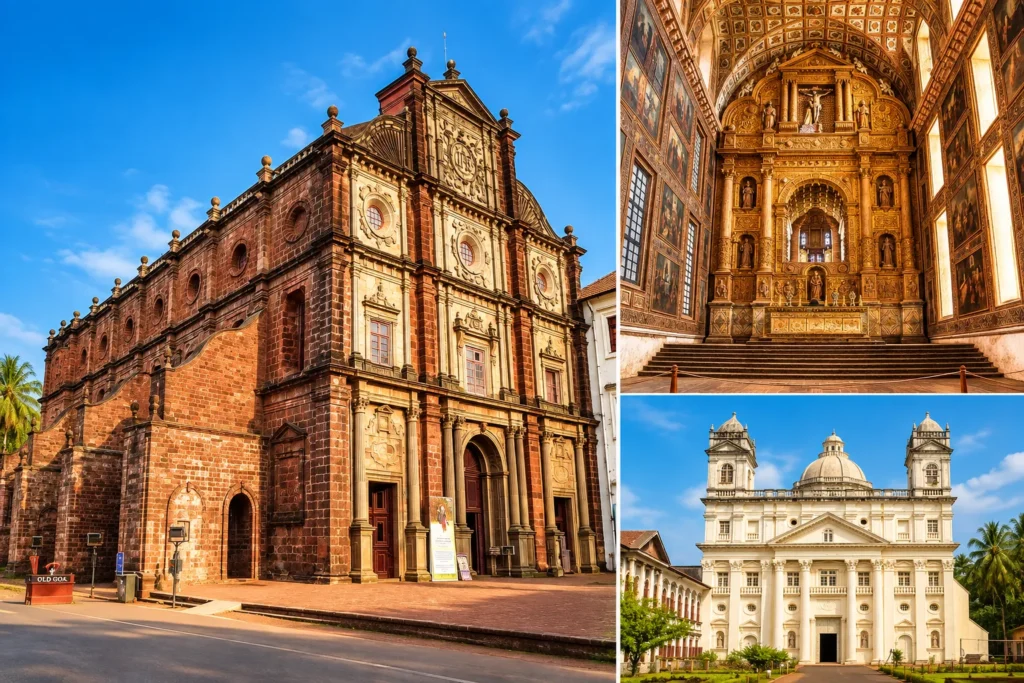
Old Goa, also known as Velha Goa, is one of the most important historical destinations in the state. It developed into a major Portuguese colonial centre during the 16th century and became known for its monumental churches, convents and religious institutions.
The Churches and Convents of Goa are recognised as a UNESCO World Heritage property, reflecting the historical importance of the former colonial capital and its religious architecture.
Basilica of Bom Jesus
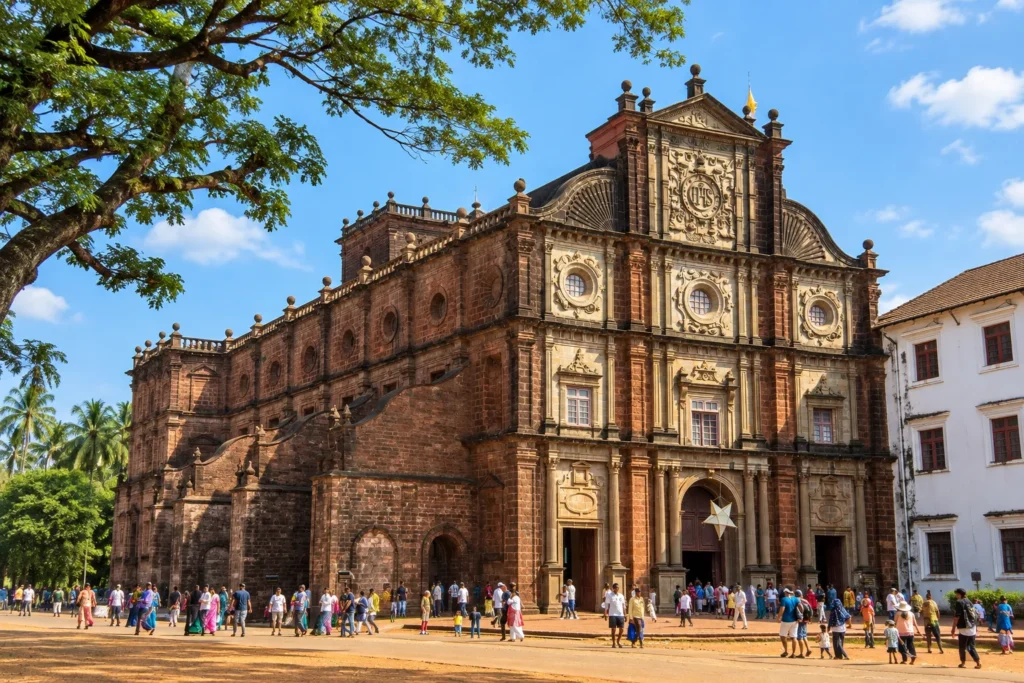
Location: Old Goa, approximately 10 km east of Panaji.
The Basilica of Bom Jesus is among Goa’s most celebrated historic churches. Consecrated in 1605, it is particularly significant for housing the venerated relics of St Francis Xavier, the Jesuit missionary associated with the spread of Christianity in Asia.
The basilica is known for its exposed laterite exterior and richly decorated interior. Its architecture reflects the influence of European religious traditions and the artistic craftsmanship that developed in Portuguese Goa.
Historical significance: The basilica forms part of the UNESCO-listed Churches and Convents of Goa and remains an important pilgrimage destination.
Visitor tips: Dress modestly, maintain silence during worship and follow the church’s photography rules. Check access arrangements during religious services and special events.
Sé Cathedral
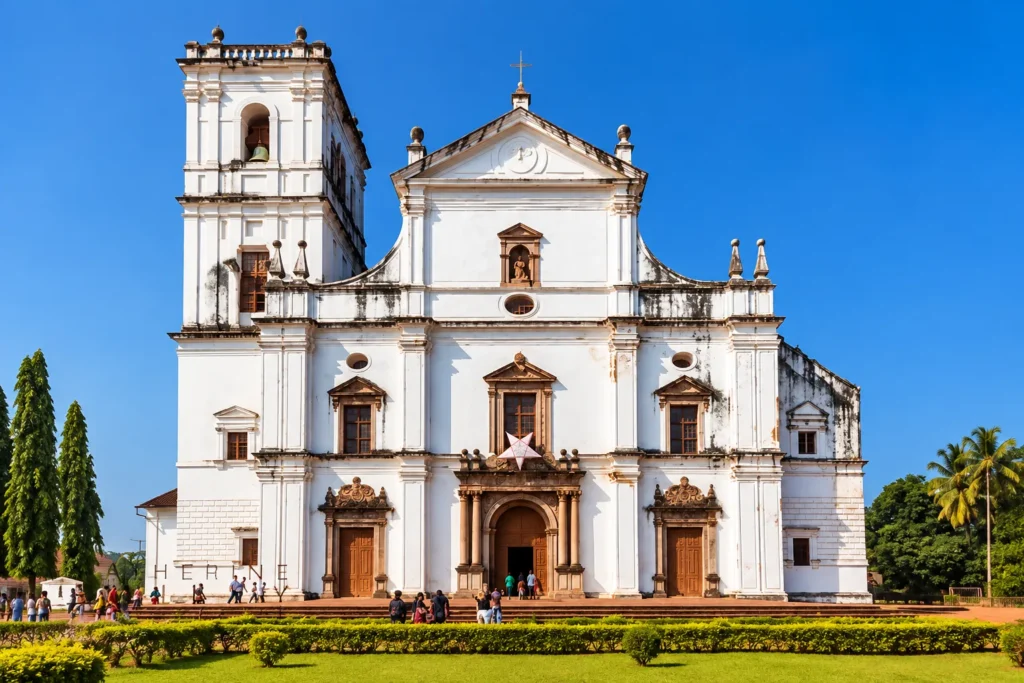
Location: Old Goa, opposite the Church of St Francis of Assisi.
Sé Cathedral is one of Goa’s largest historic churches. Dedicated to St Catherine of Alexandria, it commemorates the Portuguese conquest of Goa in 1510, traditionally associated with her feast day.
The cathedral’s monumental scale reflects the importance of the Portuguese colonial church. Its architecture incorporates European Renaissance influences and elaborate religious decoration.
What to see: The impressive façade, spacious interior, ornate altars and historic bell tower.
The cathedral is an active religious site, so visitors should respect worshippers and any restrictions during services.
Church of St Francis of Assisi
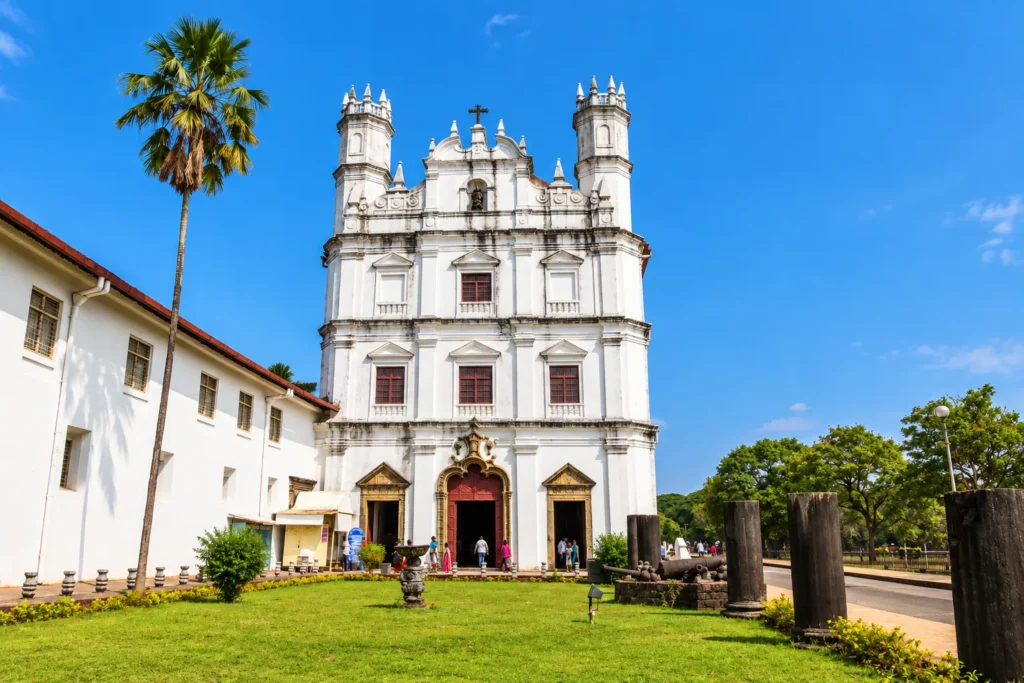
Location: Old Goa, next to Sé Cathedral.
The Church of St Francis of Assisi is known for its decorated interior, religious paintings and carved ornamentation. Its history includes an earlier church and a later rebuilding during the Portuguese period.
The adjoining convent building houses the Archaeological Museum, making this area particularly useful for visitors interested in both architecture and historical collections.
Church of St Cajetan
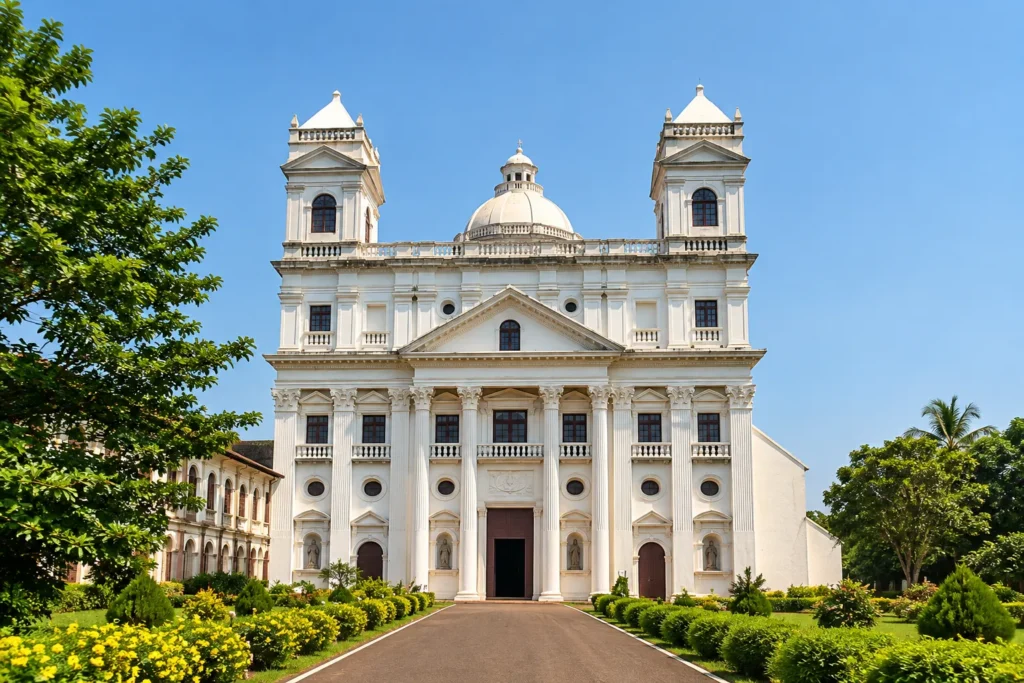
Location: Old Goa, near Sé Cathedral.
The Church of St Cajetan is a striking example of European-inspired religious architecture in Goa. Completed in the 17th century, it is known for its dome, classical columns and carefully composed façade.
Its architectural design is often compared with European church models, illustrating how European influences were adapted to Goa’s religious and cultural environment.
Chapel of St Catherine
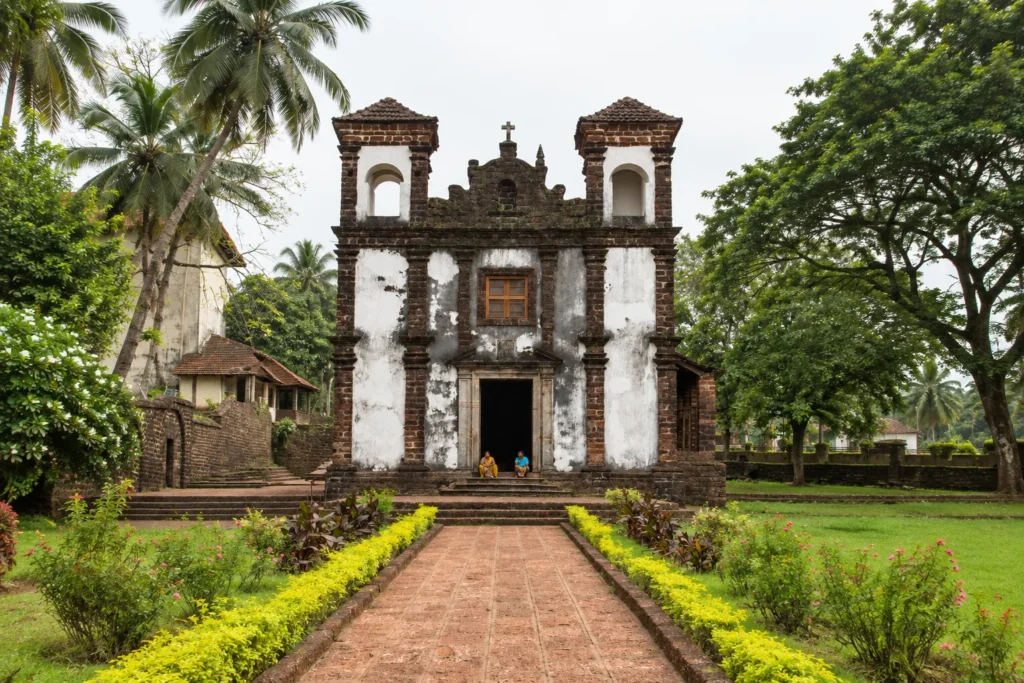
Location: Old Goa.
The Chapel of St Catherine is associated with the Portuguese conquest of Goa in 1510. It commemorates an important event in the region’s colonial history.
Compared with Old Goa’s larger churches, the chapel is relatively modest in scale, offering a different perspective on the early development of the historic settlement.
Church of Our Lady of the Rosary
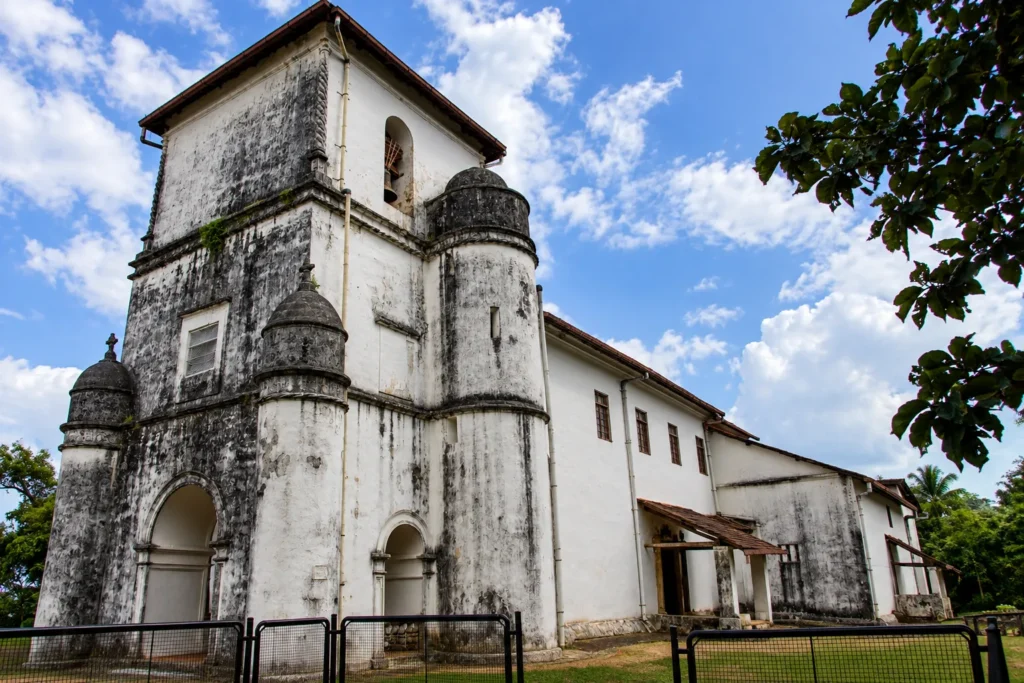
Location: Monte Santo, Old Goa.
The Church of Our Lady of the Rosary is among the oldest surviving churches in Old Goa. Its relatively austere architectural character contrasts with the elaborate decoration of some of the larger monuments.
Its location on Holy Hill also connects it to the early religious and urban landscape of Portuguese Goa.
2. Famous Forts in Goa
Goa’s forts reveal the strategic importance of the region’s coastline, river mouths and maritime trade routes. Many were built or developed to defend settlements, monitor shipping and protect important waterways.
Fort Aguada
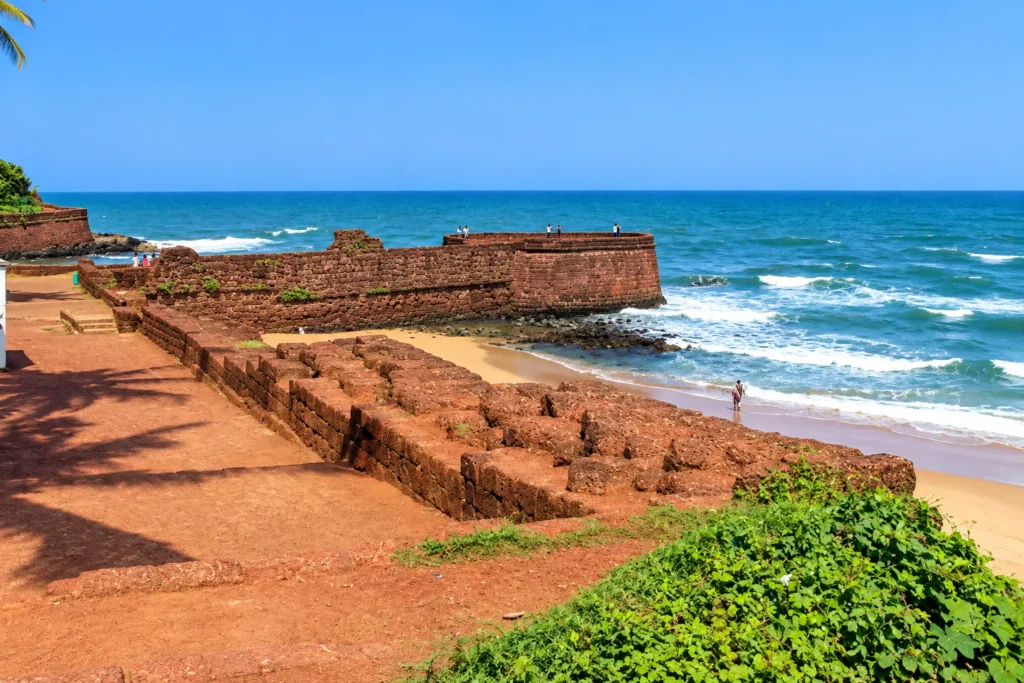
Location: Sinquerim, North Goa.
Fort Aguada was constructed by the Portuguese in the early 17th century to defend the entrance to the Mandovi River and protect Goa’s coastal approaches.
Its name is associated with the Portuguese word for water, reflecting the importance of its freshwater facilities for ships travelling along the western coast of India.
The fort’s substantial walls, strategic position and historic lighthouse make it one of Goa’s best-known military heritage sites.
Historical significance: Fort Aguada formed part of the Portuguese coastal defence network and helped protect important maritime routes.
Visitor tips: Wear comfortable footwear, carry water and avoid climbing on walls or entering restricted areas.
Reis Magos Fort
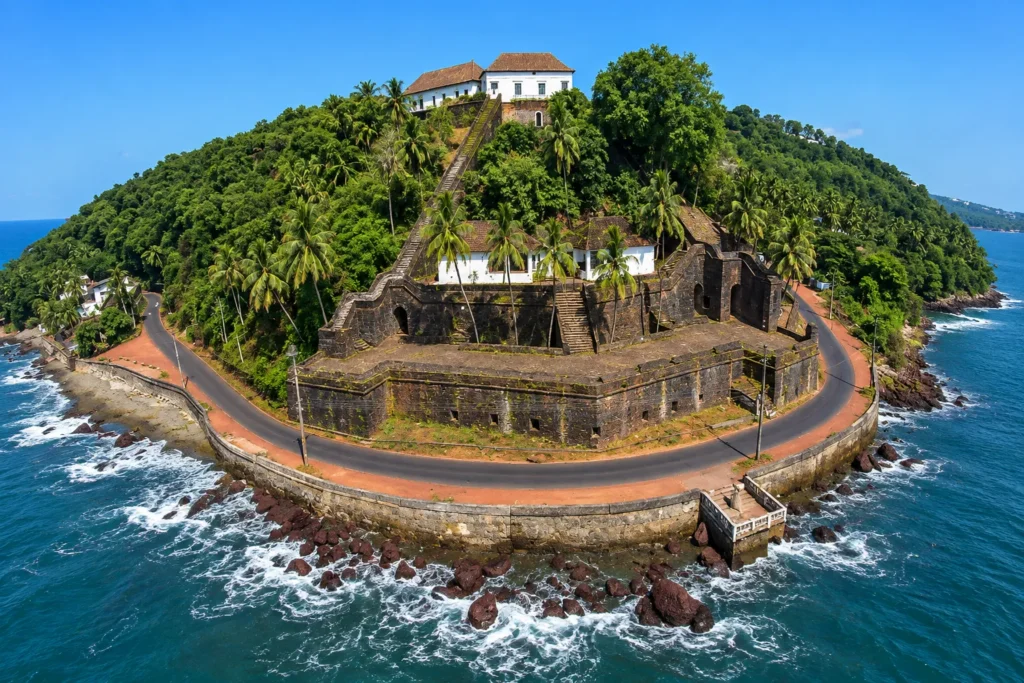
Location: Reis Magos village, Bardez, North Goa.
Reis Magos Fort stands beside the Mandovi River, overlooking the historic approaches to Panaji and Old Goa.
Developed during the Portuguese period, the fort formed part of the defensive system protecting the river and nearby settlements.
Today, its restored structure provides an opportunity to explore Goa’s military heritage while enjoying views of the Mandovi River.
What to see: Laterite walls, historic defensive features and the fort’s strategic riverside setting.
Chapora Fort
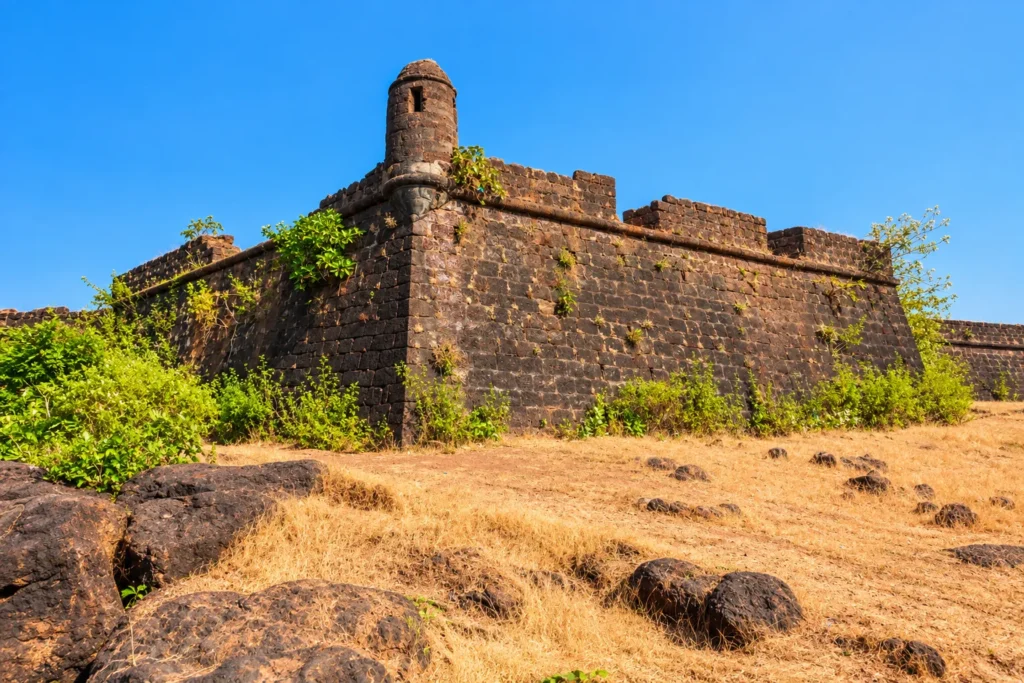
Location: Chapora, near Vagator, North Goa.
Chapora Fort occupies a hill overlooking the Chapora River and the Arabian Sea. The Portuguese constructed the surviving fortifications in the early 18th century on a site with an earlier history of fortification.
Much of the fort is now in ruins, but its remaining walls reveal its strategic position and defensive layout.
Visitor tips: Reaching the fort involves an uphill walk over uneven ground. Wear suitable footwear and stay away from exposed edges.
Historical note: Chapora is associated with various local stories and legends. These should be distinguished from documented events unless supported by reliable historical evidence.
Cabo de Rama Fort
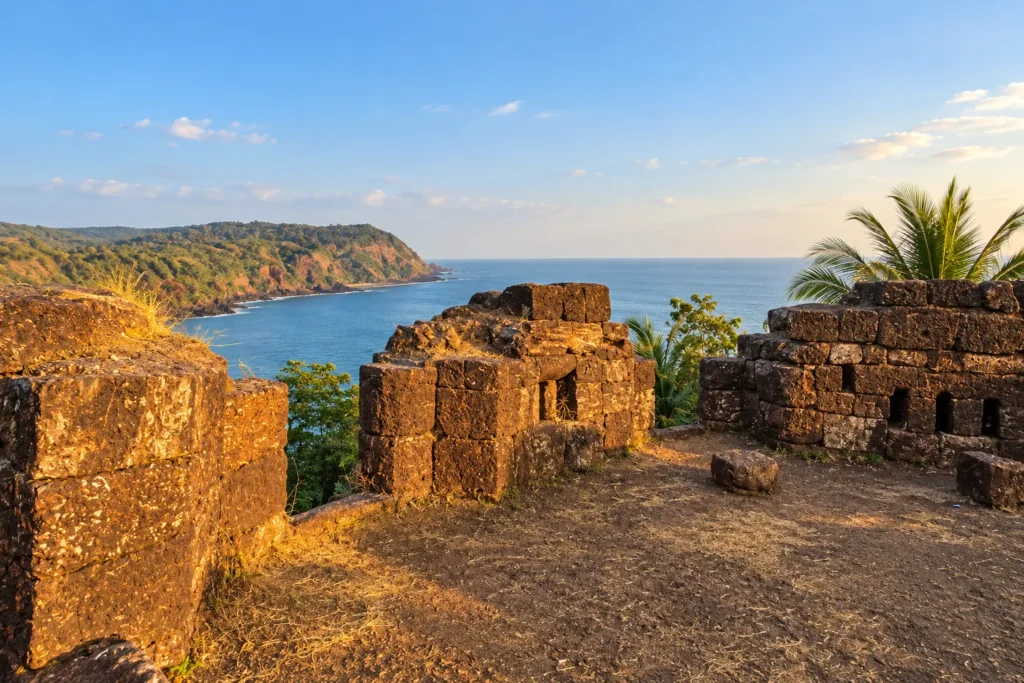
Location: Canacona, South Goa.
Cabo de Rama Fort stands on a prominent headland overlooking the Arabian Sea. Its history includes periods before and during Portuguese rule.
The fort’s elevated location made it strategically useful for observing the southern coastline. Today, visitors can explore surviving fortifications and enjoy views of the surrounding landscape.
Visitor tips: Allow additional time for travel, check local access conditions and exercise caution near cliffs.
Corjuem Fort
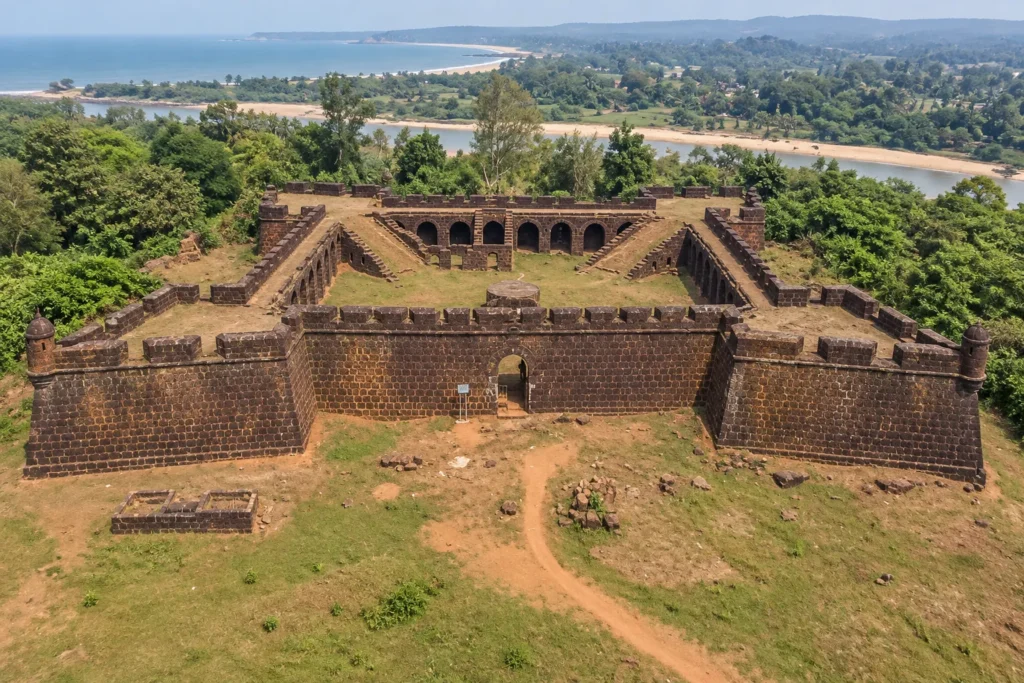
Location: Corjuem Island, near Aldona, North Goa.
Corjuem Fort is a smaller inland fortification associated with Portuguese-era defence.
Unlike Goa’s more prominent coastal forts, its location near the river system provides insight into the wider network of defensive structures that protected settlements and waterways.
3. Heritage Neighbourhoods and Traditional Houses
Goa’s heritage is not limited to churches and forts. Historic streets, residential buildings and traditional mansions offer a glimpse into the region’s changing social and architectural traditions.
Fontainhas, Panaji
Location: Central Panaji.
Fontainhas is Panaji’s historic Latin Quarter, known for its colourful houses, narrow streets, decorative balconies and tiled roofs.
Its built environment reflects Panaji’s development as an administrative and urban centre during the Portuguese period.
The neighbourhood combines European architectural influences with local materials, climate-conscious design and Goan craftsmanship.
What to notice:
- Colourful façades and traditional windows
- Decorative balconies and overhanging roofs
- Narrow streets and historic urban layouts
- Architectural details reflecting cultural exchange
Visitor etiquette: Fontainhas is a living residential neighbourhood. Keep noise low, avoid blocking doorways and ask permission before photographing residents or entering private properties.
Chandor’s Heritage Mansions
Location: Chandor, South Goa.
Chandor preserves examples of Goa’s historic residential architecture, including mansions associated with established Goan families.
These homes may feature large halls, decorative furniture, courtyards, traditional tiles and objects reflecting family histories and changing social customs.
Braganza House is one of the best-known heritage mansions in the village.
Historical significance: Such homes provide insight into domestic life, social customs and the architectural tastes of affluent Goan households during the colonial period.
Visitor tips: Heritage homes may have private ownership or specific visiting arrangements. Confirm access, visiting hours and photography permissions before travelling.
4. Museums in Goa
Museums provide valuable context for Goa’s monuments by preserving historical objects, religious art, sculptures and other cultural collections.
Archaeological Museum of Goa
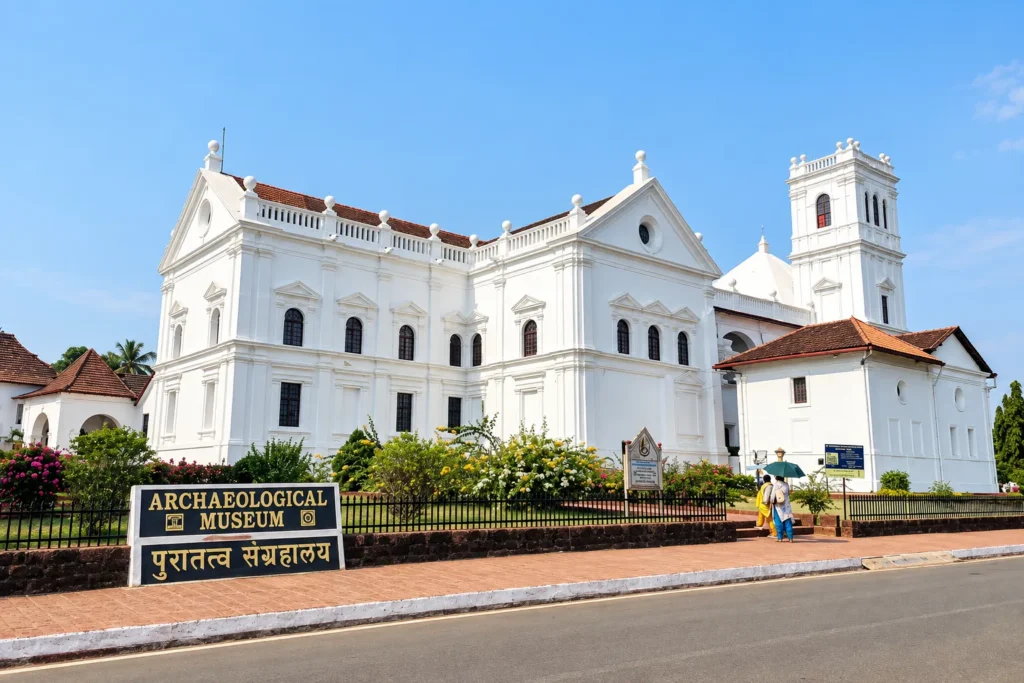
Location: Old Goa, in the historic convent complex associated with St Francis of Assisi.
The Archaeological Museum helps visitors understand Goa’s political, religious and cultural history through collections that include sculptures, inscriptions, portraits and historical objects.
It is a useful addition to a visit to Old Goa’s churches, offering context about the people and institutions behind the monuments.
Museum of Christian Art
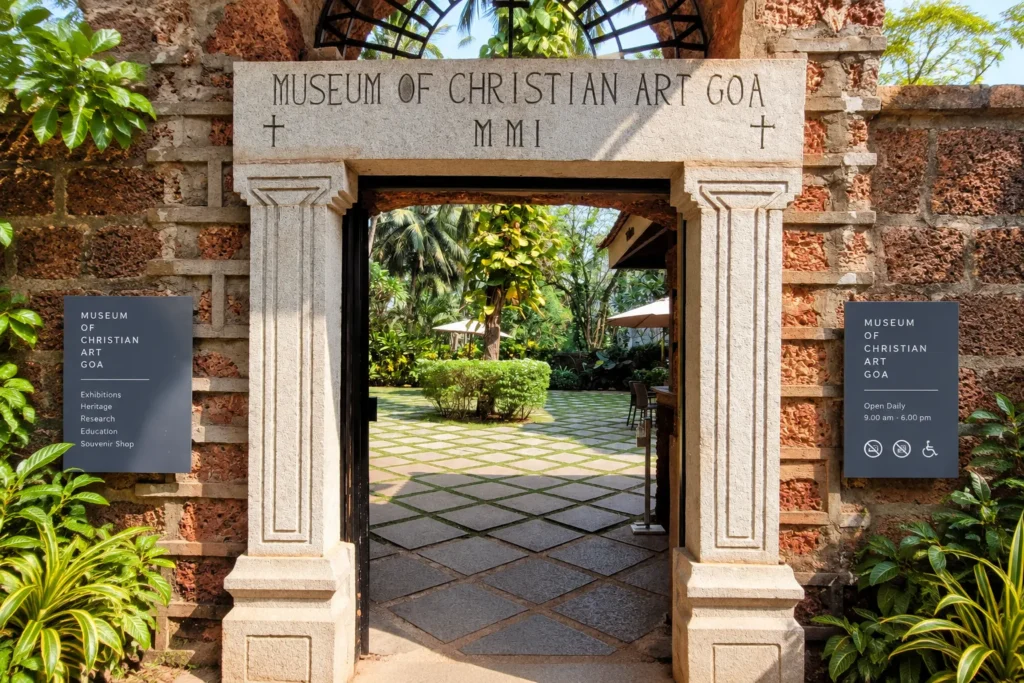
Location: Old Goa, within the historic convent area.
The Museum of Christian Art focuses on religious art associated with Goa’s Christian heritage.
Its collections illustrate the interaction between European Christian artistic traditions and local craftsmanship, offering insight into the region’s religious and cultural history.
Goa State Museum
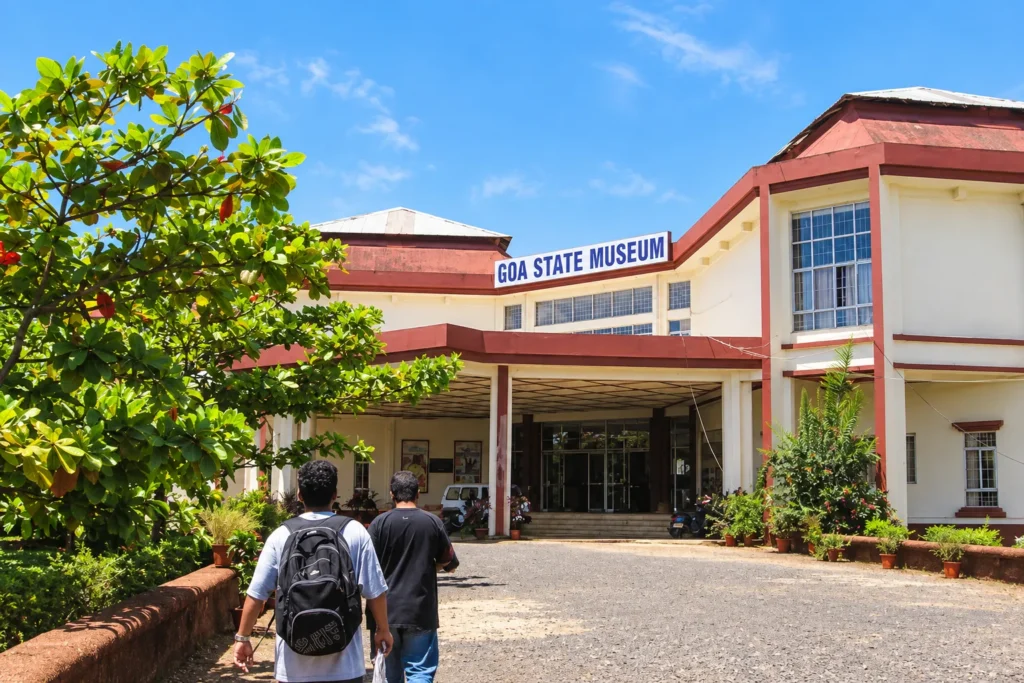
Location: Panaji.
The Goa State Museum presents aspects of the state’s history, art and cultural traditions through collections that include sculptures, paintings, coins and other historical objects.
It is a useful stop for travellers interested in understanding Goa beyond its colonial monuments.
5. Historic Temples and Religious Heritage
Goa’s religious heritage includes Hindu temples, Christian churches and other sacred spaces that reflect the region’s diverse communities and traditions.
Shri Mangeshi Temple
Location: Mangeshi, Ponda.
Shri Mangeshi Temple is an important Hindu religious site dedicated to Lord Shiva. Its present architectural appearance reflects later rebuilding and development.
The temple offers visitors an opportunity to explore Goa’s Hindu religious traditions and temple architecture.
Shri Shantadurga Temple
Location: Kavlem, Ponda.
Dedicated to Shantadurga, this is another significant Hindu temple in Goa.
Its religious importance and architectural features contribute to the understanding of the state’s Hindu heritage and continuing traditions of worship.
Visitor etiquette: Remove footwear where required, dress respectfully, follow temple instructions and check photography restrictions. Access to certain areas may be limited to worshippers.
6. Architecture of Goa: What Makes It Distinctive?
Goa’s architecture reflects a combination of local building traditions, European influences, religious practices and the region’s natural environment.
Laterite Stone Architecture
Laterite is widely visible in Goa’s historic buildings. It was used in forts, churches and houses, connecting the built environment with the region’s geology and construction traditions.
Baroque and European Church Architecture
Several historic churches feature elaborate altars, ornamentation and monumental layouts influenced by European Catholic architecture.
These structures also reflect the skills of local artisans and the adaptation of imported architectural traditions.
Traditional Goan Houses
Historic residential architecture is characterised by features such as balconies, verandas, tiled roofs and decorative façades.
These elements reflect responses to Goa’s climate, social customs and changing architectural influences.
Hindu Temple Architecture
Goa’s temples preserve distinctive religious and architectural traditions. Their histories deserve to be explored alongside the state’s Christian monuments, rather than being treated simply as a contrast to colonial architecture.
7. A Practical Sightseeing Route Through Goa’s Historical Places
For a comfortable heritage trip, group nearby attractions together instead of trying to cover the entire state in one day.
Day 1: Old Goa and Panaji
Morning: Explore Old Goa
Start with the Basilica of Bom Jesus, Sé Cathedral, Church of St Francis of Assisi and Church of St Cajetan.
Allow approximately three to four hours, depending on your interest in architecture, worship spaces and museums.
Late morning: Visit a museum
Choose the Archaeological Museum or Museum of Christian Art, subject to opening hours.
Afternoon: Walk through Fontainhas
Head to Panaji and explore the historic Latin Quarter. Take time to appreciate the houses, balconies and street layouts.
Late afternoon: Reis Magos Fort
If time and access arrangements permit, visit Reis Magos Fort to understand the historic defence of the Mandovi River.
Day 2: North Goa’s Coastal Forts
Morning: Fort Aguada
Explore the fortifications and learn about Portuguese coastal defence.
Late morning: Chapora Fort
Continue towards Chapora and allow time for the uphill walk.
Afternoon: Flexible coastal stop
Enjoy a relaxed stop nearby rather than rushing to cover every attraction.
Day 3: South Goa’s Heritage
Morning: Chandor
Explore the village’s historic architecture and check access to heritage mansions in advance.
Afternoon: Cabo de Rama Fort
Visit the fort and explore the surviving remains, allowing enough time for travel and walking.
Alternative itinerary: If you prefer religious architecture, visit the temples around Ponda, including Shri Mangeshi and Shri Shantadurga.
Travel times vary according to traffic, weather and your starting point. This itinerary is a suggested route rather than a fixed transport schedule.
8. Travel Tips for Visiting Historical Places in Goa
A little planning can make your heritage trip more comfortable and respectful.
Check Opening Hours Before Travelling
Opening hours and admission arrangements can change, particularly for museums, forts, religious buildings and privately managed heritage homes.
Confirm current details with the relevant official site or local management before visiting.
Dress Respectfully
Wear modest clothing at churches and temples. Follow any specific instructions about footwear, photography and access.
Wear Comfortable Footwear
Historic forts often have uneven surfaces, steep paths and exposed edges. Comfortable walking shoes are useful.
Carry Water and Sun Protection
Many heritage sites have limited shade, particularly coastal forts and open archaeological areas.
Respect Local Residents
Historic neighbourhoods such as Fontainhas are living communities. Avoid unnecessary noise and seek permission before photographing people or private properties.
Protect Heritage Structures
Do not touch fragile objects, climb on old walls, litter or enter restricted areas.
Frequently Asked Questions About Historical Places in Goa
1. What are the most famous historical places in Goa?
Some of Goa’s best-known heritage attractions include the Basilica of Bom Jesus, Sé Cathedral, Fort Aguada, Reis Magos Fort, Chapora Fort and Fontainhas.
2. Which part of Goa is best for history lovers?
Old Goa is a natural starting point for historic churches and colonial-era monuments. Panaji offers heritage streets, while North and South Goa have forts, historic villages and traditional houses.
3. Can I explore Old Goa in one day?
Yes. A day is generally enough to visit several major churches and one museum, depending on opening hours and how much time you spend at each attraction.
4. Are Goa’s historic churches still active places of worship?
Yes. Several historic churches continue to serve religious communities. Access may be affected by services, religious events and local arrangements.
5. Which forts can I visit together in North Goa?
Fort Aguada and Chapora Fort can be combined into a North Goa sightseeing day. Reis Magos Fort can be included with Panaji or Old Goa, depending on traffic and available time.
Also Read: Goa Travel Guide: Best Places to Visit, Things to Do, Itinerary, Budget & Travel Tips
Conclusion
Goa’s historical places reveal a fascinating story of coastal defence, religious traditions, architecture, trade and cultural exchange.
From the monumental churches of Old Goa to the coastal forts, colourful streets of Fontainhas and traditional houses of Chandor, each destination offers a different perspective on the state’s past.
Whether you have one day or an entire weekend, exploring Goa’s heritage adds depth to your trip and helps you appreciate the history behind its familiar landscapes.
Plan your route, check current visitor information and take time to experience Goa’s remarkable cultural heritage beyond its beaches.