



Rising dramatically above Junagadh, Girnar Hill is not simply a viewpoint or a hiking destination. It is a sacred mountain where Jain and Hindu pilgrimage routes, historic temples, steep stone steps and the modern Girnar Ropeway come together.
For a first-time visitor, the biggest question is not whether Girnar is worth visiting. It is how much of Girnar you want to experience.
You can climb thousands of steps to the Jain temple complex, take the ropeway towards Ambaji, or make a much longer ascent towards the higher peaks and summit shrines. Each option creates a very different day.
This guide explains how Girnar works as a visitor destination, including the route, temples, ropeway, approximate timings, preparation, transport and practical details to check before you go.
Girnar Hill at a glance
- Location: Junagadh, Gujarat
- Base: Girnar Taleti / Bhavnath Taleti
- Nearest railway station: Junagadh Junction
- Traditional ascent: About 10,000 stone steps
- Major Jain shrine: Neminath Temple
- Major Hindu shrines: Ambaji, Gorakhnath and Dattatreya
- Ropeway destination: Ambaji area
- Ropeway journey: About 9 minutes
- Current standard ropeway fare: ₹699 for visitors above 110 cm; ₹350 for children 90–110 cm
- Best climbing season: November to February
- Time required: A few hours for a limited visit; most of a day for the major ascent
Where is Girnar Hill?
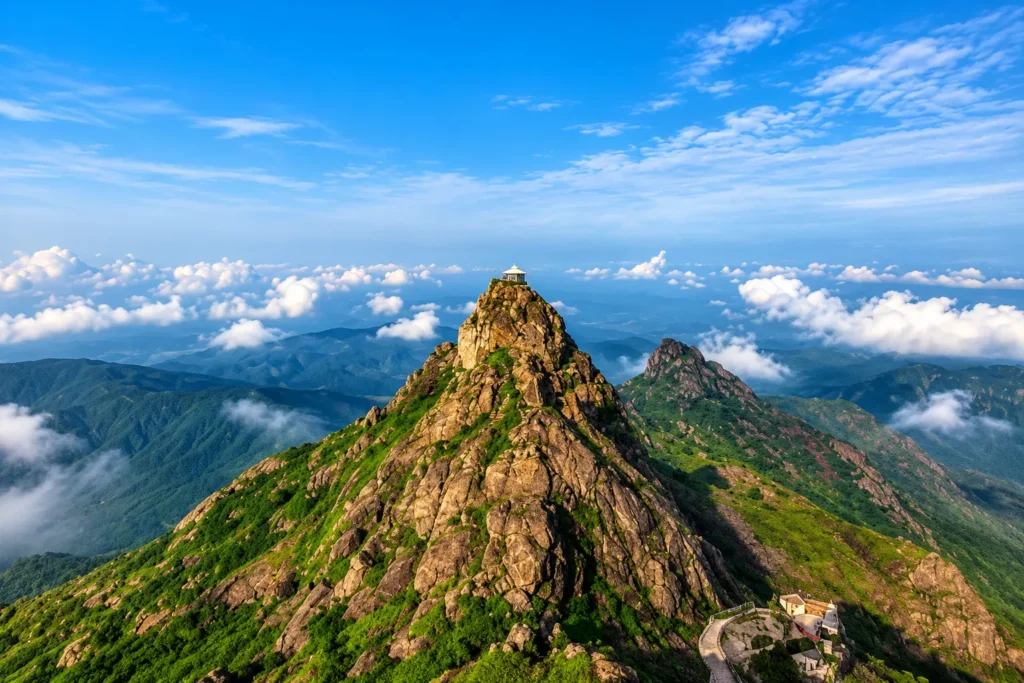
Girnar is a mountain range in Junagadh district, immediately outside Junagadh city. The main pilgrimage approach begins at Girnar Taleti/Bhavnath Taleti, where visitors can start the traditional staircase climb or reach the Girnar Ropeway’s lower station.
The Junagadh district administration describes Girnar as a major pilgrimage destination for both Hindu and Jain communities, with temples and religious sites distributed across the mountain.
Junagadh is therefore the natural base for a Girnar visit rather than a place you need to stay somewhere on the mountain itself.
How to reach Girnar
By train
For most travellers arriving by rail, Junagadh Junction is the most convenient gateway. From the railway station, continue by local taxi or auto-rickshaw towards Girnar Taleti/Bhavnath.
The ropeway operator lists Junagadh railway station at roughly 6 km from its Girnar lower station.
By road
Junagadh is connected to other Gujarat cities by state and private buses as well as the regional road network.
If you are driving, plan to reach the Bhavnath/Girnar Taleti area rather than trying to drive up the mountain itself. Parking is available around the ropeway area, with the operator noting that parking is chargeable and at the owner’s risk.
By air
Girnar itself does not have an airport. Gujarat Tourism currently lists Rajkot as the nearest airport in its Girnar information, while the ropeway operator also lists Keshod Airport and Rajkot International Airport among the relevant airports.
Because airport connectivity can change, check the airport and onward road connection when planning a flight rather than choosing an airport solely from an older distance figure.
Understanding the Girnar steps
The traditional Girnar pilgrimage is famous for its enormous staircase.
The commonly quoted figure is 9,999 steps, while tourism sources generally round this to about 10,000 steps.
The important point is that this is not a single uniform climb.
The route passes through different levels of the mountain, with religious sites appearing along the way. The Jain temple complex is encountered well before the highest Hindu shrines.
That means a visitor does not have to treat Girnar as an all-or-nothing 10,000-step trek.
How difficult is the Girnar climb?
Girnar is physically demanding.
The challenge comes from the combination of:
- thousands of steps
- sustained elevation gain
- steep sections
- uneven stone surfaces
- heat and sun exposure
- the need to descend after reaching your destination
A person who regularly walks or hikes will generally find it more manageable than someone unused to prolonged stair climbing, but even fit travellers should pace themselves.
Do not judge the climb only by the number of steps. The return journey matters too.
How long does the climb take?
There is no single reliable time for everybody.
As a practical planning guide:
- Lower sections / shorter pilgrimage: allow several hours
- Jain temple complex: commonly a substantial half-day outing when ascent, darshan and descent are included
- Ropeway + Ambaji: considerably less strenuous, but still involves walking and stairs around the upper station
- Higher peaks and summit shrines: plan for most of a day and start early
Your speed, rest breaks, crowd levels, weather and how far beyond Ambaji you intend to go can make a large difference.
Gujarat Tourism specifically advises allowing a full day if you want to reach the uppermost temples.
Girnar Ropeway: what it actually does
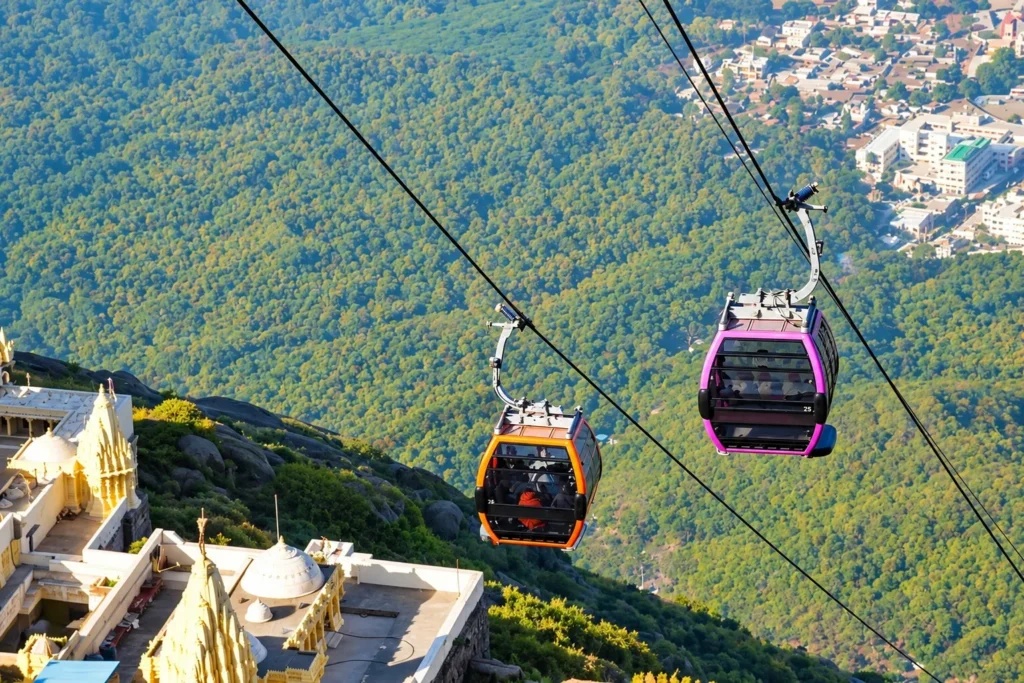
The Girnar Ropeway has changed the practical experience for visitors who cannot or do not want to climb the entire lower section on foot.
But there is one important misconception to avoid:
The ropeway does not take you to the final Dattatreya summit.
The ropeway connects the lower station at Bhavnath Taleti with the upper Ambaji area. The operator describes the route as about 2,320 metres long, with a vertical height of about 900 metres and a ride time of approximately nine minutes.
From the upper station, visitors still have to walk and climb to reach the relevant temple areas and any higher peaks.
Current Girnar Ropeway price
According to Udan Khatola’s current Girnar tariff:
| Ticket | Current fare |
| Regular ticket, height above 110 cm | ₹699 |
| Child ticket, height 90–110 cm | ₹350 |
| Gujarat three-ropeway combined adult ticket | ₹974 |
| Gujarat three-ropeway combined child ticket | ₹499 |
These prices include GST according to the operator.
The ropeway operator also lists special options including a personal cabin and a glass-bottom cabin, subject to their stated passenger limits.
Because ropeway fares can change, check the official booking page immediately before your journey rather than relying on an old blog or video.
Girnar Ropeway timings

This is an area where travellers should be careful with older information online.
Udan Khatola states that its destinations operate with different time slots and directs visitors to the booking system for the applicable timetable. Its booking pages use date-specific time slots, rather than presenting one universal daily operating period that can safely be applied to every date.
Examples indexed from the operator’s 2026 booking system include morning slots such as 6–7 am, 9–10 am and 10–11 am on different dates.
So the safest approach is:
- Select your intended date.
- Check the available Girnar slots.
- Book the appropriate slot.
- Arrive at the lower station sufficiently early.
- Recheck operational status if weather is uncertain.
The operator explicitly states that boarding may be delayed because of weather or other reasons.
Can the ropeway close because of weather?
Yes.
Udan Khatola says monsoon operation depends on weather conditions and that the company reserves the right to delay, reschedule or cancel a journey when necessary.
Its booking conditions also state that if the ropeway is not operational, the ticket may be refunded or rescheduled depending on availability.
This is especially important during periods of heavy rain or strong winds.
The major temples and sights on Girnar
Girnar’s religious landscape becomes easier to understand if you think of the mountain as a sequence of pilgrimage zones rather than one temple.
Neminath Jain Temple
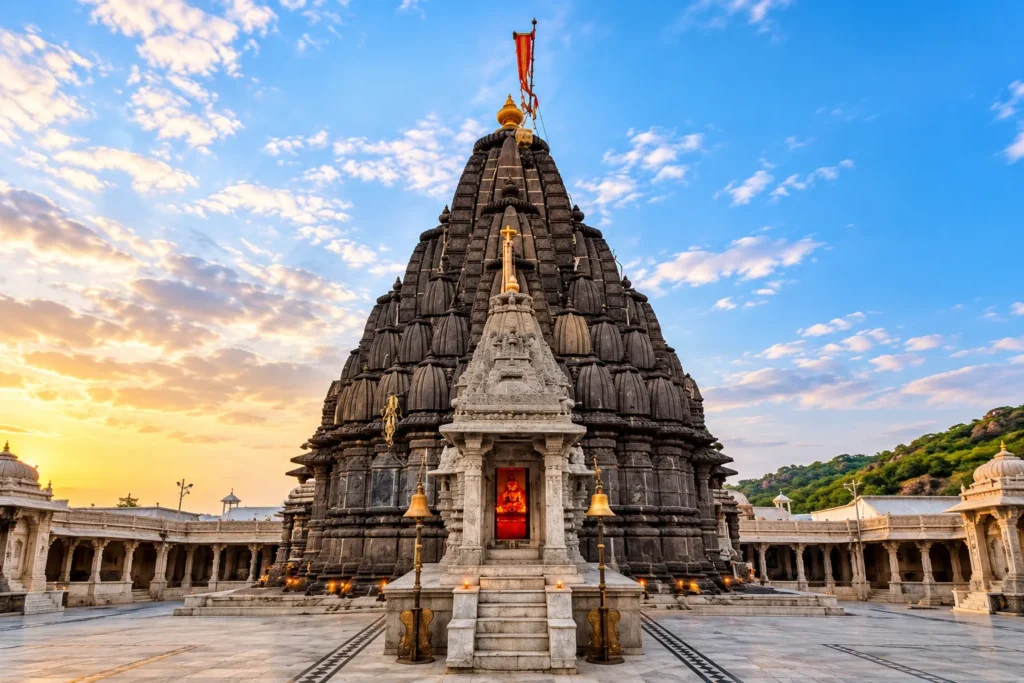
The Jain temple complex is one of the defining sights of Girnar.
It is associated with Neminath, the 22nd Tirthankara, and is an important pilgrimage destination for Jains.
Gujarat Tourism identifies the Neminath temple as the largest and oldest temple in the Jain cluster, with the present historic complex associated with the medieval period.
The surrounding Jain temples, domes and carved architectural details create a striking contrast with the rugged mountain landscape.
Importantly, the ropeway does not take visitors to the Jain temple complex. Visitors wanting to visit Neminath must use the staircase route.
Mallinath Temple
The Mallinath temple is part of the Jain temple complex. Gujarat Tourism dates the nearby triple temple to 1177 and identifies it as being dedicated to the ninth Tirthankara, Mallinath.
For visitors interested in architecture and religious history, the Jain complex is worth treating as a destination in its own right rather than merely a stop on the way to the higher peaks.
Ambaji Temple
Ambaji is one of the major Hindu pilgrimage points on Girnar and is the destination associated with the ropeway.
For visitors using the ropeway, this is the key distinction to remember:
Ropeway = a shortcut to the Ambaji area, not a cable car to the final summit.
Gorakhnath Peak
Gorakhnath is associated with one of Girnar’s higher points and is identified by Gujarat Tourism as being at approximately 1,117 metres.
The route becomes more demanding once you continue beyond the Ambaji area.
Dattatreya Temple
The Dattatreya shrine sits on a higher and more demanding part of the mountain.
Reaching it requires continuing on foot rather than simply taking the ropeway.
For anyone planning the full pilgrimage, this is why a ropeway ride should be viewed as reducing part of the ascent rather than eliminating the climb altogether.
Kalika Temple
Kalika is another shrine associated with the upper part of Girnar. The route beyond the principal lower temple areas involves additional climbing and descending between the mountain’s peaks.
Should you climb or take the ropeway?
There is no single correct way to visit Girnar.
Your choice should depend on your purpose.
Choose the stairs if:
- completing the traditional pilgrimage matters to you
- you enjoy long mountain walks
- you want to visit the Jain temples
- you want the experience of ascending through the different temple zones
- you are physically prepared for a long stair climb
Choose the ropeway if:
- you are travelling with older family members
- a long stair climb is not practical
- you mainly want to visit Ambaji
- you want to experience Girnar without committing to the full ascent
- you have limited time
Combine both if your group has mixed abilities
A mixed plan can work well: use the ropeway for the upper Ambaji section while spending more time exploring the accessible temple areas, rather than assuming that every member of the group needs to complete the entire staircase.
Remember that the upper station does not remove the need for walking.
How much time should you keep for Girnar?
A useful way to plan your day is by destination rather than by an arbitrary number of hours.
Short visit
If your main aim is to experience the mountain, see the lower religious sites and spend some time around the ropeway, a few hours may be enough.
Jain temple visit
Give yourself a larger half-day window. The climb to the Jain complex is itself substantial, and rushing the temple visit defeats much of the purpose.
Ropeway and Ambaji
Allow enough time for travel to the lower station, boarding, the ride, walking around the upper area, darshan and the return journey.
Do not schedule another tightly timed attraction immediately afterward.
Full mountain experience
If you want to climb towards the higher peaks and Dattatreya, treat Girnar as a full-day activity.
Starting early is especially important because the lower staircase can become hot and tiring later in the morning.
Best time to visit Girnar
For a serious climb, November to February is the most comfortable period. Gujarat Tourism specifically identifies these months as the preferred season.
November to February
This is the best window for travellers who want to tackle a substantial portion of the staircase.
Expect:
- cooler mornings
- more comfortable walking conditions
- stronger pilgrimage-season activity
- potentially larger crowds around major festivals
October and March
These can also work, particularly if you begin very early, although temperatures become less forgiving as the season moves toward summer.
April to June
The exposed staircase can become extremely hot.
If you are not accustomed to sustained exercise in Gujarat’s heat, this is not the season to underestimate the mountain.
Monsoon
Girnar can look spectacular in the rains, but wet stone steps and changing mountain weather introduce additional practical concerns.
The ropeway operator specifically says its monsoon operation depends on weather conditions.
If visiting during the rainy season, check the ropeway status and local conditions on the day rather than assuming the service will operate normally.
Festivals and crowded periods
Girnar is also a pilgrimage destination, so the busiest dates are not necessarily the easiest dates for a first-time sightseeing visit.
Two major events associated with the area are:
- Girnar Parikrama, traditionally held around November
- Bhavnath Mahashivratri Mela, held around Mahashivratri
These periods bring a very different atmosphere, with large numbers of pilgrims and visitors.
If your priority is photography, quiet walking and easier logistics, check the festival calendar before fixing your dates.
If your purpose is pilgrimage, experiencing Girnar during a major religious event can be an entirely different experience.
What should you carry to Girnar?
For a serious climb, pack light but deliberately.
Essentials
- comfortable walking or hiking shoes
- drinking water
- small energy snacks for the climb
- hat or cap
- sunscreen
- sunglasses
- light, breathable clothing
- a small backpack
- basic personal medicines
- phone and power bank
A walking stick can also be useful on long stair sections, particularly during the descent.
Do not turn the climb into a heavy backpacking trip. Every unnecessary kilogram has to go back down the mountain with you.
If you are using the ropeway
Keep your belongings compact.
Udan Khatola states that food and packed eatables are not allowed inside the ropeway cabin. The operator also provides baggage storage at its ropeway units, but says large luggage and valuables such as phones, laptops, jewellery and purses are excluded from that storage provision.
For that reason, travel to the lower station with only what you actually need.
Dress and temple etiquette
Girnar is an active pilgrimage landscape, not simply a trekking attraction.
Wear clothing that is comfortable for walking but also respectful around temples. Covering shoulders and knees is a sensible approach.
When entering a temple:
- remove footwear where required
- follow signs and instructions from temple staff
- keep voices low inside shrines
- do not photograph restricted areas
- ask before photographing an idol or inner sanctum
- respect worshippers and queues
- avoid treating religious ceremonies as a photo opportunity
Jain temples have their own traditions, so follow the rules displayed at the complex rather than assuming that normal tourist behaviour applies everywhere.
A practical Girnar day plan
For a first visit, an early start makes the day considerably easier.
Option 1: Jain pilgrimage
Early morning: Reach Girnar Taleti
Morning: Climb towards the Jain temple complex
Late morning: Explore the Neminath and associated temples
Afternoon: Descend and return to Junagadh
Option 2: Ropeway experience
Morning: Reach the Udan Khatola lower station
Booked slot: Take the ropeway
After arrival: Visit the Ambaji area and explore on foot
Later: Return by ropeway according to your ticket arrangements
Afternoon: Continue sightseeing in Junagadh
Option 3: Full mountain day
Pre-dawn: Begin the staircase climb
Morning: Pass the Jain temple complex and continue upward
Later: Ambaji and the higher peaks
Continue: Gorakhnath/Dattatreya route if physically prepared
Return: Descend with enough daylight and energy remaining
The third option should not be treated as an ordinary sightseeing stop. It is a demanding mountain day.
Nearby places to visit in Junagadh
Girnar can easily be combined with Junagadh’s historic attractions.
Uparkot Fort
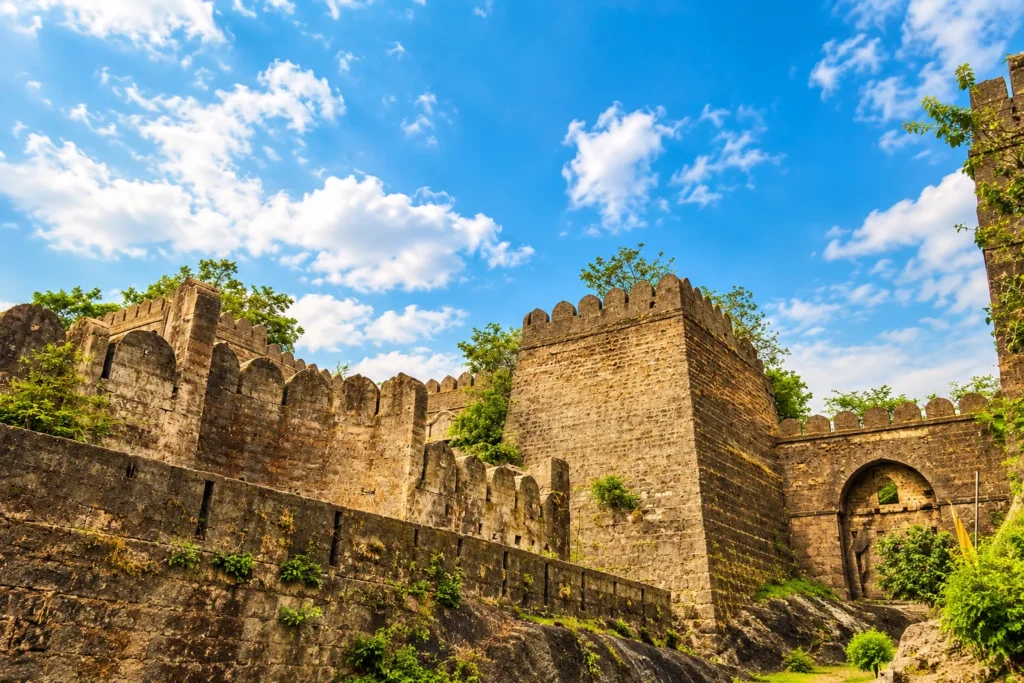
The historic Uparkot Fort is one of Junagadh’s principal heritage attractions. It works particularly well before or after Girnar because it gives you a completely different perspective on the city’s history.
Ashoka Rock Edicts
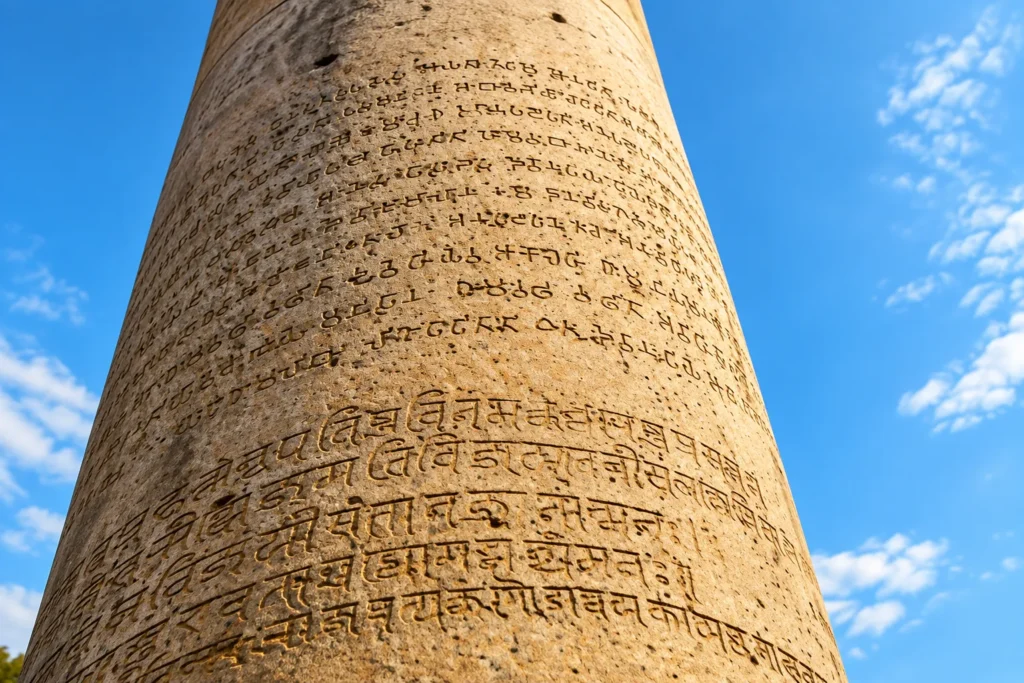
The Ashoka edicts are another major historical stop in Junagadh and are particularly useful for travellers interested in the region’s ancient history.
Buddhist caves
Junagadh’s rock-cut Buddhist remains add another layer to a trip centred on Girnar’s religious architecture.
Bhavnath Temple
Located near the Girnar foothills, Bhavnath is closely connected with the religious life and major festivals of the Girnar area.
Gir National Park
If your Gujarat itinerary includes wildlife, Gir National Park can be combined with Junagadh and Girnar as part of a wider Saurashtra route. It should generally be planned as a separate activity rather than squeezed into the same day as a full Girnar climb.
A sensible Junagadh itinerary
If you have two days:
Day 1: Junagadh city — Uparkot Fort, Ashoka Rock Edicts and other heritage sights
Day 2: Girnar — stairs or ropeway, temples and the mountain
If you have additional time, add Gir National Park or continue towards Somnath.
This avoids the common mistake of trying to climb Girnar in the morning and then fit several unrelated attractions into the same afternoon.
Is Girnar worth visiting without doing the full climb?
Yes.
The mountain experience is not limited to reaching the final summit.
You can experience the foothills, Bhavnath area, the ropeway, Ambaji and parts of the temple landscape without undertaking the complete 10,000-step ascent.
The important thing is to decide beforehand what you want from the visit.
If your goal is the Jain pilgrimage, plan for the stairs.
If your goal is Ambaji with less physical exertion, investigate the ropeway.
Final planning advice
Girnar is easiest to enjoy when you stop thinking of it as a single tourist attraction.
It is a mountain, pilgrimage route, collection of temples, physical challenge and viewpoint rolled into one.
For a first visit, arrive in Junagadh with a realistic plan: start early, wear proper footwear, carry water, keep your schedule flexible and decide whether the Jain temples, Ambaji, or the higher peaks are your priority.
And before travelling, verify the current ropeway fare, date-specific time slot and operating status directly with Udan Khatola. Those details change more quickly than the historic information found on many Girnar travel pages.