


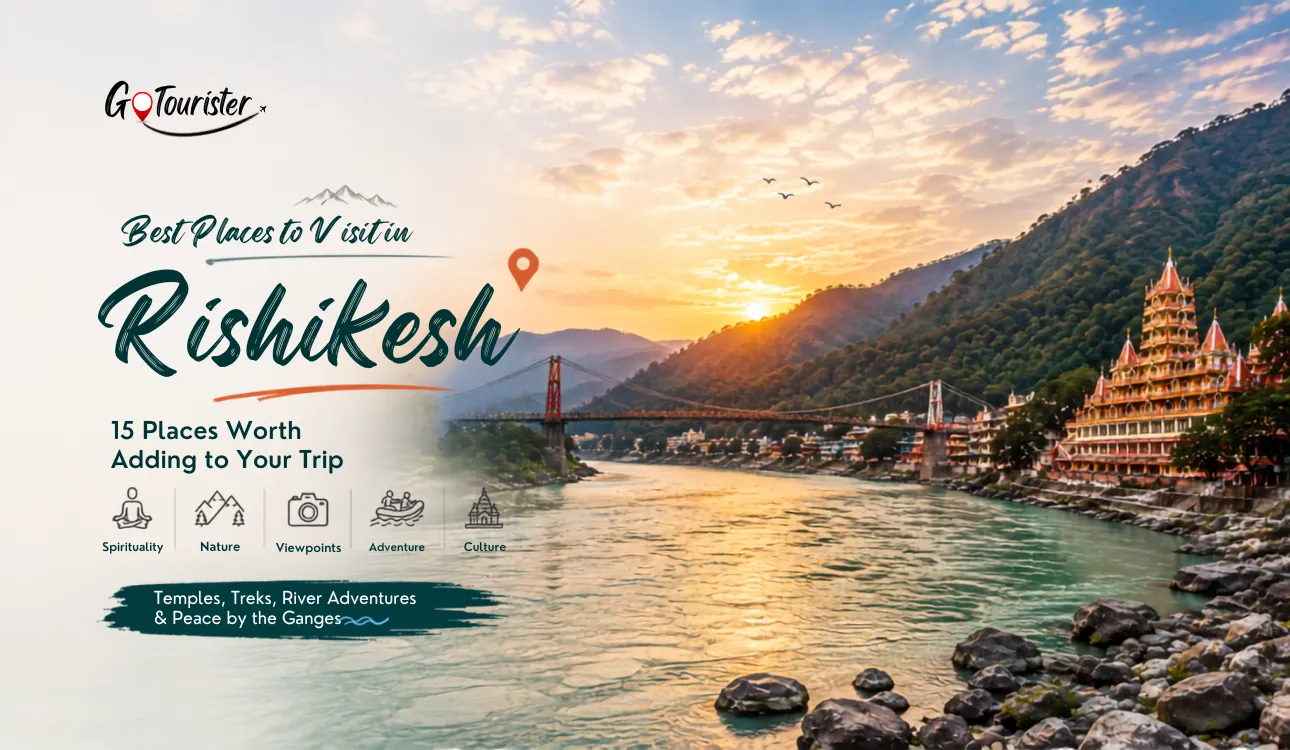
Rishikesh is not a place where you should worry about checking off the sights as that would make for a poor trip. The town’s charm lies in the fact that it offers as much to the spiritual pilgrim as the adventure lover and to the tree-hugging hippie. The following unique elements: Ganga, spiritual culture, Himalayan foothills, adventure sports, ashrams, woods and unique cafe-and-yoga scene.
That means the right question isn’t just which are the must visit places in Rishikesh? Which experiences are really worth your precious time?
Here is a collection of 15 places and activities worth seeing grouped by what you get out of it, how long you should plan to stay there, and which should be part of your short trip itinerary and which can be missed without regret.
Planning your first trip? Start with our Rishikesh Travel Guide for the bigger picture.
Quick comparison: 15 places in Rishikesh
| Place | Best For | Time Needed | Ideal Time to Visit | Priority for First-Time Visitors |
| Triveni Ghat | Spirituality, aarti | 1–1.5 hrs | Evening | Essential |
| Parmarth Niketan | Ganga aarti, yoga | 1–2 hrs | Late afternoon/evening | High |
| Ram Jhula area | River views, walking | 1–2 hrs | Morning/evening | High |
| Swargashram | Spiritual atmosphere | 1–2 hrs | Morning | High |
| Beatles Ashram | Culture, photography | 1.5–2 hrs | Morning/late afternoon | High |
| Bharat Mandir | History, spirituality | 30–45 min | Morning | Medium |
| Bajrang Setu | Views, photography | 30–45 min | Morning/evening | Medium |
| Neer Garh Waterfall | Nature, swimming | 2–3 hrs | Morning | High |
| Kunjapuri Temple | Sunrise, viewpoints | 3–5 hrs | Sunrise | High |
| Shivpuri rafting | Adventure | 3–5 hrs | Morning | Essential for adventure trips |
| Ganga riverside beaches | Relaxation, photography | 1–2 hrs | Morning/late afternoon | Medium |
| Vashishta Cave | Meditation, quiet nature | 1.5–2 hrs | Morning | Medium |
| Rajaji National Park | Wildlife, nature | 4–5 hrs | Early morning | High for wildlife lovers |
| Kaudiyala | Advanced rafting, scenery | Half/full day | Morning | Low unless experienced |
| Rishikesh café and market walk | Relaxed culture, food | 2–3 hrs | Late afternoon/evening | Medium |
1. Spiritual Rishikesh: ghats, ashrams and sacred spaces
1. Triveni Ghat
What it is: the most famous riverfront bathing ghat in Rishikesh, and also the most popular spot for the evening Ganga aarti.
Why visit: This aarti is an easily accessible introduction to the religious culture of Rishikesh without the need for a long ashram stay. Lamps, chanting and the water combine to create an ambience that is more engaging than a visit to another temple.
What makes it different: It’s a living place of worship-not a monument to view and then go.
Time: 1–1.5 hours.
Best time: Evening, around aarti; confirm the day’s exact timing locally.
Suitable for: First-time visitors, families, photographers and travelers interested in spirituality.
Location: Central Rishikesh.
Practical: Arrive early if you want a good position. Expect crowds and a devotional atmosphere rather than a quiet sightseeing experience.
Short trip priority: Essential. If you can attend only one major spiritual experience, make this one of your top choices. Uttarakhand Tourism also highlights the evening aarti as a signature Rishikesh experience.
2. Parmarth Niketan
What it is: One of the biggest and most famous Ashrams of Rishikesh, situated on the bank of Ganga in Swargashram.
Why visit: It synthesizes the hallmark Rishikesh aspects of yoga, meditation, spirituality and riverfront living. It is its location that makes it so attractive even if you are not a guest at an ashram.
What makes it different: The scale and riverfront setting give it a more institutional, organized feel than simply wandering through the town’s smaller spiritual centres.
Time: 1–2 hours.
Best time: Late afternoon into evening.
Suitable for: Spiritual travelers, first-time visitors and anyone curious about yoga culture.
Location: Swargashram, east bank.
Practical: Respect dress codes and photography restrictions where applicable. If attending a programme or aarti, check the current schedule rather than assuming timings.
Short trip priority: High. It pairs naturally with a walk around Swargashram.
3. Swargashram
What it is: A spiritual district on the eastern bank of the Ganga, filled with ashrams, temples, small shops and riverside paths.
Why visit: Swargashram is less about one landmark and more about experiencing the atmosphere that made Rishikesh internationally famous for yoga and meditation.
What makes it different: It rewards slow exploration rather than a quick photo stop.
Time: 1–2 hours.
Best time: Morning or early evening.
Suitable for: Spiritual travelers, walkers, photographers and culture-focused visitors.
Location: Between the Ram Jhula and Lakshman Jhula/Bajrang Setu areas.
Short trip priority: High, especially when combined with Parmarth Niketan and a riverfront walk.
4. Bharat Mandir
What it is: One of Rishikesh’s older and historically significant temples, traditionally associated with Adi Shankaracharya and dedicated to Lord Vishnu.
Why visit: It offers a more traditional temple experience than the internationalized yoga-and-café side of Rishikesh.
What makes it different: Its significance is primarily religious and historical rather than scenic.
Time: 30–45 minutes.
Best time: Morning.
Suitable for: Pilgrims, history-minded travelers and temple enthusiasts.
Location: Near Triveni Ghat.
Short trip priority: Medium. Worth adding if you are interested in Hindu temples, but not essential for travelers with only two days.
2. Culture and photography: the Rishikesh you see on foot
5. Beatles Ashram
What it is: The former ashram of Maharishi Mahesh Yogi, popularly known as Beatles Ashram or Chaurasi Kutia.
Why visit: Members of The Beatles stayed here in 1968 to study Transcendental Meditation, helping cement Rishikesh’s place in global popular culture.
What makes it different: Ruined meditation cells, murals, forest paths and graffiti create an unusually atmospheric combination of history and contemporary street art.
Time: 1.5–2 hours.
Best time: Morning or late afternoon.
Suitable for: Photographers, Beatles fans, architecture lovers and independent travelers.
Location: Swargashram area.
Practical: Wear comfortable shoes; much of the appeal comes from walking around the site.
Short trip priority: High if you enjoy photography or cultural history; medium if your trip is primarily spiritual or adventure-focused.
6. Bajrang Setu
What it is: The new suspension bridge near the old Lakshman Jhula corridor, with glass pedestrian sections overlooking the Ganga.
Why visit: It provides a modern viewpoint over the river and a very different experience from Rishikesh’s temples and ashrams.
What makes it different: The glass walkway turns a simple river crossing into a viewpoint experience. Current reporting says the glass pedestrian section operates during designated daytime/evening hours, with access rules and fees subject to administration arrangements.
Time: 30–45 minutes.
Best time: Early morning or around sunset.
Suitable for: Photographers, families, couples and visitors who enjoy viewpoints.
Practical: Crowds can affect the experience. Check current access and ticket arrangements before going.
Short trip priority: Medium. Treat it as an add-on rather than a reason to restructure your itinerary.
7. Rishikesh café and market walk
What it is: An informal exploration of the lanes, shops, cafés and riverside neighbourhoods around Tapovan, Swargashram and the central town.
Why visit: Rishikesh is as much about its everyday atmosphere as its monuments. A slow café stop and market walk can reveal more of the modern backpacker-and-yoga side of the city.
What makes it different: There is no fixed attraction or entrance fee; the experience comes from wandering.
Time: 2–3 hours.
Best time: Late afternoon and evening.
Suitable for: Couples, solo travelers, food lovers and slow travelers.
Short trip priority: Medium, but highly recommended if you dislike rushing between attractions.
3. Nature and viewpoints
8. Neer Garh Waterfall
What it is: A forested waterfall area reached by a short hike from the Rishikesh side of the Himalayan foothills.
Why visit: It is one of the easiest ways to escape the traffic and crowds for a few hours.
What makes it different: The forest walk and natural pools provide a completely different mood from the ghats and ashrams.
Time: About 2–3 hours.
Best time: Morning; water flow is especially attractive in and after the monsoon, although conditions can be slippery.
Suitable for: Nature lovers, active travelers, couples and families comfortable with walking.
Location: Near the Lakshman Jhula/Bajrang Setu side, several kilometres from central Rishikesh.
Practical: Wear shoes with grip, carry water and be cautious around wet rocks. Check local conditions after heavy rain.
Short trip priority: High for travelers who want nature without committing to a full-day excursion.
9. Kunjapuri Temple
What it is: A hilltop temple near Narendranagar, reached by road and/or trekking routes from the Rishikesh area.
Why visit: The attraction is as much the panoramic Himalayan foothill scenery as the temple itself. Sunrise is the main reason many travelers make the early start.
What makes it different: Unlike riverfront Rishikesh, Kunjapuri gives you altitude and a broad landscape.
Time: 3–5 hours including travel; longer if you trek.
Best time: Sunrise.
Suitable for: Photographers, hikers, couples and travelers who enjoy early starts.
Short trip priority: High if viewpoints matter to you; otherwise medium. Uttarakhand Tourism specifically recommends Kunjapuri as a trekking/viewpoint experience and places it roughly 25 km from Rishikesh on the route toward Tehri.
10. Vashishta Cave
What it is: A traditional meditation cave associated with the sage Vashishta, set beside the Ganga outside the busiest parts of Rishikesh.
Why visit: It offers quietness and a more contemplative experience than the city’s famous ghats.
What makes it different: The attraction is the feeling of solitude and meditation rather than a spectacular monument.
Time: 1.5–2 hours.
Best time: Morning.
Suitable for: Spiritual travelers, meditators and anyone seeking a quieter half-day.
Location: Along the Ganga road beyond the main Rishikesh centre.
Short trip priority: Medium. Choose it over another attraction if peace and reflection are more important to you than sightseeing.
4. Adventure and wildlife
11. Shivpuri river rafting
What it is: One of the most accessible rafting areas on the Ganga near Rishikesh.
Why visit: For many visitors, rafting is the defining adventure experience of the destination.
What makes it different: You experience the river itself rather than merely viewing it from a ghat.
Time: Around 3–5 hours including transport and preparation, depending on the stretch.
Best time: Morning.
Suitable for: Adventure travelers, active groups and first-time rafters using an appropriate guided stretch.
Location: About 19 km from Rishikesh. Uttarakhand Tourism identifies Shivpuri as a major rafting hub, with a commonly used stretch toward Rishikesh.
Practical: Use an authorised operator and follow guide instructions. The rafting season is generally September–June; conditions and operating schedules can change.
Short trip priority: Essential for adventure travelers; skippable for everyone else.
12. Rajaji National Park
What it is: A large protected Himalayan foothill ecosystem known particularly for Asian elephants, along with other wildlife and birdlife.
Why visit: It provides a genuine wildlife experience close to Rishikesh rather than another city sightseeing stop.
What makes it different: The landscape shifts from river-and-town scenery to forests and wildlife habitat.
Time: At least half a day for a safari.
Best time: Early morning.
Suitable for: Wildlife photographers, families and nature enthusiasts.
Location: Near Rishikesh, Haridwar and Dehradun.
Practical: The park is closed during the monsoon; Uttarakhand Tourism lists November–June as the best visiting period.
Short trip priority: High for wildlife lovers, low for a first-time two-day sightseeing trip.
13. Kaudiyala
What it is: A rafting area farther upstream from Rishikesh, known for stronger rapids and a more demanding river experience.
Why visit: It is aimed at travelers looking for a more serious rafting day rather than a gentle introduction.
What makes it different: Longer, more challenging stretches and a more remote mountain-river setting.
Time: Half to full day.
Best time: Morning.
Suitable for: Experienced or physically confident rafters using professional guides.
Practical: Do not select an advanced stretch simply because it sounds more exciting. Uttarakhand Tourism describes stretches around Kaudiyala as including Grade III and IV rapids and stresses the need for expert guidance.
Short trip priority: Low unless rafting is the main purpose of your trip.
5. Relaxed riverside experiences
14. Ganga riverside beaches and sandbanks
What it is: Quieter stretches of the Ganga outside the main ghats, particularly around the Shivpuri and upstream areas.
Why visit: They are ideal for sitting beside the river, taking photographs or simply slowing down after a morning of sightseeing.
What makes it different: Unlike the formal ghats, these areas feel natural and open.
Time: 1–2 hours.
Best time: Morning or late afternoon.
Suitable for: Couples, photographers and travelers seeking downtime.
Practical: River conditions can change rapidly. Avoid isolated stretches during unsuitable weather and follow local safety advice.
Short trip priority: Medium. Add one if your itinerary feels too packed.
15. Ram Jhula area
What it is: The river-crossing and neighbourhood around Ram Jhula, surrounded by ashrams, shops, temples and Ganga views.
Why visit: It is one of the easiest areas for combining several Rishikesh experiences in one walk.
What makes it different: Rather than being a standalone attraction, it works as a hub connecting the spiritual and commercial sides of the city.
Time: 1–2 hours, longer if you explore the surrounding lanes.
Best time: Morning or evening.
Suitable for: Almost everyone, particularly first-time visitors.
Practical: Bridge access can change because of maintenance and crowd-management measures. As of July 2026, Ram Jhula was reported closed for maintenance, so check its status before planning around a crossing.
Short trip priority: High as an area to explore, but don’t build your itinerary around crossing the bridge without checking current conditions.
What to prioritize on a 2-day Rishikesh trip
With only two days, resist the temptation to visit all 15 places.
Day 1
- Morning: Neer Garh Waterfall
- Afternoon: Beatles Ashram + Swargashram
- Evening: Parmarth Niketan or Triveni Ghat aarti
Day 2
- Morning: Shivpuri rafting or Kunjapuri sunrise
- Afternoon: Ram Jhula area and riverside cafés
- Evening: Ganga riverside walk
Best two-day combination for first-timers: Choose one adventure, one spiritual experience, one cultural stop and one nature/viewpoint experience.
If rafting is not your thing, replace it with Kunjapuri and spend more time around the ashrams.
Want this plan mapped out day by day? Follow our [Rishikesh 2-Day Itinerary.]
What to prioritize on a 3-day Rishikesh trip
A third day gives you enough room to slow down.
Day 1 — Spiritual Rishikesh
Triveni Ghat → Bharat Mandir → Parmarth Niketan → Swargashram → evening Ganga experience.
Day 2 — Nature + culture
Kunjapuri sunrise → relaxed breakfast → Beatles Ashram → cafés and riverside walk.
Day 3 — Adventure or wildlife
Choose Shivpuri rafting for adventure, or Rajaji National Park for wildlife.
If you want a slower trip, skip both and use Day 3 for Vashishta Cave, riverside time and café-hopping.
Staying an extra day? Our [Rishikesh 3-Day Itinerary] makes planning the slower version easy.
First-time visitor recommendations
If this is your first trip, these are the experiences I would prioritize:
- Triveni Ghat or a major Ganga aarti
- Swargashram + Parmarth Niketan
- Beatles Ashram
- One nature experience — Neer Garh or Kunjapuri
- Shivpuri rafting if you enjoy adventure
- A relaxed riverside/café evening
The attractions most easily skipped on a short first visit are Kaudiyala, Bharat Mandir and Vashishta Cave, unless they specifically match your interests.
Also remember that Rishikesh is not just a sightseeing destination. Leaving a few hours unplanned can be more rewarding than adding another temple to the schedule.
FAQs
1. How many days are enough for Rishikesh?
Two days are enough for the major highlights. Three days is better if you want to combine spirituality, nature and adventure without rushing.
2. What is the best time to visit Rishikesh?
Uttarakhand Tourism recommends March–May and mid-September–December for general travel. Rafting has a different seasonal pattern, with the tourism board listing September–June as the rafting season.
3. Is Rishikesh suitable for families?
Yes. Riverfront walks, temples, waterfalls and sightseeing work well for families. Adventure activities should be selected according to age, fitness and operator requirements.
4. What should I wear in Rishikesh?
For temples and ashrams, modest, comfortable clothing is the safest choice. For hikes and waterfalls, use proper walking shoes rather than sandals with poor grip.
5. Is rafting safe for beginners?
Beginner-friendly stretches are available, but rafting should be done with an authorised, professional operator and on a stretch appropriate to your ability. Stronger Kaudiyala sections are not suitable simply because you are looking for a more exciting experience.