


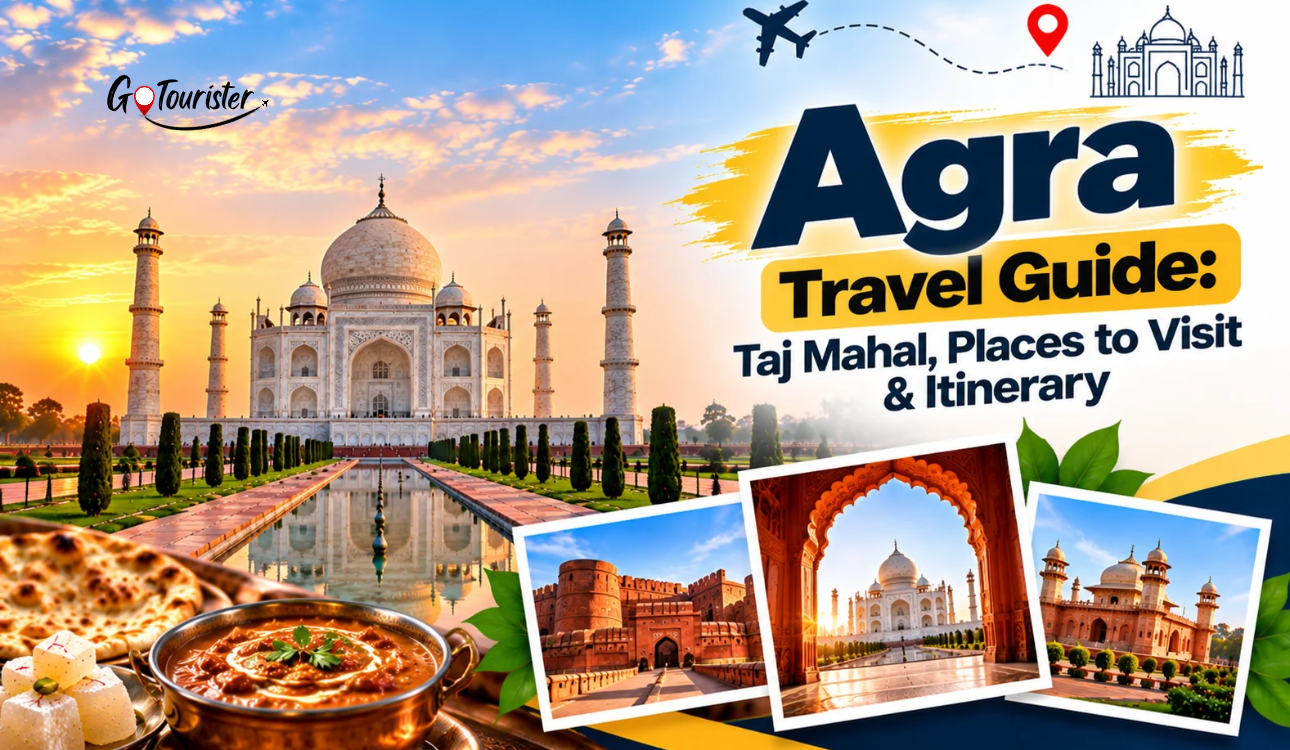
Agra is one of India’s most famous heritage destinations, attracting travellers who want to experience the beauty of the Taj Mahal and explore the history of the Mughal Empire. Located in Uttar Pradesh, the city is home to magnificent forts, marble mausoleums, historic gardens, traditional markets and a food culture that reflects its rich past.
For many visitors, the Taj Mahal is the main reason to visit Agra. However, stopping at this iconic monument alone means missing several other experiences that make the city worth exploring. Agra Fort reveals the power and architectural achievements of the Mughal rulers, Itimad-ud-Daulah’s Tomb showcases delicate marble craftsmanship, and Mehtab Bagh offers a different perspective of the Taj Mahal across the Yamuna River.
Agra is also a convenient destination for travellers planning a Delhi–Agra–Jaipur Golden Triangle trip. You can explore its main attractions on a well-planned day trip, but staying overnight gives you more time to enjoy an early morning visit to the Taj Mahal, explore local markets and discover the city’s lesser-known heritage sites.
This Agra travel guide covers the best places to visit, things to do, famous food, shopping, transport options, travel costs and practical itineraries to help you plan your trip.
Agra Travel Guide at a Glance
| Travel Detail | Information |
|---|---|
| State | Uttar Pradesh, India |
| Famous for | Taj Mahal, Mughal architecture and marble handicrafts |
| Best time to visit | October to March, with weather checks before travel |
| Ideal trip duration | 1–2 days |
| Nearest major airport | Agra Airport, subject to flight availability |
| Main railway stations | Agra Cantt and Agra Fort |
| Popular food | Agra petha, bedai-kachori and Mughlai cuisine |
| Best transport options | Train, road, auto-rickshaw and app-based cab |
| Suitable for | Families, couples, history lovers and photographers |
Best Places to Visit in Agra
Agra offers more than one world-famous monument. The best sightseeing plan combines its major Mughal landmarks with gardens, historic tombs and local neighborhoods.
1. Taj Mahal: The Landmark Every Agra Visitor Wants to See
The Taj Mahal is the defining attraction of Agra and one of the most recognisable monuments in the world. Emperor Shah Jahan commissioned this white marble mausoleum in memory of Mumtaz Mahal. Its symmetrical design, detailed stone inlay work, calligraphy and landscaped gardens make it one of the finest examples of Mughal architecture.
The experience begins as you enter the monument complex and see the white marble structure framed by the entrance gateway and reflecting pool. As you get closer, the decorative details become more noticeable, including floral patterns and intricate craftsmanship in the marble.
When should you visit the Taj Mahal?
Early morning is a popular choice because the light is beautiful for photography and the weather may be more comfortable. Sunrise visits can also help you avoid some of the heat experienced later in the day, although crowd levels vary.
The Taj Mahal generally opens around sunrise and closes around sunset, and it remains closed to regular visitors on Fridays. Check official visitor information before travelling because timings and access arrangements can change.
Travel tip: Buy tickets through the official booking channel, carry only permitted belongings and allow time for security checks. Avoid planning several other major attractions immediately after your visit unless your transport schedule is flexible.
2. Agra Fort: Explore the Mughal Empire’s Power Centre
Agra Fort is one of the city’s most important historical attractions and a UNESCO World Heritage Site. Built primarily under Emperor Akbar and expanded by later Mughal rulers, the fort served as a major imperial residence and centre of administration.
Its massive red sandstone walls enclose courtyards, palaces and historic structures that reveal how the Mughal court functioned. Visitors can explore sections of the complex and appreciate the contrast between the fort’s imposing exterior and its more decorative interiors.
Agra Fort also offers views towards the Taj Mahal from certain areas. The connection between these two landmarks makes the fort especially interesting for travellers who want to understand the city’s royal history.
How much time should you allow? Around 1.5–2 hours is a useful planning estimate, although history enthusiasts may prefer longer.
Travel tip: Visit the Taj Mahal and Agra Fort on the same day if your schedule permits, but check the opening hours of both sites before deciding the order.
3. Itimad-ud-Daulah’s Tomb: Discover the Beauty of the Baby Taj
Often called the Baby Taj, Itimad-ud-Daulah’s Tomb is a smaller but architecturally significant Mughal mausoleum. It was commissioned by Nur Jahan in memory of her father, Mirza Ghiyas Beg.
The monument is known for its white marble surfaces, delicate lattice screens and decorative stone inlay work. These features make it a rewarding stop for visitors who appreciate fine craftsmanship and want to explore a quieter heritage site.
Although it does not have the scale of the Taj Mahal, its design offers a closer look at the decorative traditions that developed during the Mughal period.
Best for: Architecture enthusiasts, photography and travellers interested in Mughal history.
4. Mehtab Bagh: See the Taj Mahal from Across the Yamuna
Mehtab Bagh is a historic garden complex on the opposite side of the Yamuna River from the Taj Mahal. It offers a different viewpoint of the monument, particularly for visitors who want photographs away from the main complex.
The garden is worth considering in the late afternoon, depending on the season, weather and current opening arrangements. It can also provide a more relaxed experience after visiting the busier monuments.
Do not assume that a visit will always deliver a perfect sunset view. Weather, haze and seasonal conditions can affect visibility.
Best for: Couples, photographers and travellers seeking a different view of the Taj Mahal.
5. Fatehpur Sikri: Visit Akbar’s Historic Capital
Fatehpur Sikri is a historic city built during the reign of Mughal Emperor Akbar and is another UNESCO World Heritage Site associated with the Agra region.
Its impressive architecture includes Buland Darwaza, Jama Masjid, palace complexes and other historic structures. The site offers insight into the Mughal approach to architecture, urban planning and imperial life.
Fatehpur Sikri is located outside central Agra, so it requires a separate travel plan. Rather than trying to fit it into a crowded one-day sightseeing schedule, consider adding an extra day if you want to explore it comfortably.
Best for: History lovers, architecture enthusiasts and longer Agra trips.
6. Akbar’s Tomb at Sikandra: Explore Another Mughal Monument
Akbar’s Tomb is located in Sikandra, on the outskirts of Agra. It is the mausoleum of Emperor Akbar and is known for its large complex, decorative gateways and combination of architectural influences.
The monument offers a different perspective from the Taj Mahal because of its red sandstone features and distinctive design. It is particularly worthwhile for visitors interested in the evolution of Mughal architecture.
Allow additional travel time because it is not immediately beside the central Taj Mahal sightseeing area.
7. Jama Masjid and Agra’s Old City
Agra’s historic city area provides a glimpse into everyday life beyond the main tourist attractions. Jama Masjid is an important religious and architectural landmark, while nearby streets contain traditional shops, markets and food establishments.
This part of the city is best explored at a comfortable pace. You can combine a short heritage visit with local shopping or a meal, but remember that traffic, crowds and religious activities can affect access.
Dress respectfully when visiting religious sites and follow local visitor instructions.
8. Soami Bagh Samadhi: A Different Side of Agra’s Architecture
Soami Bagh Samadhi is a distinctive religious and architectural site known for its elaborate marble craftsmanship. Its design and decorative details make it interesting for travellers who want to explore attractions beyond the usual Taj Mahal and Agra Fort circuit.
It is not essential for a first-time visitor with only a few hours in Agra, but it can be a worthwhile addition to a longer itinerary.
Check current visiting arrangements before travelling and respect the site’s religious customs.
Things to Do in Agra Beyond the Taj Mahal
Agra becomes more rewarding when you leave enough time for experiences beyond monument visits.
Start with a heritage walk or a guided visit to understand the history behind the city’s architecture. A knowledgeable guide can explain the symbolism, construction techniques and stories associated with Mughal buildings.
You can also explore traditional markets for marble handicrafts, decorative items, leather products and souvenirs. If you are interested in craftsmanship, ask about the materials used and compare products before purchasing.
Food is another essential part of the Agra experience. Try regional snacks, sweets and Mughlai dishes at established eateries. You can finish your day with a relaxed market visit or an evening meal rather than rushing between distant attractions.
For photographers, the best approach is to plan around lighting conditions and visitor schedules. The Taj Mahal’s appearance changes with the light, but weather and crowd levels can affect the experience.
Famous Food in Agra: What Should You Eat?
Agra’s food culture combines North Indian favourites with Mughlai influences and traditional sweets. You do not need an elaborate food tour to enjoy it; even a few local dishes can add a memorable dimension to your trip.
Agra Petha
Petha is Agra’s best-known sweet, traditionally made using ash gourd and sugar syrup. It comes in several varieties, including plain, dry and flavoured versions.
You will find petha in sweet shops throughout the city. If you want to take some home, choose properly packaged products and check their storage instructions.
Bedai and Kachori
Bedai and kachori are popular breakfast choices in the region. They are commonly served with potato curry and may be accompanied by chutneys or other local accompaniments.
A local breakfast stop is a good way to experience the city’s food culture before beginning a day of sightseeing.
Mughlai Cuisine
Agra has a strong association with Mughlai cooking, including rich gravies, kebabs, breads and rice dishes. Restaurants offer different interpretations, from traditional preparations to modern dining experiences.
Vegetarian visitors can also find plenty of North Indian dishes, snacks and sweets.
Dalmoth and Local Snacks
Dalmoth is a savoury snack associated with Agra and makes a popular option for taking home. Local sweet shops and snack stores also sell other packaged regional products.
When choosing where to eat, prioritise food hygiene, freshness and your dietary needs. If you have food allergies, confirm ingredients before ordering.
Best Shopping Markets in Agra
Shopping in Agra offers more than the usual tourist souvenirs. The city is known for marble-inlay handicrafts, leather products, traditional footwear, textiles and sweets.
| Market or Shopping Area | What to Look For |
|---|---|
| Sadar Bazaar | Souvenirs, footwear, snacks and general shopping |
| Kinari Bazaar | Decorative goods, textiles, wedding items and traditional products |
| Raja Ki Mandi | Local shopping and everyday retail |
| Marble handicraft shops | Decorative marble items and inlay work |
| Traditional sweet shops | Petha and other regional treats |
Compare prices at more than one shop, especially for marble handicrafts. Ask about the materials, craftsmanship and packaging before making a purchase.
If you are buying fragile items, confirm whether the seller provides safe packaging for train or air travel. For expensive purchases, request a clear bill and check the product carefully.
Best Time to Visit Agra
The best time to visit Agra depends on your tolerance for heat, interest in photography and travel schedule.
October to March: This is a popular period for sightseeing because temperatures are generally more comfortable than during peak summer. However, winter fog and air pollution can affect visibility, travel times and the experience of visiting outdoor monuments.
April to June: Summer temperatures can become very high. Plan outdoor sightseeing early in the morning, carry water and avoid prolonged exposure during the hottest hours.
July to September: The monsoon season can bring humidity and rainfall. The gardens and surroundings may look greener, but wet conditions can affect walking and road journeys.
For most travellers, the cooler months are a practical choice. Regardless of the season, check weather conditions and the official monument schedule before finalising your itinerary.
Agra Itinerary: How to Explore in 1 or 2 Days
The right Agra itinerary depends on whether you are visiting from Delhi for a day or planning to stay overnight. Group attractions by location and avoid spending too much time travelling between distant sites.
One-Day Agra Itinerary
If you have only one day, focus on the two major landmarks and one additional experience.
Early morning: Visit the Taj Mahal around opening time. Allow time for security checks and exploring the main complex.
Late morning: Travel to Agra Fort and explore its historic courtyards, palaces and architecture.
Lunch: Enjoy a local meal at a reputable restaurant.
Afternoon: Choose between Itimad-ud-Daulah’s Tomb and a short shopping visit, depending on your available time.
Late afternoon: If your schedule permits, visit Mehtab Bagh for a different perspective of the Taj Mahal.
This is a busy itinerary. If you are travelling with children, older family members or anyone who prefers a slower pace, consider removing one attraction.
Two-Day Agra Itinerary
A two-day trip gives you more flexibility and allows you to explore the city without rushing.
Day 1: The Main Mughal Landmarks
- Early morning: Taj Mahal
- Late morning: Agra Fort
- Afternoon: Lunch and rest
- Late afternoon: Mehtab Bagh, subject to opening hours
Day 2: Heritage, Markets and Local Culture
- Morning: Itimad-ud-Daulah’s Tomb
- Late morning: Akbar’s Tomb at Sikandra, if time and transport permit
- Afternoon: Lunch and local shopping
- Evening: Explore Agra’s food scene or enjoy a relaxed heritage experience
If Fatehpur Sikri is a priority, plan it as a substantial part of your second day or add another day. Do not assume that you can comfortably cover every major monument in Agra and Fatehpur Sikri in one short visit.
Agra Trip Budget: How Much Should You Plan?
The cost of an Agra trip depends on accommodation, transport, ticket categories, meals and whether you travel independently or hire a private vehicle.
The following estimates are illustrative planning ranges per person per day, excluding travel to Agra and major shopping expenses.
| Expense | Budget Travel | Mid-Range Travel |
|---|---|---|
| Accommodation | ₹800–₹2,000 | ₹2,500–₹6,000 |
| Food | ₹400–₹800 | ₹800–₹1,500 |
| Local transport | ₹200–₹500 | ₹500–₹1,500 |
| Sightseeing allowance | ₹200–₹700 | ₹500–₹1,500 |
| Estimated daily total | ₹1,600–₹4,000 | ₹4,300–₹10,500 |
These are general planning estimates, not live prices. Actual expenses can vary considerably, especially during holidays and busy tourist periods.
Monument ticket prices differ by attraction and visitor category. The Taj Mahal may also have additional charges for access to specific areas. Check the official Archaeological Survey of India or authorised booking information before your visit.
How to Reach Agra
Agra is connected to several major Indian cities by rail and road, making it convenient for both independent travellers and organised tours.
By Train
Rail travel is a practical option for visitors coming from Delhi and other major cities. Agra has multiple railway stations, including Agra Cantt and Agra Fort.
Check the exact arrival station before booking because the best station depends on your train and accommodation location. Leave enough time for onward transport to your hotel or the monument area.
By Road
Agra is connected to Delhi and other North Indian cities by major roads and expressways. Travellers can choose buses, private cars or taxis depending on their budget and preferred level of flexibility.
Road journey times depend on the route, traffic, weather and departure point. Check current travel conditions before setting out.
By Air
Agra has an airport, but flight availability and connectivity can be limited or change over time. Many visitors find it more practical to fly into Delhi and continue to Agra by train or road.
Verify flight schedules before making a travel plan around Agra Airport.
Getting Around Agra
Auto-rickshaws, e-rickshaws, taxis and app-based cab services can help you travel between attractions. For a day trip, agree on the transport arrangement and expected charges before beginning your sightseeing.
If you are visiting several monuments, a planned route can be more efficient than booking separate journeys for every stop.
Where to Stay in Agra
The best area to stay depends on your sightseeing plan, transport arrangements and budget.
Taj Ganj: A popular area for travellers who want to stay near the Taj Mahal. It offers a range of accommodation options, including budget guesthouses and hotels. Check the exact location and recent reviews before booking.
Fatehabad Road: A practical choice for travellers looking for hotels, restaurants and convenient access to major tourist areas.
Agra Cantt area: Worth considering if railway access is important to your trip. Check the distance to the Taj Mahal and other attractions before booking.
Premium hotels near the main tourist areas: These can offer additional comfort and services for families and couples, but prices may be higher during busy periods.
For a sunrise visit, choose accommodation that allows you to reach the Taj Mahal comfortably before opening. Also confirm check-in times, transport availability and luggage-storage arrangements if you arrive early.
Practical Travel Tips for Visiting Agra
A few simple preparations can make your trip much easier.
- Check the Taj Mahal’s weekly closure: The monument is closed to regular visitors on Fridays.
- Book tickets through authorised channels: This helps you avoid confusion over ticket validity and visitor categories.
- Travel light: Security restrictions apply at major monuments, and prohibited items can delay entry.
- Wear comfortable footwear: Heritage complexes involve walking across courtyards, pathways and gardens.
- Plan around the weather: Summer heat, winter fog and monsoon rain can affect sightseeing.
- Use reputable guides and transport providers: Confirm prices and the agreed service before starting.
- Protect valuables: Stay alert in crowded markets and busy tourist areas.
- Allow extra time for travel: Traffic and security checks can affect a tight schedule.
- Respect religious and heritage sites: Follow photography rules, dress requirements and visitor instructions.
- Verify current timings: Official information should take priority over old travel articles or unverified social media posts.
Places to Visit Near Agra
If you have additional time, several destinations near Agra can extend your holiday beyond the city’s major monuments.
Fatehpur Sikri
This historic Mughal city is a strong choice for travellers interested in architecture and imperial history. Allow substantial time for the journey and sightseeing.
Mathura
Mathura is an important religious destination associated with Lord Krishna. Visitors can explore temples and cultural sites, although festival periods can be particularly crowded.
Vrindavan
Vrindavan is known for its temples, devotional traditions and religious festivals. It can be combined with Mathura for a spiritual journey, but travel and crowd conditions should be considered.
Bharatpur
Bharatpur is known for Keoladeo National Park, a major destination for birdwatching and nature enthusiasts. It may appeal to travellers who want a break from monuments and urban sightseeing.
Jaipur
Jaipur is a popular addition to a longer Golden Triangle journey. Its forts, palaces, markets and Rajasthani food offer a different cultural experience from Agra.
Choose nearby destinations according to your available days rather than trying to cover too many cities in one trip.
FAQs
How many days are enough to visit Agra?
One day is enough to visit the Taj Mahal and Agra Fort if you plan carefully. Two days provide more time for other monuments, local food, markets and a relaxed sightseeing experience.
What is the best time to visit the Taj Mahal?
Early morning is a popular choice for comfortable sightseeing and photography. The best experience depends on weather, crowd levels and seasonal conditions. Check the official opening schedule before travelling.
Is the Taj Mahal closed on Friday?
Yes. The Taj Mahal is closed to regular visitors on Fridays, although arrangements for prayers at the mosque within the complex are separate. Plan your visit for another day and verify current official information.
Can I visit Agra from Delhi in one day?
Yes. A day trip is possible by train or road, depending on your departure time and transport arrangements. Start early and prioritise the Taj Mahal and Agra Fort rather than trying to cover every attraction.
What is Agra famous for besides the Taj Mahal?
Agra is also known for Agra Fort, Fatehpur Sikri, Itimad-ud-Daulah’s Tomb, Mehtab Bagh, marble handicrafts and Agra petha.
How much does an Agra trip cost?
A budget traveller might plan around ₹1,600–₹4,000 per person per day, excluding travel to Agra. Mid-range travel may cost around ₹4,300–₹10,500 per person per day. These estimates vary with hotel rates, transport, ticket categories and dining choices.
Is Agra suitable for a family trip?
Yes. Families can explore the Taj Mahal, Agra Fort, gardens, local markets and cultural attractions. Plan around walking distances, weather, meal breaks and the needs of children or older travellers.
Can I visit Fatehpur Sikri on the same day as the Taj Mahal?
It may be possible with private transport and an early start, but it can make the day rushed. If you want to explore the monuments properly, consider spending an additional day in the Agra region.
Final Thoughts
Agra is much more than a stop for a photograph of the Taj Mahal. Its forts, marble mausoleums, historic gardens, local food and traditional markets offer a richer picture of the city’s Mughal heritage and contemporary culture.
For a short visit, prioritise the Taj Mahal and Agra Fort. If you have more time, add Itimad-ud-Daulah’s Tomb, Mehtab Bagh, Fatehpur Sikri or other attractions according to your interests.
Plan your journey around the monument schedules, choose transport that suits your itinerary and leave enough time to enjoy the city at a comfortable pace. With thoughtful planning, Agra can become one of the most memorable stops on your North India trip.