


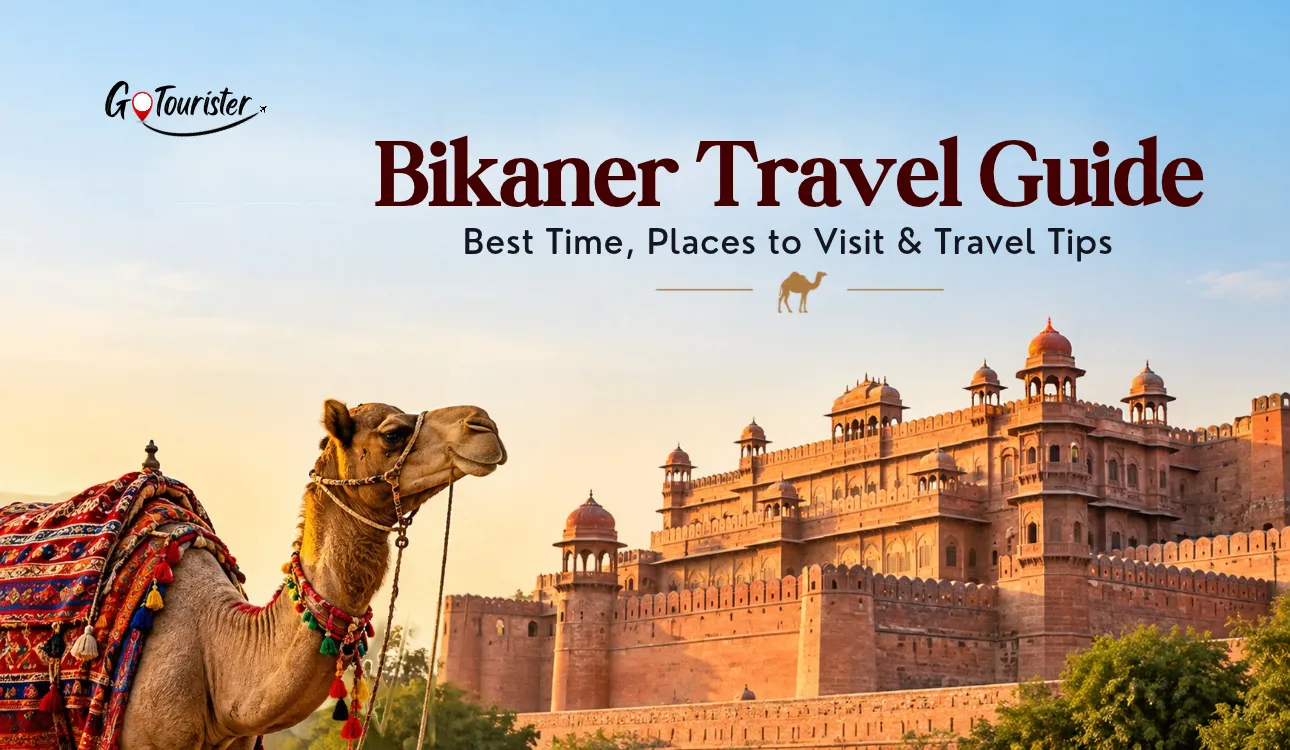
Bikaner, in northern Rajasthan, is a desert city known for its grand forts, intricately carved havelis, camel culture and distinctive local cuisine. Founded by Rao Bika in the 15th century, the city retains a strong sense of its royal and trading heritage while offering visitors a different perspective on Rajasthan’s desert landscape.
Whether you are planning a heritage getaway, a stop on a Rajasthan road trip or a visit during the famous Camel Festival, this Bikaner travel guide covers the essentials you need to plan your trip, from the best time to visit to transport, local experiences and the ideal length of stay.
Best Time to Visit Bikaner
The best time to visit Bikaner is generally from October to March, when temperatures are more comfortable for sightseeing and exploring the old city. Winter is particularly suitable for visiting forts, temples and outdoor attractions.
October to March: The most comfortable season
Cooler weather makes this period a good choice for exploring Bikaner’s heritage sites and surrounding desert landscape. December and January can bring cold nights, so pack warm clothing if you plan to travel during winter.
January is also associated with the Bikaner Camel Festival, an annual celebration featuring camel-related activities and Rajasthani cultural performances. Check the official Rajasthan Tourism calendar for confirmed dates before booking your trip.
April to June: Hot summer weather
Summer temperatures can become extremely high in this desert region. If you travel during these months, plan outdoor sightseeing for early mornings and later in the day, carry water and sun protection, and allow time to rest during the hottest hours.
July to September: Monsoon season
The monsoon can bring some relief from summer heat, although conditions vary. Check the local forecast before travelling and allow flexibility for outdoor plans.
For most visitors, the cooler months offer the most convenient conditions for a Bikaner sightseeing trip.
How to Reach Bikaner
Bikaner is connected to other destinations in Rajasthan and northern India by rail and road. Air travel is another possibility, but flight availability should be checked carefully before finalising your plans.
By train: Bikaner Junction is the principal rail connection for visitors arriving by train. Check current services and journey times from your departure city through the official railway booking system. Travelling by rail can be a practical option for those coming from major cities in northern India.
By road: Bikaner can be reached by car or bus from other Rajasthan destinations. Road travel is useful if you are combining the city with places such as Jaipur, Jodhpur or Jaisalmer. Your journey time will depend on the route, traffic and stops along the way.
By air: Bikaner has an airport at Nal, but commercial flight options may be limited or subject to change. Check current services before relying on a direct flight. Jaipur and Jodhpur are alternative airports to consider, depending on your onward route and available connections.
When planning your journey, compare the complete travel time, including the transfer from the airport or railway station to your accommodation.
Best Things to Experience in Bikaner
Bikaner’s appeal lies in its combination of royal architecture, old-city streets, camel-related attractions and regional food. You can experience its main highlights without treating every attraction as a separate day trip.
Junagarh Fort and royal architecture
Junagarh Fort is one of Bikaner’s signature landmarks. Built on the plains rather than a hilltop, the fort complex is known for its courtyards, palaces, carved details and ornate interiors. It offers a useful introduction to the city’s royal heritage.
The wider city also has historic palaces and merchant havelis, including the celebrated Rampuria havelis. Exploring the old-city lanes provides a glimpse of Bikaner’s architectural character and traditional streetscapes.
For a detailed sightseeing list, see our guide to places to visit in Bikaner.
Discover Bikaner’s camel culture
Camels are an important part of Bikaner’s regional identity. The National Research Centre on Camels, located outside the main city, is a distinctive attraction for visitors interested in camel breeding and research. The centre is also associated with camel-related visitor experiences and products.
If you would like to see the city at its liveliest, consider planning your trip around the Bikaner Camel Festival. The annual event celebrates camels alongside local music, dance and cultural activities. Festival dates and programmes vary, so confirm the latest details with Rajasthan Tourism.
Visit Karni Mata Temple at Deshnok
Karni Mata Temple, situated at Deshnok outside Bikaner, is one of the region’s best-known religious destinations. The temple is distinctive for its revered rats and attracts visitors interested in its unusual traditions and religious significance.
Allow time for the journey outside the city and follow the temple’s visitor rules. For information about the temple’s background, customs and visiting considerations, read our dedicated Karni Mata Temple travel guide.
Explore the local markets and food culture
Bikaner’s food is another reason to include the city in your Rajasthan plans. Its famous Bikaneri bhujia is a must-try local speciality, while traditional sweet shops, kachoris and other savoury snacks offer more ways to sample the region’s flavours.
You can also explore local markets for snacks, souvenirs and traditional goods. Shopping and food stops fit naturally into a walk through the older parts of the city.
Getting Around Bikaner
The best way to get around Bikaner depends on which attractions you plan to visit.
Walking is a useful way to explore selected old-city streets, markets and heritage areas, although distances and local conditions may make a vehicle more convenient for some stops.
Auto-rickshaws can be useful for shorter journeys within the city. For attractions outside the centre, such as Karni Mata Temple at Deshnok or the National Research Centre on Camel, consider a taxi or a hired vehicle.
If you hire a local vehicle, agree on the fare, route and any waiting charges before starting the journey. When visiting several attractions in one day, groups stop according to their locations to reduce unnecessary travel.
Check the latest opening hours and visitor arrangements for individual attractions before setting out.
What to Eat in Bikaner
Food is an important part of the Bikaner experience. The city is particularly famous for Bikaneri bhujia, a savoury snack made with gram flour and spices. Its reputation is recognised through a registered geographical indication for the product.
Other local favourites include kachoris, namkeen snacks, traditional sweets and Rajasthani meals. Explore established local shops and eateries to sample these specialities, and choose food and drinking water carefully when travelling in hot weather.
If you want to bring something home, packaged bhujia and sweets are convenient options. Check the packaging and storage instructions when purchasing food for a longer journey.
How Many Days Are Enough for Bikaner?
For most travellers, one to two days is a practical amount of time to spend in Bikaner.
A one-day visit can focus on Junagarh Fort, the old city and its havelis, along with time to sample local food. This option suits travellers who are passing through Rajasthan and want to experience the city’s main highlights.
Two days allow for a more relaxed pace and make it easier to include an attraction outside the city, such as Karni Mata Temple or the National Research Centre on Camel. You can also leave more time for local markets and heritage areas rather than rushing between stops.
If you are planning a longer Rajasthan trip, Bikaner can be incorporated into a wider route connecting destinations such as Jaipur, Jodhpur and Jaisalmer. See our Bikaner itinerary guide.
Practical Travel Tips for Bikaner
A little preparation will help you make the most of your visit.
- Prepare for the weather: Carry sun protection and water in warmer months. In winter, bring an extra layer for cold evenings and mornings.
- Check attraction details: Opening hours, entry arrangements and visitor facilities can change. Verify current information before visiting.
- Plan festival travel early: If you want to attend the Camel Festival, confirm the official dates and arrange accommodation and transport in advance.
- Dress respectfully at religious sites: Follow local customs, observe footwear requirements and comply with instructions from temple staff.
- Arrange transport for outlying attractions: Check the route and agree on fares before beginning a taxi or auto-rickshaw journey.
- Leave room for local exploration: Bikaner’s character is found not only in its main landmarks but also in its markets, food shops and historic streets.
Plan Your Bikaner Trip
Bikaner offers a rewarding mix of desert heritage, royal architecture, camel culture and distinctive Rajasthani food. A visit can be as short as a day focused on the main landmarks or extend over two days to include an excursion beyond the city centre.
Choose the cooler months if you want more comfortable sightseeing conditions, check transport and attraction details before departure, and allow enough time to explore without rushing. With a little planning, Bikaner can be a memorable stop on a wider Rajasthan journey.
3 responses to “Bikaner Travel Guide: Best Time, Places to Visit & Travel Tips”
[…] a complete travel experience, explore our Bikaner Travel Guide for the best places to visit, things to do, and travel […]
[…] Also Read: Bikaner Travel Guide: Best Time, Places to Visit & Travel Tips […]
[…] Also Read: Bikaner Travel Guide: Best Time, Places to Visit & Travel Tips […]