



Cherrapunji, known locally as Sohra, is in the heart of the Meghalaya travel region where all the dramatic attractions of the state come together in one small, manageable area. Waterfalls, caves, trekking routes, living root bridges and vantage points looking down into deep valleys make this a striking area beyond the monsoons. Sohra is situated in the Khasi Hills of Meghalaya and it is one of the most popular places from which to discover the state and its natural and cultural riches.
If you’re researching Cherrapunji attractions, the problem isn’t so much finding stuff to do-attractions are so numerous and diverse it will be hard to narrow down your list. This page will highlight 11 rewarding tourist places, scenic viewpoints, caves, waterfalls, and the more adventurous Nongriat living-root-bridge hike, plus tips on walking difficulty, best time, required time, safety, and how to limit your attractions on a quick trip around Meghalaya.
What Is Cherrapunji Famous For?
Famed for its extraordinary rainfall, lush monsoons, magnificent waterfalls, limestone caves and traditional living root bridges, Cherrapunji, or Sohra is located on the surrounding steep Khasi Hills, with some of the deepest gullies, cliffs and cascades. Village life here showcases the Khasi way of living.
However the prominent sites include the Nohkalikai Falls, Seven Sisters Falls, the Mawsmai Cave and the famous Double Decker Living Root Bridge near the village of Nongriat. Cherrapunji is in close association with the rest of Meghalaya’s tourism circuit and consequently blending the Sohra stay with excursions towards Shillong, Mawlynnong, Dawki and other destinations is very simple.
Quick Facts About Cherrapunji
| Travel Fact | Details |
| Location | Sohra/Cherrapunji, East Khasi Hills, Meghalaya |
| Best season | November to February for easier sightseeing; monsoon for dramatic waterfalls |
| Recommended duration | 2 days for major highlights; 3+ days for trekking and slower exploration |
| Nearest airport | Shillong Airport; Guwahati is the more practical major-airport option for many travellers |
| Nearest major railway station | Guwahati Railway Station |
| Ideal for | Nature, waterfalls, caves, trekking, photography and cultural experiences |
| Famous for | Heavy rainfall, waterfalls, caves and living root bridges |
| Main attractions | Nohkalikai Falls, Seven Sisters Falls, Mawsmai Cave, Nongriat and more |
According to a Meghalaya Tourism published on its website, Sohra is approximately 54 km away fromShillong. The state tourism department has identified Guwahati Airport and Guwahati Railway Station as the primary entry points.
Top Tourist Places in Cherrapunji
The most popular tourist attractions in Cherrapunji cover a diverse spectrum of sights and activities. Some (like the scenic viewpoints along the roadside) can be seen in a matter of minutes while others (like the waterfalls and caves) take more time to walk around. These 11 sights should provide first- timers with a comprehensive overview of the most popular sites and activities in Sohra.
1. Nohkalikai Falls
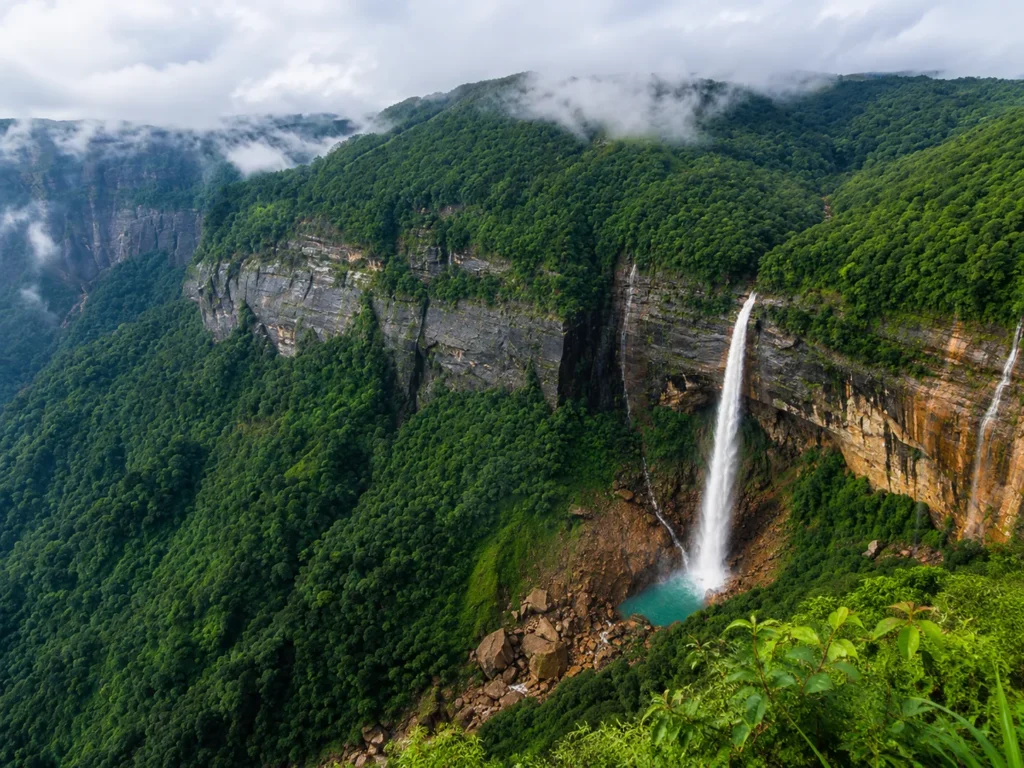
Among the most famous of the Cherra tourist places is the Nohkalikai Falls. This waterfall, which cascades from the plateau down to the pool below, can easily be considered one among the best sights on Sohra. The cliffs in the background and the lush green fields only add to the allure of the falls. Elsewhere in India the heights are estimated at over 1,100 ft.
Most visitors’ main attraction is the viewpoint rather than an up long walk. Expect to spend 30-60 minutes depending how much time you take clicking and waiting for better weather.
So families can normally enjoy the view point, but stay behind the barriers and exercise extreme caution around the wet surfaces and open edges.
Practical Advice: things can change quickly in Sohra, if the falls are shrouded in clouds, don’t assume it’s the same all the time, a change in the weather can be very quick!
2. Seven Sisters Falls
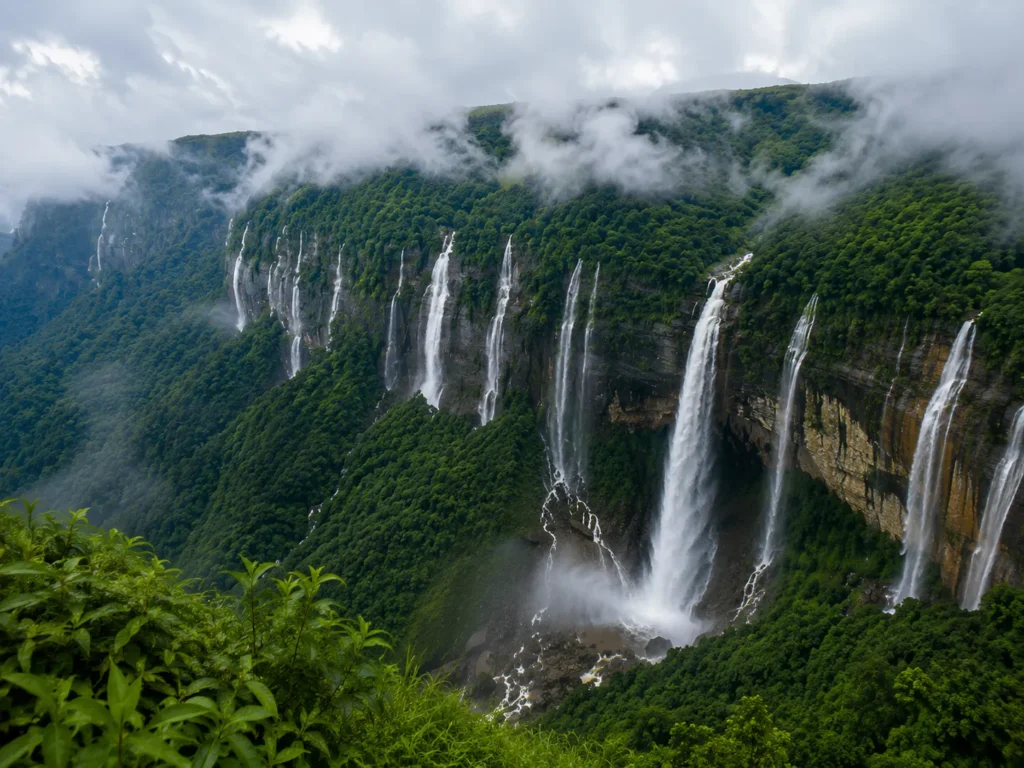
Another famous waterfall in the Sohra region is Nohsngithiang Falls also known as Seven Sisters Falls. It is a complex waterfall flowing down from a tall cliff in seven streams, which is the reason that it has earned the name Seven Sisters. It is one of the popular points of interest in Sohra according to Meghalaya Tourism and Incredible India.
The highlight is the view point so there is no need to plan in any hard walk to go along it. It normally takes about 30-45minutes.
The crucial factor here is seasonality. At times of high and post heavy rain, the falls are much more spectacular and at times of drought can be far less impressive.
Practical advice: Use this as a weather-dependent stop, assuming there is a possibility the panoramic view will not look like photos during the height of monsoon.
3. Mawsmai Cave
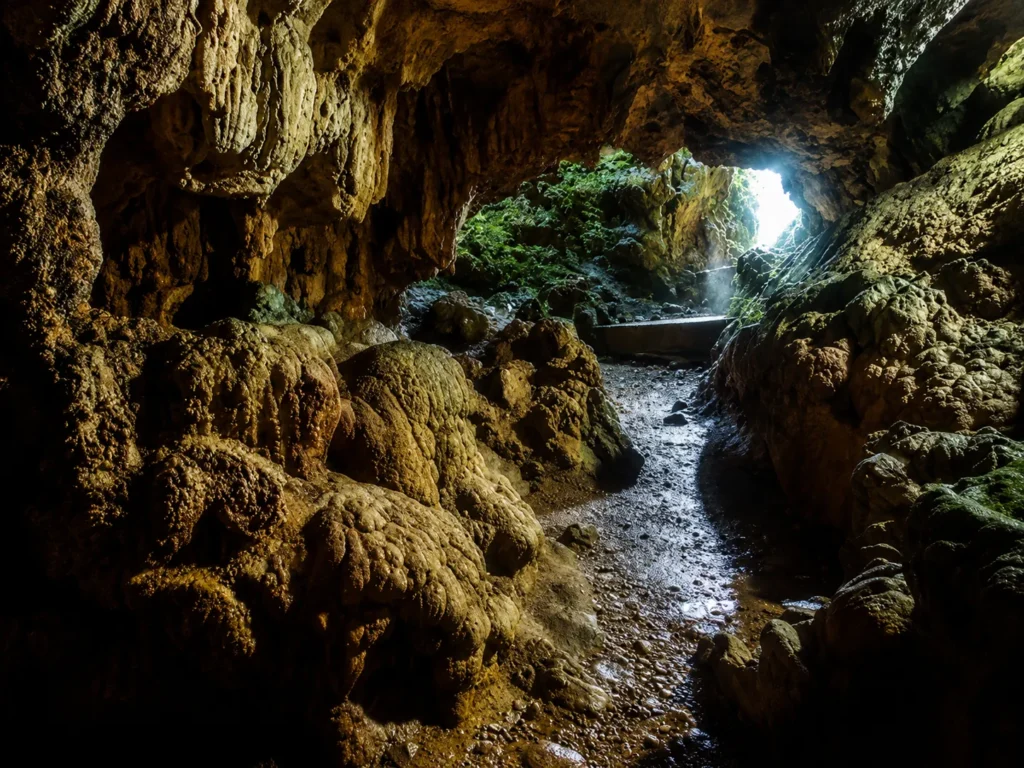
Mawsmai Cave is one of the most easily accessible and popular caves near Cherrapunji. A visit here is more than simple sightseeing. You can explore natural limestone formations, narrow passages and uneven sections inside the cave. Some areas require you to walk carefully or crouch as you move through the passages.
The cave is very handy for those tourists who want to get a quick glimpse of the wonderful cave area in Meghalaya without experiencing a full day’s caving. According to Incredible India, Mawsmai Cave runs about 820 feet (250 m) deep.
Gives a rough estimate of 30-60 minutes, depending upon the number of visitors and how easily you make your way through the cave.
Be prepared and wear appropriate shoes with a good grip. Expect wet and uneven ground. Visitors with a fear of confined spaces, wet ground or tight gaps should be cautious and think twice before attempting.
4. Double Decker Living Root Bridge
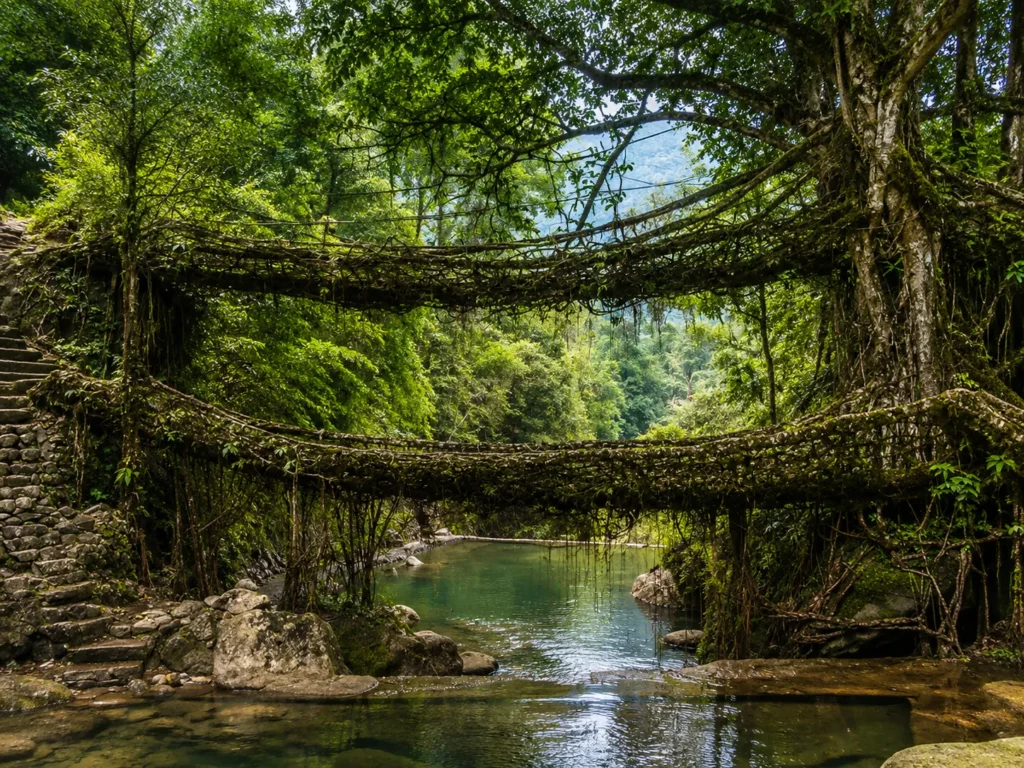
The double decker living root bridge near Nongriat differs completely from the hurried sightseeing stops around Sohra. It is a native living structure, a scaffold of thatch formed by intentionally guiding the aerial roots of rubber trees into shape that over time form a usable bridge. Top Incredible India lists the Umshiang Double-Decker Root Bridge as an example of a living-root bridge.
A fair walk back up from here is required with many steps involved so this isn’t an attraction to just jump in between the various viewpoints of waterfalls. You need to allow a good part of the day (gas, depending upon your pace and stops)
Should be a top priority for hikers seeking to explore more of Meghalaya than roadside attractions. Both ecologically significant and culturally notable, the bridge-building tradition signifies a long-term strategy for living in this humid land.
Note on planning: This part isn’t meant to be a comprehensive trekking guide. For information on route planning, backpacking tips and a detailed day by day plan of Meghalaya, our [ultimate Cherrapunji itinerary ] is a good place to start.
5. Eco Park
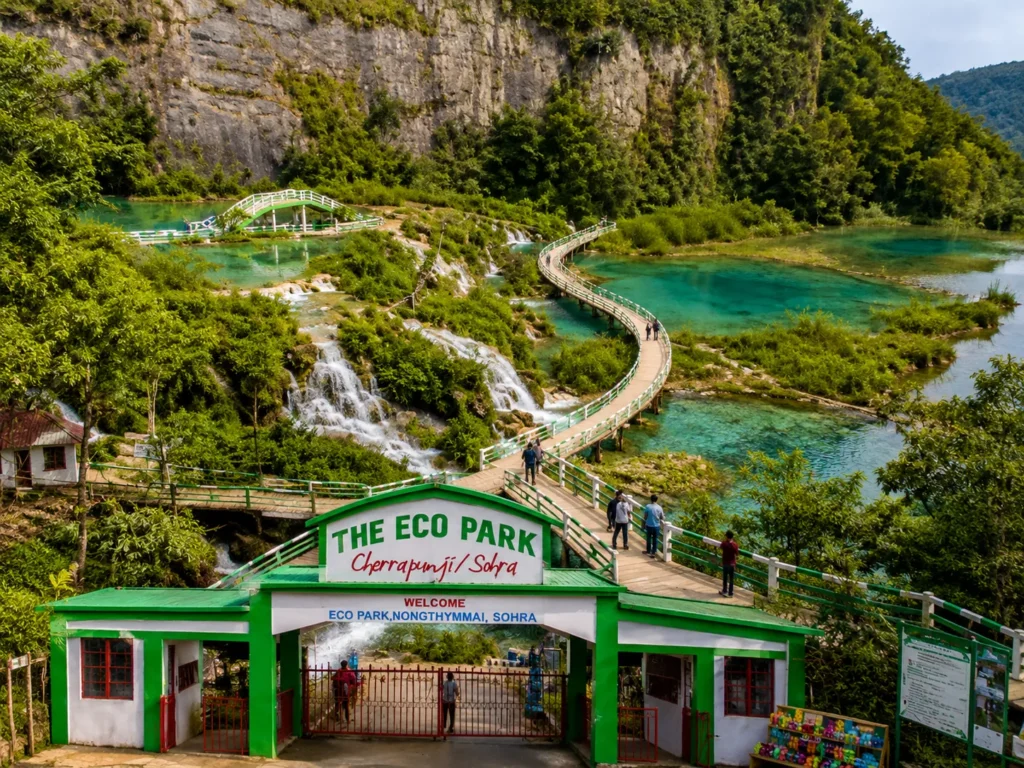
There is nothing too challenging about any of Eco Park and it is mostly about views to the landscape rather than any real thrill. The fact that it is set quite high up means that there are views across the landscape and on a clear day you should be able to see the valleys.
Allow roughly 30–60 minutes for a relaxed visit.
It works well for families and travellers who don’t want every stop to involve stairs or trekking. It can also be a useful contrast to the more physically demanding Nongriat experience.
Practical tip: Visit when visibility is reasonably good. Heavy clouds and mist can substantially reduce the value of a viewpoint-based stop.
6. Thangkharang Park
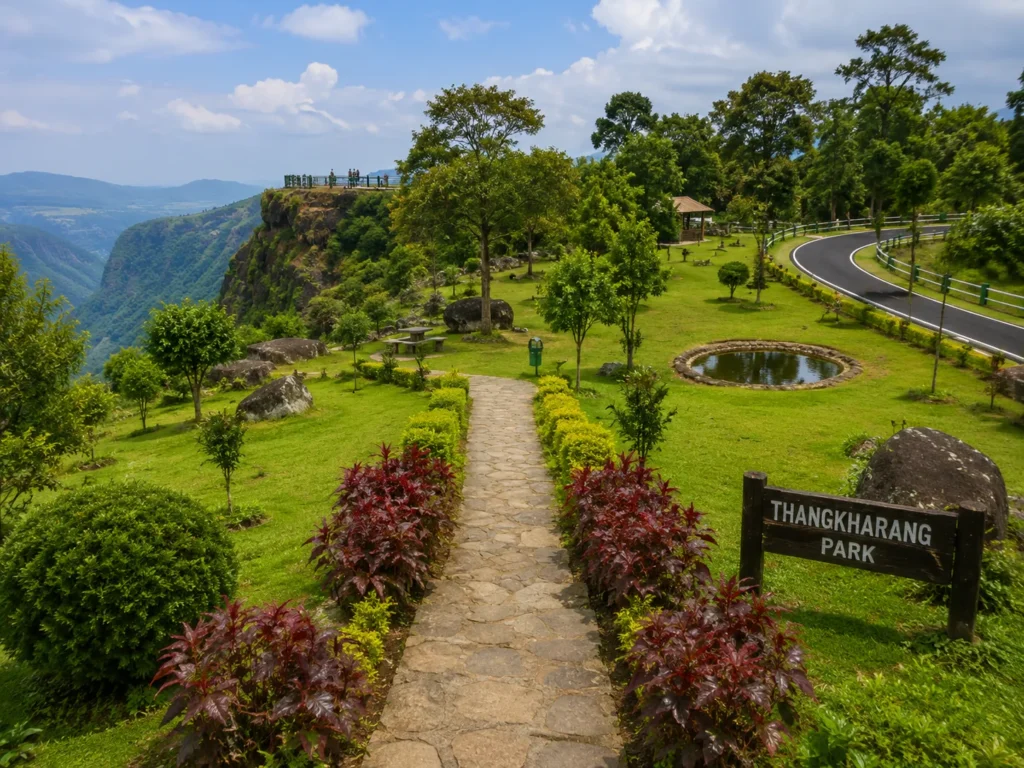
This park blends the landscape with the panoramic views across the rugged southern Khasi Hills. On a clear day, the lookout provides mesmerising horizons looking towards the Bangladesh plains. ThanKharang Park is also worth a stop for those interested in landscapes and photography.
The attraction is not overly strenuous so you can enjoy it without having to undertake a long walk, and it will usually be sufficient to only spend 30-60 minutes of sightseeing time.
It is especially good value if you will be on Nohkalikai or other of western/south side Sohra destinations.
Best conditions: Clear or partly clear weather makes the biggest difference. In mist or heavy rain, the distant views can disappear.
7. Wei Sawdong Falls
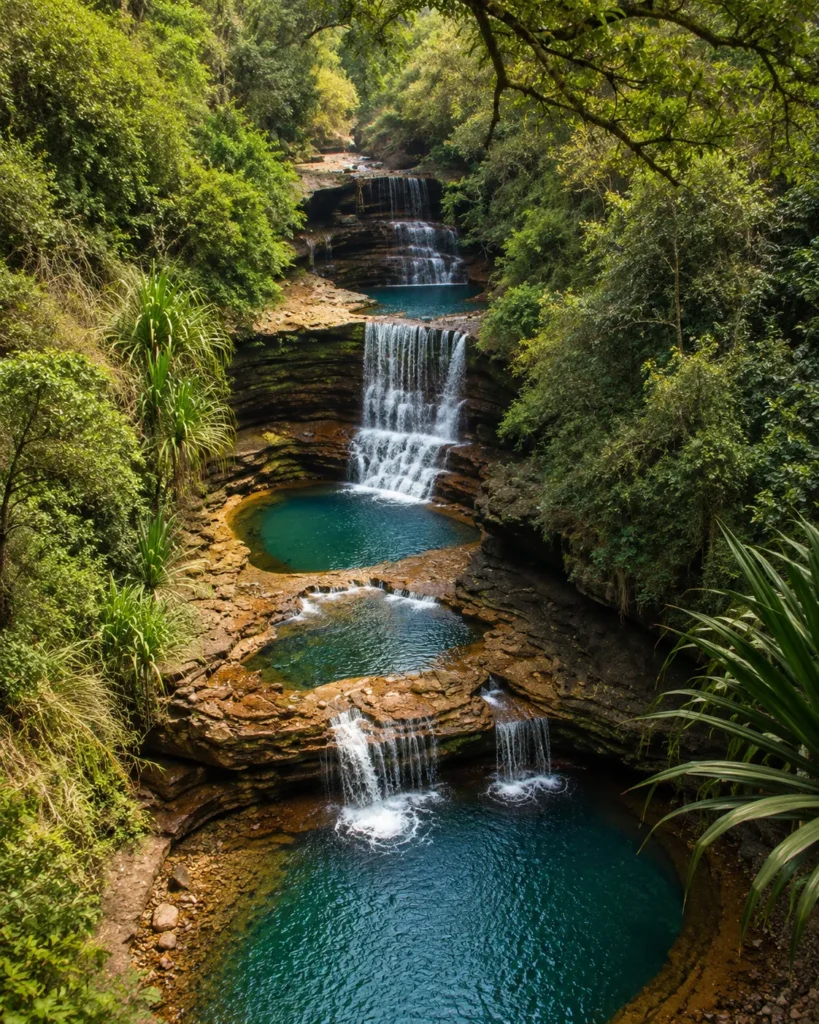
Wei Sawdong Falls has received a new popularity to the Cherrapunji sightseeing circuit in view of its picturesque three – suspended cascade flowing down through a covered terrain. 3 – tiered Wei Saw Dong has been featured among all other places of the frontier by Meghalaya Tourism.
Except for the simple viewpoint at the roadside waterfalls, it may take some walking and steps to go to the viewpoints, so it would be better to allow about 1-2 hours, depending on your walking speed and stopping time.
Slippery due to moisture. This can affect steps and paths. Travel shoes are more important here than fashionable travel shoes.
Practical tip: Don’t rush the descent or climb back up. Give yourself enough time to negotiate wet surfaces safely, particularly during the rainy season.
8. Dainthlen Falls
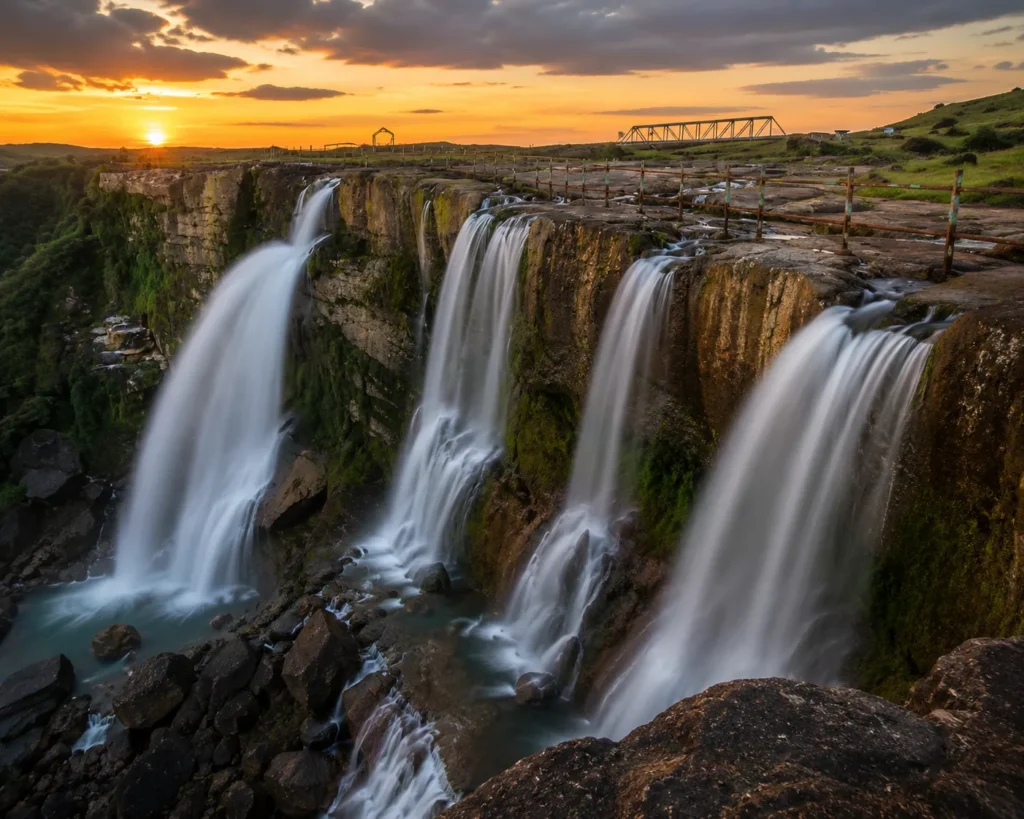
Dainthlen Falls offers a picturesque series of waterfalls surrounded by the untamed landscapes of Sohra. The falls also connect with a popular Khasi legend about Thlen, a giant serpent that the Khasi people defeated at this site. The story remains an important part of Khasi folklore.
The surrounding hills and greenery make Dainthlen Falls worth visiting for nature and photography lovers. You can enjoy the scenery even if local legends do not interest you. Meghalaya Tourism also lists Dainthlen Falls among the main places to see in Sohra.
Allow around 30–60 minutes for a typical visit.
Practical tip: The waterfall is generally more impressive when water levels are higher, but heavy rain can also reduce visibility and make surfaces slippery. Keep some flexibility in your sightseeing schedule.
9. Arwah Cave
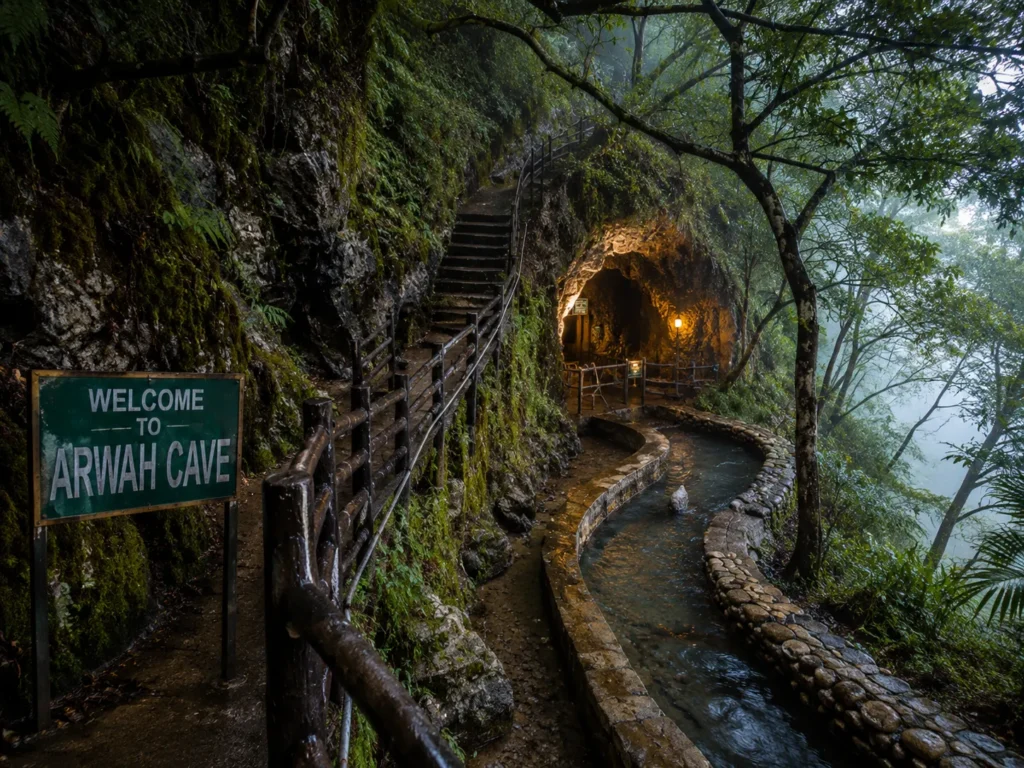
Arwah Cave is much more of an adventure than Mawsmai Cave. Mawsmai is the more basic and easier introduction to these limestone caves but Arwah is based more around the walk so is a better choice for people who are looking for a little more adventure.
The surroundings and cave formations are what have attracted visitors rather than polished sightseeing sights. Meghalaya Tourism has Arwah Cave (besides others) listed as one of the main attractions at Sohra.
About 1–2 hours to complete (more if you want a bit more time to enjoy the approach or if it’s a bit damp).
Use a shoe with a good grip and be ready for unstable damp surfaces. Mawsmai is the easier option if you are pressed for time while Arwah is fun if you like hiking and natural settings.
10. Mawsmai Village
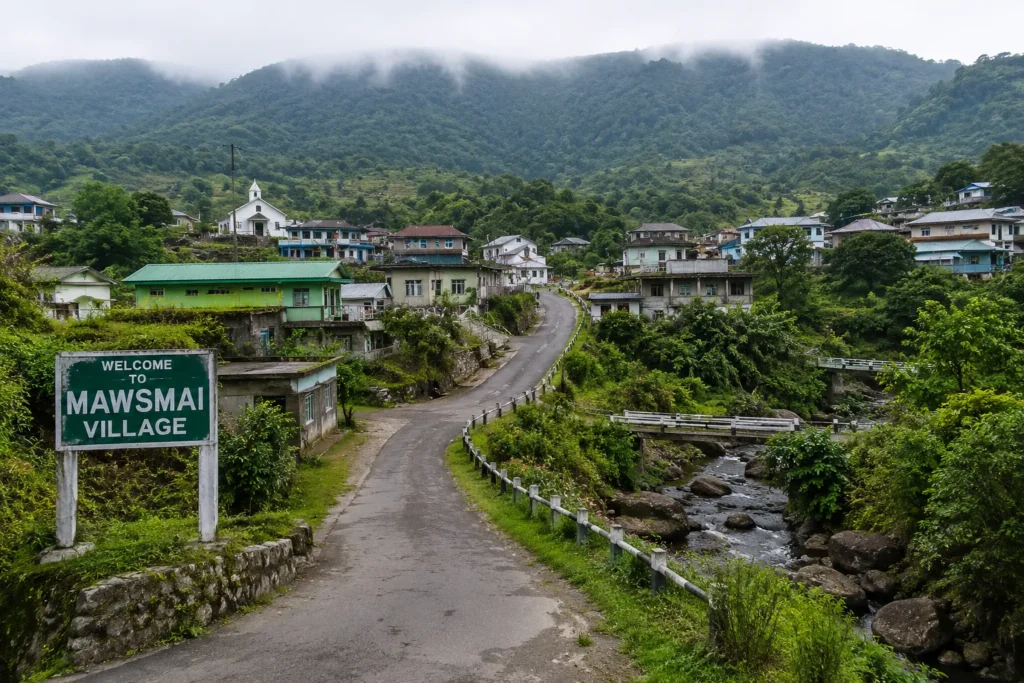
You don’t have to always stop at Waterfalls or caves when you come to Sohra. You can take Mawsmai Village to sit back, relax and see the real surroundings and environments around one of the popular destinations in the area.
This is better described as a local and cultural experience rather than an attraction in its own right. Dedicate around 30-60 minutes or if you want to combine it with other interests in the neighborhood.
For the first time visitor it can be helpful in giving background information for a more comprehensive picture of the villages and landscapes of the Khasi Hills outside of the normal sightseeing circuit.
Show consideration when photographing people, dwellings or public areas, and remember not all village spaces are places to stop off at.
11. Nongsawlia Presbyterian Church
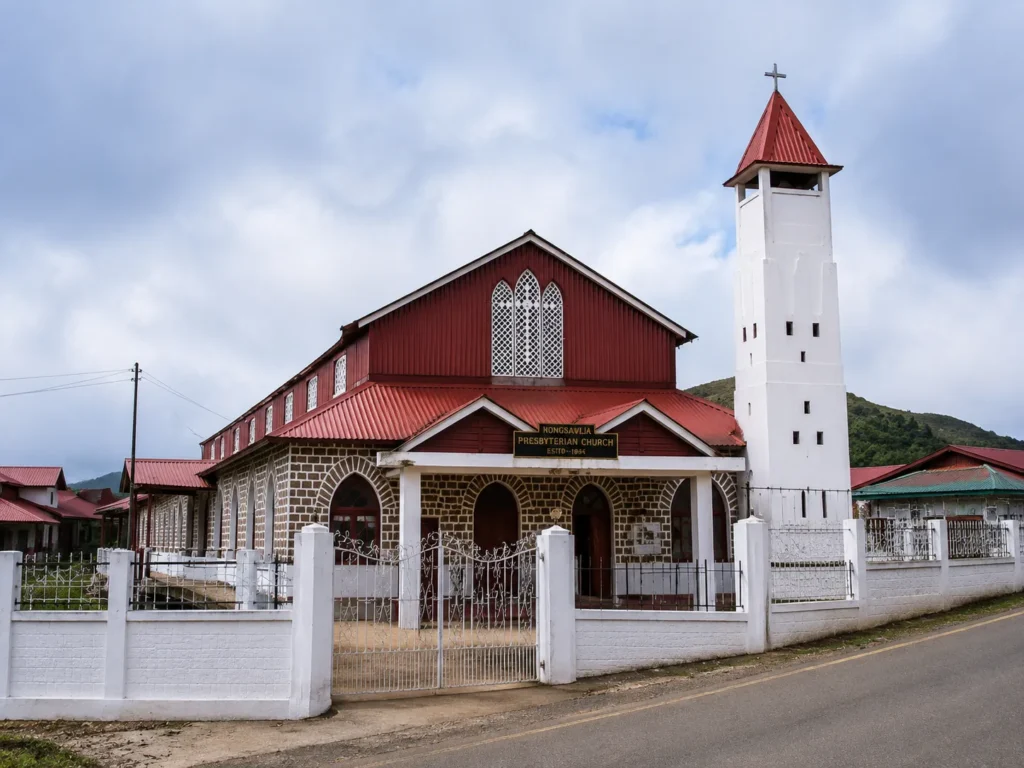
If you want a cultural diversion from waterfalls and caves, a visit to Nongsawlia Presbyterian Church is worth consideration as you compile your sightseeing list for Sohra. The church is one of the attractions of Cherrapunji listed by Incredible India and reflects the colonial presence of Christianity in the region.
Give yourself about 20-40 min or so if you’re into architecture and the history of the local area.
Not a site everyone should see if your focus is the natural landscape. Still, it is understandable for those who desire to experience Sohra as a living cultural attraction.
As with any active place of worship, dress and behave respectfully and avoid interfering with prayers or local activities.
Which Places Should You Prioritise?
| If you have… | Prioritise… |
| Half a day | Nohkalikai Falls, Seven Sisters Falls and one nearby cave |
| 1 day | Nohkalikai, Seven Sisters, Mawsmai Cave, Eco Park and one additional viewpoint |
| 2 days | Major waterfalls, both caves, viewpoints and time for a more relaxed Sohra experience |
| More than 2 days | Add Nongriat’s Double Decker Living Root Bridge and explore beyond the main sightseeing circuit |
The Double Decker Living Root Bridge deserves separate planning because it is a trekking experience rather than a quick attraction stop.
Places Near Cherrapunji
Sohra is excellent as part of a bigger route in Meghalaya. Shillong is the default endpoint/ beginning point but Mawlynnong and Dawki combine better with a broader Meghalaya. Nongriat is associated with Sohra but can be planned as a separate route owing to the trek involved.
Travelers with more time can also include Mawsynram and other parts of the Khasi Hills. Please don’t try to visit everything in a day; the roads, the weather and the walks of Meghalaya are much more enjoyable when experienced in a relaxed manner.
Read our complete Tavel guide in Cherrapunji →
Is Cherrapunji Safe to Visit?
Yes, Cherrapunji is best visited by tourists keeping sensible precautions in mind. Given the terrain and weather there are practical concerns about rainfall, icy paths, steep parts, edges of waterfalls and cave locations.
In the monsoons, give yourself a little more time and refrain from walking on unfenced edges of cliffs or across rushing water just for a picture. Use slip-resistant footwear in caves and wet trail routes, and be aware of steps near waterfall sites.
Check fitness level for treks such as Nongriat and don’t continue in worsening conditions. Families can watch children near observation points, caves and wet steps. Individual travelers should not try unfamiliar paths after dark and should allow flexible time schedules for transportation.
According to Meghalaya Tourism, Sohra’s topography changes throughout the year. The region receives heavy rainfall during the monsoon, while the drier months offer better conditions for scenic walks and treks.
Is Cherrapunji Worth Visiting?
Yes, particularly if you like outdoor landscapes, nature and hiking. Cherrapunji has a great combination of important waterfalls, limestone caves, living root bridges, jungled landscapes and Khas cultural activities all in the one area. It is very unlike a normal city vacation.
It isn’t for everyone though. Those coming on a holiday mainly to partake in the nightlife, meat and two veg style shopping or enjoy an easy city break probably won’t get as much out of Sohra. Many of the top activities involve walking, climbing stairs and changing weather or a full day trek.
Most visitors to Meghalaya would, however, try to include Cherrapunji, since it is a unique blend of waterfalls, caves and living-root architecture that is hard to find in the rest of the world.
How Many Days Do You Need in Cherrapunji?
One day is enough for the major highlights if you prioritise efficiently—particularly Nohkalikai Falls, Seven Sisters Falls, Mawsmai Cave and a few nearby viewpoints.
Two days gives you a much better balance and allows time for caves, waterfalls, viewpoints and less rushed sightseeing.
Three or more days makes sense if you want to include the Double Decker Living Root Bridge trek, explore villages or add nearby destinations.
If you’re building a longer Meghalaya holiday, don’t confuse the number of days in Sohra with the length of your entire Meghalaya trip.
[See our complete Cherrapunji itinerary for 4, 6 and 8-day trip plans →]
FAQs About Cherrapunji Tourist Places
1. What is Cherrapunji famous for?
Cherrapunji, also known as Sohra, is famous for its heavy rainfall, magnificent waterfalls, impressive limestone caves and living root bridges. Some of the most popular attractions include Nohkalikai Falls, Seven Sisters Falls, Mawsmai Cave and the Double Decker Living Root Bridge. Visitors can also experience Khasi culture and admire the spectacular scenery of the Khasi Hills.
2. What is Cherrapunji called now?
Cherrapunji is locally known as Sohra, and both names are widely recognized. Travel searches commonly use “Cherrapunji,” while official tourism references often use “Sohra.” You may also find “Cherrapunji” and “Cherrapunjee” in travel directories and other tourism resources.
3. What are the best tourist places in Cherrapunji?
The shortlist for these first-wards who are visiting for the first time would be Nohkalikai Falls, Seven Sisters Falls, Mawsmai Cave, the Double Decker Living Root Bridge, Eco Park, Thangkharang Park, Wei Sawdong Falls, Dainthlen Falls and Arwah Cave. It’ll be up to you to decide on the order of it based on whether you like viewpoints, waterfalls, caves or trekking.
4. How many days are enough for Cherrapunji?
Two days is a good time span for most travellers. This gives enough time to visit the main waterfalls, caves, viewpoints and have a relatively relaxed pace. The best can be done in a day while more than three days will give you a more leisurely and extensive tour, including the Nongriat trek.
5. Is Cherrapunji safe for tourists?
Cherrapunji is mostly fine, but the weather and the terrain should be considered. Heavy normal rain can make the steps, trails and the top surface of the caves slippery while the waterfalls and cliffs do have some dangerous behaviour options. Ensure you consider the local weather, have the right shoes, do not make risky behaviour on the cliffs, and don’t back down into un-charted trekking routes after sunset.
6. Is Cherrapunji worth visiting?
Cherrapunji is a destination for those who love nature, jungle, waterfalls, caves, treks and amazing scenic view points. The major plus point for this place is the variety it offers. You can indulge in light sightseeing and also feel the adventure while doing more tough activities like Nongriat trek. It is not a good place for night lovers who enjoy many entertainment options.
7. What is the best time to visit Cherrapunji?
The best time varies according to the desire. November to February present usually a drier weather (which also means it will be more pleasant for sightseeing and trekking), while during the monsoon, the waterfalls tend to be significantly more forceful and the scenery bright-green. Meghalaya Tourism compares the monsoon with the drier, clearer months:
8. Are Cherrapunji tourist places open throughout the year?
Accessibility can vary by weather, season, local conditions and site management. Heavy rain can affect trails, caves, viewpoints and trekking routes, even when a destination is normally accessible. Before travelling, verify the current status of individual attractions locally rather than relying on old opening information.
9. Where can I find a Cherrapunji tourist places map?
Google Maps and other navigation apps are useful for locating major Cherrapunji attractions and planning the order of stops. Keep in mind that a map pin doesn’t always indicate the actual walking effort required. For caves, waterfalls and treks, check the latest local directions and conditions before setting out.
10. Can Cherrapunji be covered from Shillong?
Yes. Travelers commonly visit Sohra from Shillong, and Meghalaya Tourism places the destination approximately 54 km south of Shillong. However, a day trip can feel rushed if you want to include multiple waterfalls, caves or a trek. Staying overnight in Sohra is usually more practical for travellers who want to explore at a relaxed pace.
Conclusion
Cherrapunji—or Sohra—is one of Meghalaya’s most rewarding destinations because its attractions aren’t limited to one type of scenery. You can spend a morning at Nohkalikai Falls, explore limestone caves, stop at viewpoints, experience Khasi villages and dedicate another day to the living root bridges around Nongriat. The best Cherrapunji tourist places are therefore worth experiencing at different paces rather than rushing through a checklist.
For a first visit, give yourself at least two days if possible, keep plans flexible around the weather, and match attractions to your fitness level. For your next step, use this list to build a practical Sohra route around the attractions you most want to experience.