


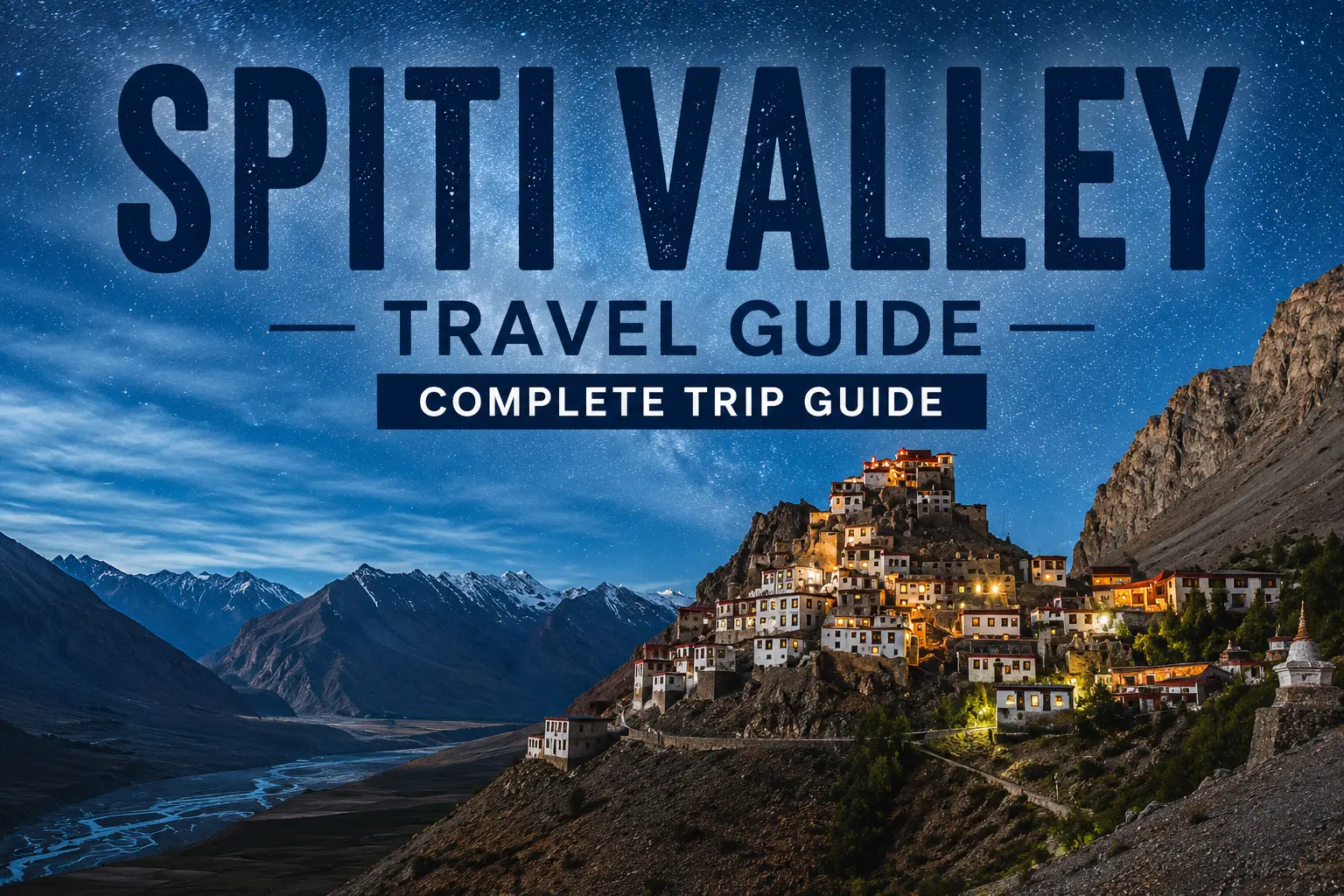
Spiti Valley is one of India’s most extraordinary travel destinations, offering dramatic mountain landscapes, ancient monasteries, high-altitude villages, crystal-clear rivers, and some of the most breathtaking roads in the Himalayas. Located in the northeastern part of Himachal Pradesh, Spiti is often called the “Middle Land” because it lies between India and Tibet. Unlike the lush green valleys of Manali and Kasol, Spiti presents a completely different landscape filled with rugged mountains, barren deserts, deep gorges, turquoise rivers, and snow-covered peaks.
Situated at altitudes ranging from 3,000 to over 4,500 metres above sea level, Spiti Valley is a paradise for adventure seekers, bikers, photographers, road-trip enthusiasts, trekkers, and travellers looking for offbeat experiences. The valley is famous for ancient Buddhist monasteries, some of the world’s highest villages, pristine lakes, and stunning Himalayan scenery that feels almost otherworldly.
A trip to Spiti Valley is not just a vacation; it is an adventure that takes travellers through winding mountain roads, remote villages, and landscapes that are unlike anywhere else in India. Whether you are riding a motorcycle through mountain passes, exploring centuries-old monasteries, or simply admiring the endless Himalayan vistas, Spiti promises an unforgettable journey.
Quick Information
| Information | Details |
|---|---|
| State | Himachal Pradesh |
| Region | Lahaul-Spiti |
| Famous For | Monasteries, High-Altitude Villages, Road Trips |
| Best Time to Visit | May to October |
| Ideal Trip Duration | 7–10 Days |
| Nearest Airport | Bhuntar Airport |
| Nearest Railway Station | Shimla |
| Languages Spoken | Hindi, English, Spitian |
| Budget | ₹4,500–₹25,000 Per Day |
Why Visit Spiti Valley?
Spiti Valley offers a completely different Himalayan experience compared to traditional hill stations. The region’s rugged beauty, remote villages, Buddhist culture, and dramatic landscapes attract travellers from around the world.
Visitors come to Spiti for:
- Road trips
- Motorcycle adventures
- Ancient monasteries
- High-altitude villages
- Photography
- Camping
- Trekking
- Stargazing
- Himalayan landscapes
- Unique culture
The valley is often compared to Ladakh due to its barren mountain scenery and Buddhist heritage.
Best Time to Visit Spiti Valley
Summer (May to June)
The most popular season.
Temperature Range:
5°C to 25°C
Advantages:
- Pleasant weather
- Open roads
- Sightseeing
- Camping
- Road trips
Monsoon (July to September)
Spiti receives less rainfall than many Himalayan regions.
Advantages:
- Green patches in lower valleys
- Comfortable weather
- Open routes
Autumn (September to October)
One of the best times to visit.
Advantages:
- Clear skies
- Excellent photography
- Stunning landscapes
Winter (November to April)
Extremely cold and challenging.
Temperature Range:
-20°C to 5°C
Advantages:
- Snow-covered landscapes
- Winter adventure
Disadvantages:
- Road closures
- Extreme temperatures
How to Reach Spiti Valley
Route 1: Via Manali
Most popular route.
Manali → Atal Tunnel → Gramphu → Kunzum Pass → Kaza
Distance:
Approximately 200 km
Route 2: Via Shimla
Preferred for gradual altitude gain.
Shimla → Narkanda → Kalpa → Nako → Tabo → Kaza
Distance:
Approximately 430 km
By Air
Nearest airport:
Bhuntar Airport
Distance from Kaza:
Approximately 245 km
By Train
Nearest major railway station:
Shimla Railway Station
Top Places to Visit in Spiti Valley
1. Kaza
The largest town in Spiti Valley and the main base for travellers.
Highlights:
- Cafés
- Hotels
- Local markets
- Monastery visits
2. Key Monastery
The most famous monastery in Spiti Valley.
Highlights:
- Tibetan architecture
- Mountain views
- Buddhist culture
- Photography
Altitude:
4,166 metres
3. Kibber Village
One of the highest inhabited villages in the world.
Known for:
- Scenic landscapes
- Wildlife
- Traditional culture
4. Chicham Bridge
One of Asia’s highest suspension bridges.
Highlights:
- Mountain views
- Photography
- Adventure
5. Hikkim
Home to the world’s highest post office.
Altitude:
4,400 metres
Visitors can send postcards from one of the highest postal locations on Earth.
6. Komic Village
Among the highest motorable villages in the world.
Known for:
- Ancient monastery
- Mountain views
- Unique landscapes
7. Langza
A beautiful village famous for fossils and giant Buddha statues.
Highlights:
- Fossil hunting
- Photography
- Himalayan views
8. Tabo Monastery
Over 1,000 years old and one of the most important monasteries in the Himalayas.
9. Dhankar Monastery
Perched dramatically on a cliff overlooking the valley.
10. Pin Valley National Park
A stunning protected area known for wildlife and trekking opportunities.
Best Things to Do in Spiti Valley
- Visit ancient monasteries.
- Explore high-altitude villages.
- Go on motorcycle road trips.
- Experience local culture.
- Camp under the stars.
- Photograph dramatic landscapes.
- Visit the highest post office.
- Explore remote mountain roads.
- Enjoy stargazing.
- Experience Himalayan village life.
Famous Monasteries in Spiti Valley
| Monastery | Location |
|---|---|
| Key Monastery | Near Kaza |
| Tabo Monastery | Tabo |
| Dhankar Monastery | Dhankar |
| Komic Monastery | Komic |
| Kungri Monastery | Pin Valley |
Famous Food to Try
Spitian cuisine is influenced by Tibetan culture.
Must-try dishes include:
- Thukpa
- Momos
- Tingmo
- Butter Tea
- Thenthuk
- Tibetan Bread
- Yak Cheese
- Noodles
- Local Soups
- Himachali Dishes
Popular Restaurants
| Restaurant | Location |
|---|---|
| Sol Café | Kaza |
| The Himalayan Café | Kaza |
| Taste of Spiti | Kaza |
| Local Homestays | Various Villages |
Best Hotels and Homestays in Spiti Valley
Budget Accommodation
| Type | Approx Price |
|---|---|
| Hostels | ₹800–₹2,000 |
| Guesthouses | ₹1,500–₹3,000 |
| Homestays | ₹1,500–₹3,500 |
Mid-Range Hotels
| Hotel | Approx Price |
|---|---|
| Hotel Deyzor | ₹4,000–₹8,000 |
| Kaza Hotels | ₹4,000–₹7,000 |
| Valley Resorts | ₹5,000–₹8,000 |
Premium Stays
| Hotel | Approx Price |
|---|---|
| Boutique Mountain Hotels | ₹8,000–₹20,000+ |
| Luxury Camps | ₹10,000–₹25,000+ |
Suggested 8-Day Itinerary
Day 1
Shimla to Narkanda.
Day 2
Narkanda to Kalpa.
Day 3
Kalpa to Tabo.
Day 4
Tabo, Dhankar, and Kaza.
Day 5
Key Monastery, Kibber, Chicham.
Day 6
Hikkim, Komic, Langza.
Day 7
Pin Valley exploration.
Day 8
Return journey.
Nearby Places to Visit
| Destination | Distance |
|---|---|
| Pin Valley | 35 km |
| Kibber | 18 km |
| Chicham | 20 km |
| Tabo | 50 km |
| Kalpa | 200 km |
| Manali | 200 km |
Where to Travel Next
After exploring Spiti Valley, continue your Himalayan journey by visiting:
Manali (200 km)
A famous hill station known for adventure sports and snowfall.
Kullu (165 km)
Perfect for rafting and scenic landscapes.
Kalpa (200 km)
Known for Kinnaur Kailash views.
Sangla Valley
A beautiful Himalayan destination in Kinnaur.
Chandratal Lake
One of India’s most beautiful high-altitude lakes.
Estimated Budget
| Traveller Type | Daily Budget |
|---|---|
| Backpacker | ₹4,500–₹7,000 |
| Budget Traveller | ₹7,000–₹10,000 |
| Mid-Range Traveller | ₹10,000–₹15,000 |
| Luxury Traveller | ₹15,000–₹25,000+ |
Travel Tips
- Spend time acclimatizing to avoid altitude sickness.
- Carry warm clothing even during summer.
- Keep cash as ATMs are limited.
- Carry basic medicines.
- Download offline maps.
- Check road conditions before travelling.
- Respect local culture and monasteries.
- Avoid rushing the itinerary.
Conclusion
Spiti Valley is one of India’s most spectacular travel destinations and a place that feels untouched by time. From the ancient monasteries of Key and Tabo to the remote villages of Hikkim, Komic, and Langza, every part of the valley offers unique experiences and breathtaking scenery. Whether you’re exploring mountain roads on a motorcycle, camping beneath star-filled skies, or immersing yourself in centuries-old Buddhist culture, Spiti delivers memories that last a lifetime. For travellers seeking adventure, solitude, and some of the most dramatic landscapes in the Himalayas, Spiti Valley is truly a destination unlike any other.
FAQs
1. What is Spiti Valley famous for?
Spiti Valley is famous for monasteries, high-altitude villages, road trips, rugged Himalayan landscapes, and Buddhist culture.
2. How many days are enough for Spiti Valley?
A 7–10 day trip is ideal for exploring the valley comfortably.
3. What is the best time to visit Spiti Valley?
May to October is the best time as roads remain open and weather conditions are favourable.
4. Is Spiti Valley better than Ladakh?
Both destinations are unique. Spiti offers a less crowded experience, while Ladakh provides larger landscapes and more extensive tourism infrastructure.
5. Can Spiti Valley and Manali be visited together?
Yes. Many travellers enter Spiti through Shimla and exit via Manali, creating a popular Himalayan circuit.