


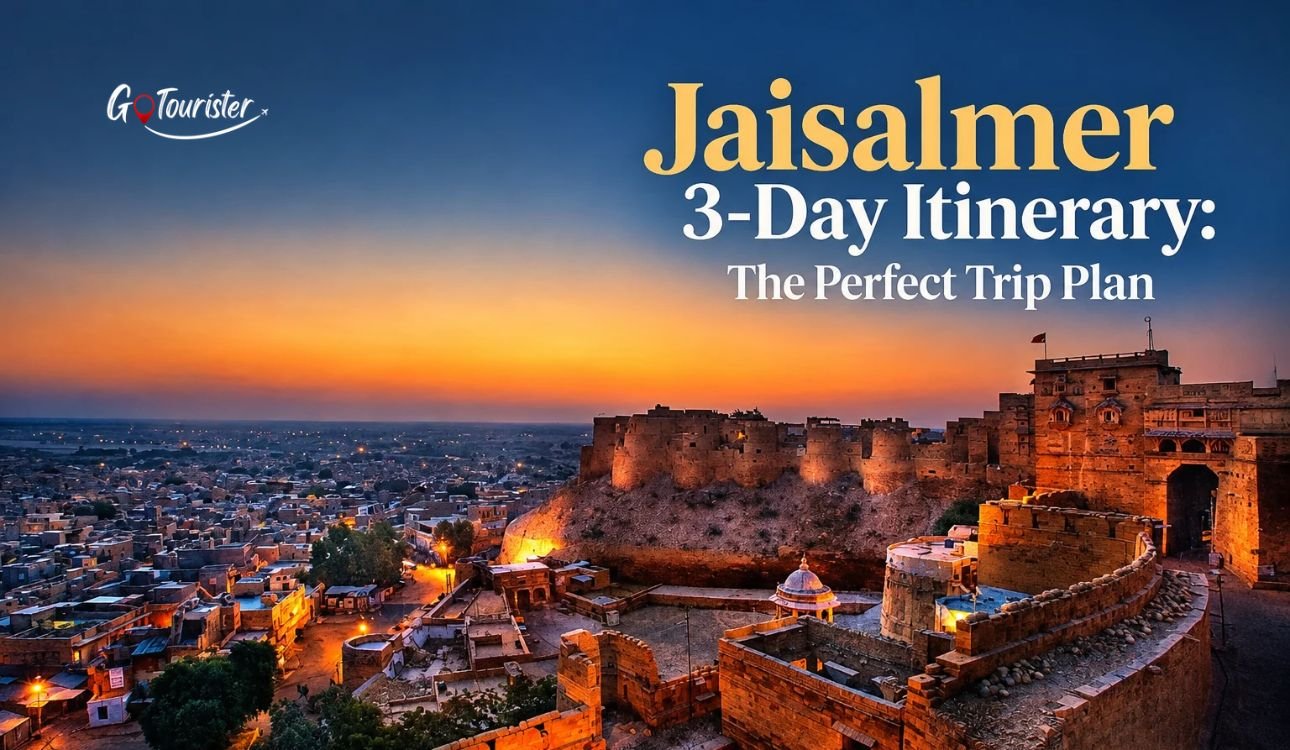
Jaisalmer is the kind of destination that feels completely different from the rest of Rajasthan. The golden sandstone buildings, narrow lanes, historic havelis, enormous fort and endless Thar Desert create a landscape that looks almost unreal, especially when the evening sun turns the entire city golden.
Known as the Golden City of Rajasthan, Jaisalmer is one of the best places in India for combining history, culture, adventure and desert experiences in a short trip. The city was founded in 1156 by Rawal Jaisal and developed as an important trading center on ancient caravan routes. Today, its biggest attractions range from the living Jaisalmer Fort and beautifully carved havelis to Sam Sand Dunes, desert camps and traditional Rajasthani cultural performances.
If you have only three days, the key is not trying to see absolutely everything. Instead, plan your route intelligently so you can experience the historic city, explore its surrounding attractions and still spend a memorable night in the desert.
This Jaisalmer 3-day itinerary is designed to give you that balance.
Jaisalmer 3-Day Itinerary at a Glance
Day 1: Jaisalmer Fort, Jain Temples, Patwon Ki Haveli, Nathmal Ki Haveli and Gadisar Lake
Day 2: Bada Bagh, Kuldhara Village, Sam Sand Dunes, camel safari and desert camp
Day 3: Desert sunrise, Desert National Park or a relaxed morning, local shopping, food and departure
The plan can also be adjusted depending on your arrival and departure timings.
Day 1: Discover the Golden City
Your first day should be dedicated almost entirely to the historic heart of Jaisalmer. The best way to experience this part of the city is slowly, because many of the attractions are close to each other and the narrow streets are part of the experience.
Morning: Begin With Jaisalmer Fort
Start your trip with Jaisalmer Fort, also known as Sonar Quila. Built in 1156, the fort is one of the defining landmarks of the city and is unusual because it continues to function as a living urban settlement, with homes, shops, temples and restaurants within its historic walls.
Morning is an excellent time to explore the fort. The temperatures are more comfortable, the light is ideal for photography and you can walk through the lanes before the busiest part of the day begins.
Take your time exploring the fort’s gateways, sandstone architecture, viewpoints and old streets. The Jain temples inside the fort are another important attraction for architecture and history enthusiasts.
Don’t rush through the fort simply to tick it off your list. Walk through the small lanes, look at the traditional architecture and stop occasionally at a viewpoint to see the city spread below.
Suggested time: 8:00 AM – 11:00 AM
Late Morning: Explore the Old City
After exploring the fort, walk down into the old city and spend some time discovering its colourful streets.
Jaisalmer’s charm isn’t limited to its major monuments. Small shops, traditional houses, handicrafts and sandstone façades give the old city its distinctive character.
This is also a good time to pick up a few souvenirs, although it is better to compare prices before buying anything.
Afternoon: Patwon Ki Haveli and Nathmal Ki Haveli
After lunch, continue towards the famous havelis.
Patwon Ki Haveli is one of the most impressive architectural attractions in Jaisalmer. It is a cluster of five interconnected havelis featuring detailed sandstone carvings and elaborate interiors.
Next, visit Nathmal Ki Haveli, which is known for its distinctive combination of architectural influences and detailed craftsmanship.
If you still have time, you can also visit Salim Singh Ki Haveli, recognised for its unusual upper structure and intricate stonework.
These havelis offer a different perspective on Jaisalmer. While the fort represents the city’s royal and defensive history, the havelis show the wealth and artistic ambitions of its merchant families.
Suggested time: 2:00 PM – 5:00 PM
Evening: Sunset at Gadisar Lake
End your first day at Gadisar Lake.
The lake is surrounded by temples, shrines, ghats and traditional structures, making it one of the most relaxing places to visit after a day of walking through the old city. Boating and photography are popular activities here.
Try to arrive before sunset rather than after it. The changing light on the surrounding sandstone structures creates some of the best photography opportunities of the day.
After sunset, return to the city for dinner.
What to Eat on Day 1
Your first evening is a good opportunity to try traditional Rajasthani dishes such as:
- Dal Baati Churma
- Gatte Ki Sabzi
- Ker Sangri
- Bajra Roti
- Laal Maas
- Pyaaz Kachori
- Makhaniya Lassi
You don’t need to turn dinner into a formal restaurant experience. A simple local meal can often be one of the most memorable parts of a Rajasthan trip.
Day 2: Leave the City Behind and Enter the Thar Desert
Day two is the highlight for many first-time visitors because this is when Jaisalmer’s urban history gives way to its desert landscape.
Keep your morning reasonably relaxed because you’ll have a long and exciting afternoon ahead.
Morning: Bada Bagh
Start with Bada Bagh, a collection of royal cenotaphs located outside the main city.
The sandstone structures stand against the desert landscape and provide a completely different atmosphere from the crowded streets around Jaisalmer Fort.
The location is especially attractive for photographers because of the contrast between the detailed stone architecture and the open desert surroundings.
Spend some time here before continuing towards Kuldhara.
Late Morning: Visit Kuldhara Village
Next, make your way to Kuldhara, an abandoned historic village associated with several local stories and legends.
The ruined structures and empty streets give the place a mysterious atmosphere. You don’t need to spend hours here. A short visit is enough to understand the setting and explore the remains.
Kuldhara is around 18 km from Jaisalmer, making it a convenient addition to a three-day itinerary.
Afternoon: Head Towards Sam Sand Dunes
After Kuldhara, continue towards Sam Sand Dunes, one of the most popular desert areas near Jaisalmer.
Sam is around 40–42 km from Jaisalmer and is well known for camel rides, jeep safaris, desert camps and sunset experiences.
Try to reach your desert camp with enough time to relax before the main activities begin.
This is where you should slow down.
The desert isn’t something you need to rush through. Sit outside your tent, walk around the dunes and simply enjoy the huge open landscape.
Evening: Camel Safari and Sunset
A camel safari around sunset is one of the classic Jaisalmer experiences.
As the sun starts dropping, the colour of the dunes changes from bright gold to deeper shades of orange. The experience becomes even better when the crowds start thinning and the desert becomes quieter.
If camel riding isn’t your thing, many camps also offer jeep safaris or other desert activities.
Choose your experience based on what you actually enjoy rather than trying to fit every activity into the evening.
Night: Desert Camp Experience
Return to your desert camp after sunset.
Most organised desert camps offer some combination of traditional Rajasthani food, folk music, dance performances and cultural entertainment.
After dinner, spend some time outside your tent if the weather is comfortable.
One of the best parts of staying in the desert is simply looking up at the night sky away from the bright lights of the city.
Important tip: Desert temperatures can fall considerably during winter nights, so carry a warm layer even if the afternoon feels pleasant.
Day 3: Desert Morning, Wildlife and Shopping
Your final day should be flexible. Depending on your departure time, you can either explore another attraction or keep the morning relaxed after your desert stay.
Early Morning: Watch the Desert Sunrise
Wake up early and step outside before breakfast.
A desert sunrise is completely different from a sunset. The dunes are quieter, the air is cooler and the changing light slowly reveals the shape of the landscape.
This is also one of the best times to take photographs without the harsh midday sunlight.
Return to camp for breakfast and check out.
Option 1: Visit Desert National Park
If you’re interested in wildlife and natural landscapes, consider visiting Desert National Park.
The park showcases the unique ecosystem of the Thar Desert and is home to desert-adapted wildlife and bird species. It is located roughly 40 km from Jaisalmer according to the referenced travel guide.
This option works best if your departure is later in the day.
Option 2: Keep Day 3 Relaxed
If your trip has been busy, there is nothing wrong with keeping your final morning slow.
Return to Jaisalmer, have breakfast or lunch at your hotel, take one final walk through the old city and spend some time shopping.
A three-day trip doesn’t have to mean three days of nonstop sightseeing.
Shopping in Jaisalmer
Before leaving, keep some time for shopping.
Popular shopping areas include Sadar Bazaar, Bhatia Bazaar, Manak Chowk and the markets around the fort.
You can look for:
- Mirror-work textiles
- Embroidered fabrics
- Silver jewellery
- Traditional handicrafts
- Camel-leather products
- Carpets
- Wooden souvenirs
Take your time and compare products and prices before making a purchase, particularly in tourist-heavy areas.
Best Time to Visit Jaisalmer
For most travellers, October to March is the most comfortable period for a Jaisalmer trip. Winter offers more pleasant daytime conditions for sightseeing and is particularly suitable for desert activities and camping.
Summer can be extremely hot, with daytime temperatures becoming difficult for outdoor sightseeing. Monsoon brings fewer tourists, but the experience can be more humid.
If desert camping is one of your main reasons for visiting Jaisalmer, winter is the safer choice for comfortable conditions.
How to Reach Jaisalmer
By Air
Jaisalmer Airport is around 15 km from the city and operates seasonal or tourist-oriented flight connections. Another option is to fly to Jodhpur and continue to Jaisalmer by road or train.
By Train
Jaisalmer Railway Station connects the city with several major destinations, including Jodhpur, Jaipur, Delhi and Ahmedabad.
For travellers coming from western India, travelling by train can be a convenient way to include Jaisalmer in a Rajasthan itinerary.
By Road
Jaisalmer can also be reached by road from cities such as Jodhpur, Bikaner, Jaipur and Ahmedabad.
Road travel is particularly useful if you are planning a wider Rajasthan road trip.
Getting Around Jaisalmer
The fort and old city are best explored on foot. Walking allows you to discover smaller lanes and architectural details that you could easily miss from a vehicle.
For attractions outside the city, such as Bada Bagh, Kuldhara and the desert areas, a private cab is usually more convenient.
Auto-rickshaws are useful for shorter city journeys, while rental bikes can work for experienced riders who are comfortable with local traffic and longer desert-area distances.
Jaisalmer Trip Budget
Your overall cost depends heavily on your accommodation and desert camp.
A rough daily planning range can look like this:
Budget traveller: ₹3,500–₹5,500 per day
Comfortable mid-range traveller: ₹8,500–₹15,000 per day
Luxury traveller: ₹20,000+ per day
These figures can change considerably during peak travel periods and depending on your hotel, transport, activities and desert camp.
For a three-day trip, it is worth budgeting separately for the desert experience because camel rides, jeep safaris and overnight camps can make up a significant portion of the total cost.
Practical Tips for a Better Jaisalmer Trip
Start sightseeing early. The desert climate can make afternoons uncomfortable, especially outside winter.
Keep one night for the desert. Visiting the dunes only for a few hours misses one of the best parts of the Jaisalmer experience.
Carry a light jacket in winter. Desert nights can be surprisingly cold.
Wear comfortable shoes. The fort and old city involve plenty of walking.
Carry sunscreen and water. The Rajasthan sun can be strong even when temperatures feel comfortable.
Keep some cash. Small shops and local vendors may not always accept digital payments.
Book desert camps ahead of time during peak season. October to March can be busy, especially around holidays.
Don’t overpack your itinerary. Jaisalmer is more enjoyable when you leave room to wander and enjoy the atmosphere.
Is 3 Days Enough for Jaisalmer?
Yes. Three days is a very good duration for a first Jaisalmer trip.
You can dedicate the first day to the fort and historic city, the second to the desert and nearby attractions, and the third to the desert morning, wildlife or relaxed sightseeing and shopping.
If you have four or five days, you can slow the itinerary down and add destinations such as Tanot Mata Temple, Longewala or other parts of western Rajasthan. But for travellers who want to experience the main highlights without taking a long holiday, three days works extremely well.
Final Thoughts
Jaisalmer is not simply a destination where you visit a fort, take a few photographs and leave.
Its real appeal comes from the combination of experiences.
One moment you’re walking through centuries-old sandstone architecture inside a living fort. A few hours later, you’re standing beside an intricately carved haveli. By the next evening, you’re sitting on a camel in the middle of the Thar Desert as the sun disappears behind the dunes.
That contrast is what makes Jaisalmer special.
With the right planning, a 3-day Jaisalmer itinerary can give you a taste of Rajasthan’s history, architecture, food, culture and desert life without making the trip feel rushed.
If this is your first visit, focus on the fort and havelis, experience Gadisar Lake, spend at least one evening at the dunes and leave a little time simply to walk through the Golden City’s streets.
Sometimes the best memories in Jaisalmer aren’t the places you planned to visit—they’re the moments you discover along the way.
FAQs
What is the ideal number of days for a Jaisalmer trip?
Three days is ideal for a first visit. It gives you enough time to explore Jaisalmer Fort and the historic city, visit nearby attractions and spend a night experiencing the Thar Desert.
Which is better for a desert experience, Sam or Khuri?
Sam Sand Dunes is the more popular and established option, with a wide choice of camps, camel safaris and cultural activities. Khuri is generally considered a quieter alternative and can suit travellers looking for a less commercial atmosphere.
Should I stay inside Jaisalmer Fort?
Staying around the fort or old city can be convenient for sightseeing because many attractions are nearby. However, you should also consider heritage-property conditions, access and your preferred level of comfort before booking.
Is a camel safari in Jaisalmer worth it?
Yes, particularly if it is your first desert trip. A camel safari around sunset gives you the chance to experience the dunes at a slower pace. If you prefer speed and adventure, a jeep safari may be a better choice.
What should I wear in Jaisalmer?
Wear light, breathable clothes during the day and comfortable walking shoes. During winter, carry a jacket or warm layer because desert temperatures can drop significantly after sunset.
Can I visit Jaisalmer with family?
Absolutely. Jaisalmer works well for families, couples, groups and solo travellers. Families may prefer a comfortable hotel and a well-organised desert camp, while younger travellers may want to add jeep safaris and more adventure activities.
What food is Jaisalmer famous for?
Traditional Rajasthani dishes such as dal baati churma, ker sangri, gatte ki sabzi, bajra roti and laal maas are worth trying. Local snacks such as pyaaz kachori and mirchi vada are also popular choices.
Is Jaisalmer expensive for a 3-day trip?
It doesn’t have to be. Budget accommodation and local transport can keep costs reasonable, while luxury hotels and premium desert camps can make the trip significantly more expensive. Your desert camp and activities will usually have a noticeable impact on the total budget.
What is the best month to visit Jaisalmer?
The broader October-to-March period is generally the most comfortable for sightseeing and desert activities. December and January offer cooler conditions but can also bring particularly cold desert nights.